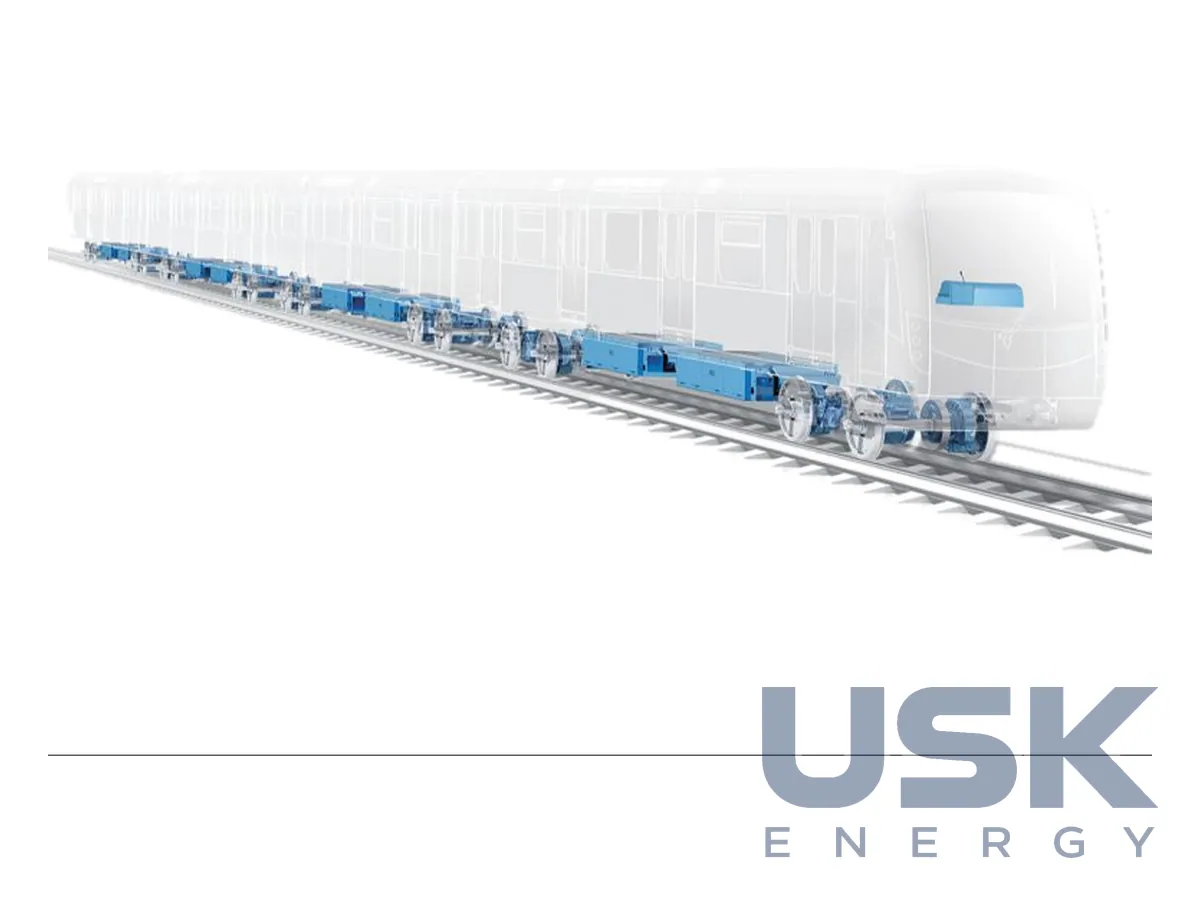
Traction electrical equipment for metro cars (IGBT inverters, DC choppers for modernisation)
The manufacturer develops and produces traction and auxiliary systems for metro cars powered from DC and AC networks. New cars receive IGBT-based AC traction systems. For modernisation of older cars the company offers DC choppers that retain the existing DC traction motors.
- New cars
- AC traction systems on IGBTs
- Modernisation
- DC choppers retaining the DC motors
- Control
- microprocessor units; Ethernet, MVB, CAN
- Mounting
- underfloor containers
Price, availability and lead time on request. We help with analogue selection, customs clearance and delivery.
Description
A DC chopper suits an operator that wants to update the traction control without replacing the traction motors. For fleets of 81-717/714 type cars and similar ones it is a modernisation route where full replacement of the traction drive is not economical. The chopper controls the traction motor current in pulse mode on IGBTs, so instead of stepped rheostatic starting the car gets smooth control of tractive effort. New cars, by contrast, receive AC traction systems with IGBT inverters. For new cars the company also supplies asynchronous traction motors of its own production.
The traction and auxiliary systems use IGBT technology with built-in microprocessor control units. The units exchange data with the upper-level train control system and other subsystems over the standard Ethernet, MVB and CAN protocols. They have advanced diagnostic and fault-finding tools. The traction and auxiliary equipment containers are designed for underfloor installation. In its supply chain the company requires component manufacturers to provide a declaration of conformity with the RoHS directive (2011/65/EU) according to EN ISO/IEC 17050-1.
Complete traction equipment of this manufacturer has operated in the Prague metro, where the company modernised cars from the 1990s, as well as in Budapest and Kyiv. Deliveries also go to Suzhou in China. The company's new metro trainsets for Warsaw (six-car, 750 V DC from the third rail, regenerative braking) and Sofia (four-car, 750 V DC, 90 km/h) are built with its own traction equipment. The Warsaw car bodies are welded from aluminium profiles in Ostrava, assembly and commissioning are carried out in Plzeň, and the electrodynamic brake works with priority given to regeneration. According to the company, the new metro trainsets consume up to 25 % less energy.
The traction equipment is tested at the company's own test centre, where the compatibility of the whole traction chain is checked, from the traction transformer and converter to the motor and gearbox. Electromagnetic and thermal calculations are performed during development. On average the company allocates 10 % of annual turnover to new products, and more than 200 specialists work in its technical departments. The manufacturer does not publish rated power figures for the equipment, and the configuration is selected for the car type. The equipment is supplied both for new cars and for modernisation of the fleet in service.
Technical specifications
| New cars | AC traction systems on IGBTs |
|---|---|
| Modernisation | DC choppers retaining the DC motors |
| Control | microprocessor units; Ethernet, MVB, CAN |
| Mounting | underfloor containers |
| Deliveries | Prague, Budapest, Kyiv, Kazan, Suzhou; new trainsets for Warsaw and Sofia (750 V DC, third rail) |
Request a price and lead time
Traction electrical equipment for metro cars (IGBT inverters, DC choppers for modernisation). We reply within one business day.
Or email sales@usk.ua or call 044 339-50-20.
Customs codes
| UKTZED (Ukraine) | 8504 40 88 00 8504 40 82 00 |
|---|---|
| HS, 6 digits | 8504 40 |
| CN (EU) | 8504 40 88 8504 40 82 |
| HTSUS (USA) | 8504 40 95 10 |
| China customs tariff | 8504 40 99 99 |
Codes are for reference: the final code is determined at declaration for the specific model.
Questions and answers
Can metro cars be modernised without replacing the traction motors?
Yes. For older cars the company offers DC choppers that retain the existing DC traction motors, including on 81-717/714 type cars.
What interfaces do the control units have?
The microprocessor units exchange data with the train control system and other subsystems over Ethernet, MVB and CAN.
Where does this metro traction equipment operate?
In the metros of Prague, Budapest, Kyiv and Suzhou in China, and on new trains for Warsaw and Sofia with 750 V DC supply from the third rail.
Similar equipment from other manufacturers