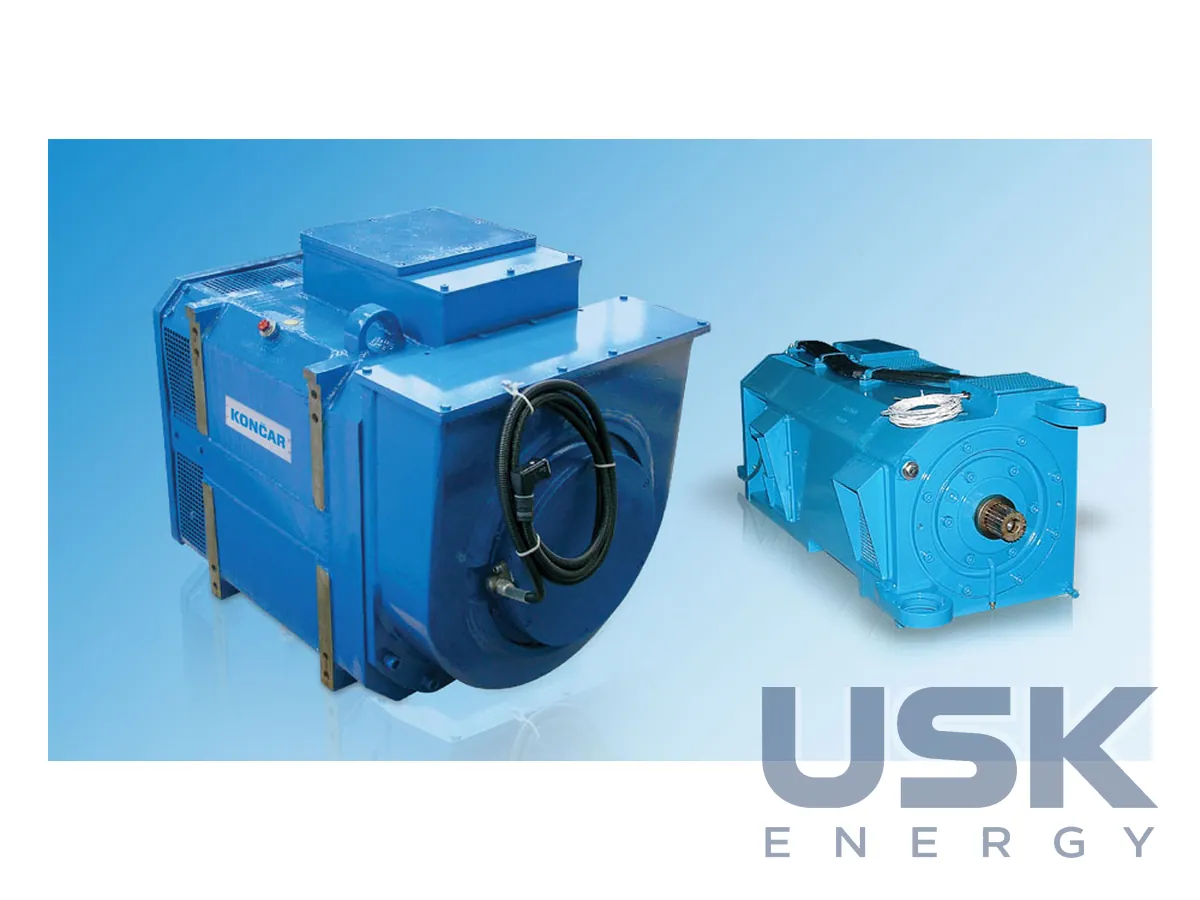
Induction traction motors 65 to 525 kW for low-floor trams and electric multiple units
Three-phase squirrel-cage induction traction motors with a power from 65 to 525 kW for voltages up to 1000 V. They are intended for low-floor trams and for low-floor and multiple-unit electric trains of urban and suburban rail transport.
- Type
- three-phase induction with squirrel-cage rotor
- Rated power
- 65 and 85 kW (trams), 525 kW (electric trains); range 65 to 525 kW
- Rated voltage
- up to 1000 V
- Rated speed
- up to 4580 rpm (tram), up to 5280 rpm (EMU)
Price, availability and lead time on request. We help with analogue selection, customs clearance and delivery.
Description
The motors were designed for urban and suburban rail transport. Machines of 65 kW and 85 kW are built for low-floor trams, and of 525 kW for low-floor electric trains. Since 2015 more than 1000 traction motors have been supplied.
According to the 2025 product catalogue (the section on traction converters and motors for rolling stock), these are three-phase squirrel-cage induction motors with a rated power from 65 to 525 kW and a rated voltage up to 1000 V. The rated speed reaches 4580 rpm for tram motors and 5280 rpm for motors of electric multiple units (EMU). The insulation has a thermal class of 200. A squirrel-cage rotor is easier to maintain than a commutator machine because it has no wearing brushes.
A squirrel-cage rotor needs no commutator or brushes. The traction drive is therefore fed from a traction frequency converter, which sets the speed and torque during acceleration and electric braking. The same section of the manufacturer's catalogue contains traction converters, for example GP170DC for trams, GP550AC for AC electric trains, GP550DE for diesel-electric trains and GN720MS/BS for battery trains. Together with the motors they form the traction drive of rolling stock, which is selected as a whole for the duty cycle of the specific vehicle; the converters themselves are not covered in this item.
The motor is designed by the engineering department to the requirements of the specific rolling stock project. The windings are made and the motors assembled at the company's own plant in Zagreb. It has coil forming and winding machines, vacuum pressure impregnation (VPI) plants, including a GVPI system for low-voltage coils, machining and balancing stands. The service department maintains motors of its own and of other makes: diagnostics, bearing repair or replacement, winding insulation repair, manufacture of spare parts, rotor balancing and no-load tests to IEC standards.
Although the rated voltage does not exceed 1000 V, under the catalogue classification these motors belong to traction equipment for rolling stock. Applications are low-floor trams, low-floor and multiple-unit electric trains, and renewal and modernisation of urban and suburban rail fleets.
Technical specifications
| Type | three-phase induction with squirrel-cage rotor |
|---|---|
| Rated power | 65 and 85 kW (trams), 525 kW (electric trains); range 65 to 525 kW |
| Rated voltage | up to 1000 V |
| Rated speed | up to 4580 rpm (tram), up to 5280 rpm (EMU) |
| Insulation | thermal class 200 |
| Supplied | more than 1000 units since 2015 |
| Supply | from a traction frequency converter |
| Source | manufacturer's website; 2025 catalogue, p. 45 |
Request a price and lead time
Induction traction motors 65 to 525 kW for low-floor trams and electric multiple units. We reply within one business day.
Or email sales@usk.ua or call 044 339-50-20.
Questions and answers
What power do the traction motors for trams and electric trains have?
Motors of 65 kW and 85 kW are built for low-floor trams, and of 525 kW for low-floor electric trains. The overall range is 65 to 525 kW.
What voltage and speed are these motors designed for?
The rated voltage is up to 1000 V. The speed reaches 4580 rpm for tram motors and 5280 rpm for EMU motors.
What feeds a traction induction motor?
A squirrel-cage motor has no commutator or brushes and runs from a traction frequency converter. The converter sets the speed and torque during acceleration and electric braking.
Similar equipment from other manufacturers