Main converters (CI) for AC rolling stock of 20–25 kV, including Shinkansen
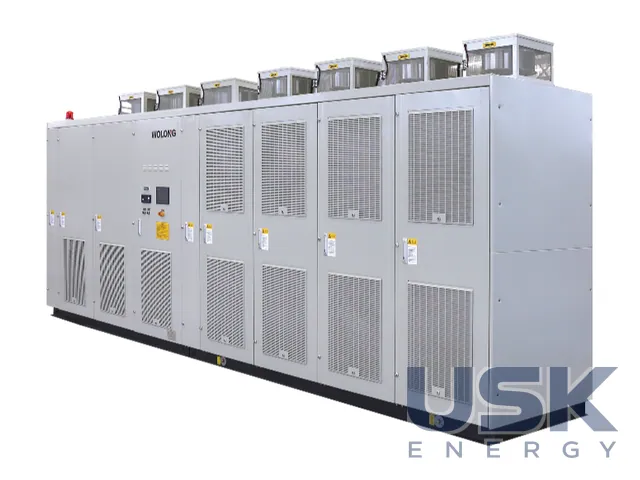
CI main converters supply traction motors of AC rolling stock of 20 and 25 kV, 50/60 Hz, rated 200–1,430 kW per motor. The circuit includes a PWM rectifier and a three-phase VVVF inverter. Used on Shinkansen, suburban trains and locomotives.
- Overhead line
- 20 kV and 25 kV, 50/60 Hz
- Circuit
- single-phase PWM rectifier (2- or 3-level) + 3-phase VVVF inverter
- Power
- 200–1,430 kW per motor (1C1M–1C4M)
- Output
- up to 2,150 V, 3 phases
Price, availability and lead time on request. We help with analogue selection, customs clearance and delivery.
Description
The main converter (CI, Converter Inverter) is installed on AC rolling stock: Shinkansen high-speed trains, suburban electric trains and electric locomotives. It consists of a single-phase PWM rectifier, a DC link and a three-phase VVVF inverter feeding the traction motors. At the input there is a traction transformer, which the manufacturer also builds, for example for the Shinkansen E5 series.
The manufacturer focuses on compactness, low mass, low noise and energy saving. Vector control gives high accuracy and fast response of torque regulation, and the AC drive simplifies maintenance. For the Shinkansen N700 (Central Japan Railway) a blower-less main converter with natural cooling has been built.
The line, per the Traction and Auxiliary Power Systems brochure, covers several classes. For high-speed trains at 20 kV, 50/60 Hz, a 3-level converter and a 3-level inverter are used, 285 kW × 4, output 1,850 V, forced air cooling. Suburban trains at 25 kV, 60 Hz have a 3-level converter and a 2-level inverter, 200 kW × 4 (1C4M), output 1,370 V, natural cooling. Locomotives at 25 kV, 50 Hz have 2-level water-cooled circuits, 1C1M, output up to 2,150 V at 1,250 kW × 3 or 1,430 kW × 2 (1,780 V, 552 A). There is also a locomotive version of 565 kW × 4 with forced air cooling at 25 kV, 50 Hz.
Deliveries cover the Shinkansen E5 (JR East), N700 (JR Central) and 700T (Taiwan), Taiwan Railway EMU800 and EMU900, electric trains of Ireland (8500), Turkey (TCDD) and Venezuela (25 kV, 240 kW × 4), as well as HXD3 electric locomotives (China) and Class 15E (50 kV, South Africa). Locomotive converters are made as modular cabinets with power units up to 1,400 kW. The converters are produced at the Fuchu complex (Tokyo) and at plants in India (Telangana) and China (Dalian). Typical use is high-speed and suburban electric trains, AC and dual-supply electric locomotives.
Technical specifications
| Overhead line | 20 kV and 25 kV, 50/60 Hz |
|---|---|
| Circuit | single-phase PWM rectifier (2- or 3-level) + 3-phase VVVF inverter |
| Power | 200–1,430 kW per motor (1C1M–1C4M) |
| Output | up to 2,150 V, 3 phases |
| Cooling | natural, forced air, water |
| Deliveries | Shinkansen N700 (blower-less), E5; EMU800/900 Taiwan |
Request a price and lead time
Main converters (CI) for AC rolling stock of 20–25 kV, including Shinkansen. We reply within one business day.
Or email sales@usk.ua or call 044 339-50-20.
Questions and answers
What overhead line voltages are the main converters designed for?
For 20 and 25 kV AC, 50/60 Hz. The Class 15E for South Africa is built for 50 kV.
What power per motor do the converters have?
From 200 to 1,430 kW per motor, with schemes from 1C1M to 1C4M. For high-speed trains 285 kW × 4.
What cooling is used in these converters?
Natural, forced air or water cooling. For the Shinkansen N700 a blower-less converter with natural cooling has been built.
Similar equipment from other manufacturers