Substation clamps and connectors of bronze and aluminium up to 500 kV, bimetallic transition types
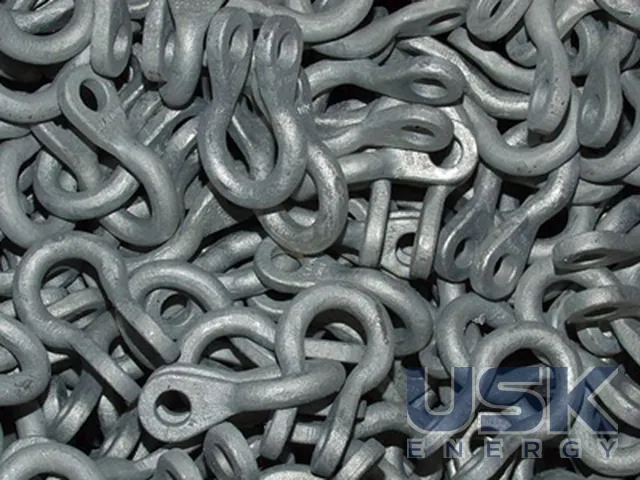
Substation clamps and connectors are intended for busbar work in open-air switchgear and substations up to 500 kV. They are made of bronze or aluminium, and bimetallic Al–Cu connectors are offered for the transition between aluminium and copper.
- Voltage class
- up to 500 kV
- Materials
- bronze, aluminium; bimetallic Al–Cu
- Standards
- international standards for substation fittings; special versions on request
Price, availability and lead time on request. We help with analogue selection, customs clearance and delivery.
Description
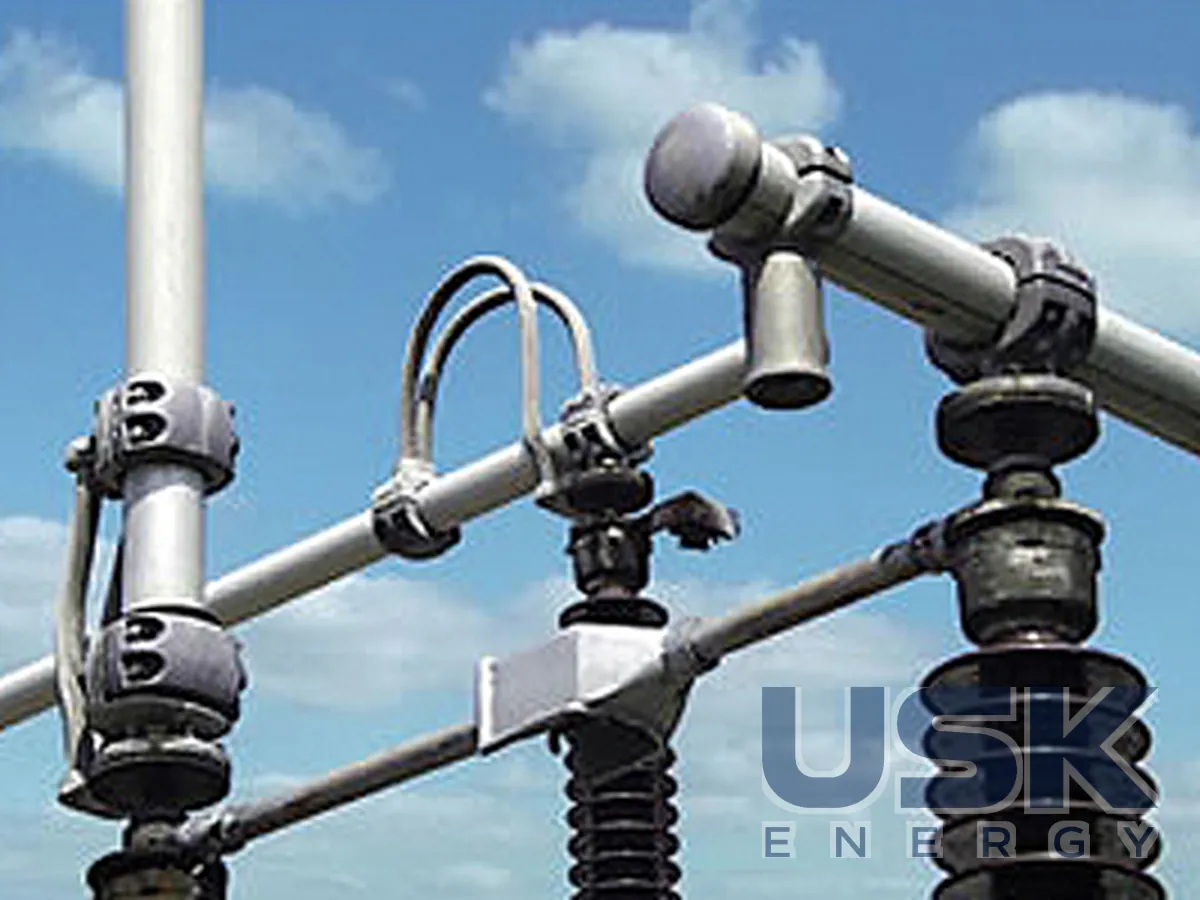
The company designs and supplies connectors for transmission and distribution substations to international standards. Designers make individual versions for a specific layout and equipment. The connectors join flexible and rigid busbars to the terminals of transformers, circuit breakers, disconnectors, current and voltage transformers. They are also used for taps and busbar joints, so one supplier covers all contact points of a switchgear. The clamp design is agreed against the drawing of the apparatus terminal and the conductor type.
Clamps are made in two materials, bronze and aluminium. A special case is where an aluminium busbar or conductor comes to a copper apparatus terminal. Bimetallic Al–Cu connectors, in which aluminium and copper do not touch directly, are intended for such a transition. This eliminates electrochemical corrosion at the contact point.
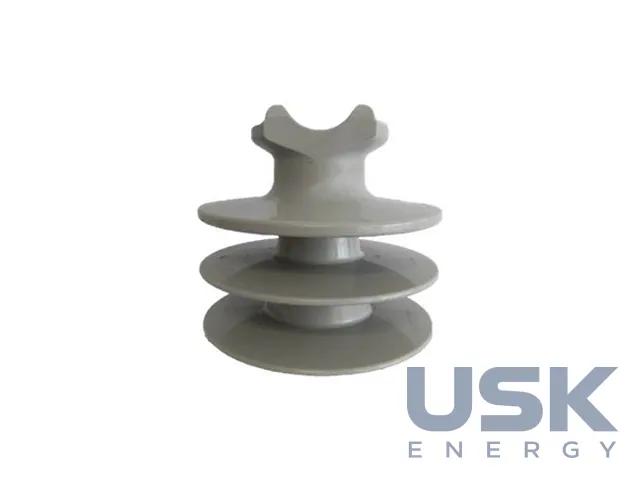
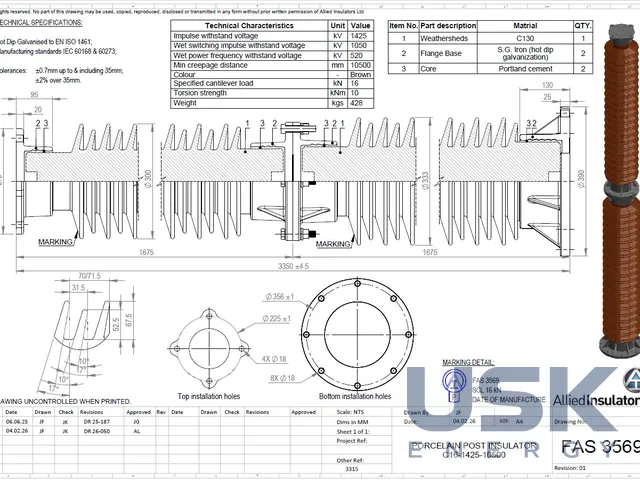
The connectors are supplied together with the company's substation post insulators up to 800 kV. The insulators come in solid porcelain, hybrid with a porcelain core and silicone housing, and purely composite types. The customer therefore gets the busbar assembly from one manufacturer with insulation and contact fittings matched to each other. For overhead lines entering a substation, the company also makes line fittings and string insulators. The same programme includes ABSD switch-disconnectors and TAG spark gaps for distribution overhead lines.
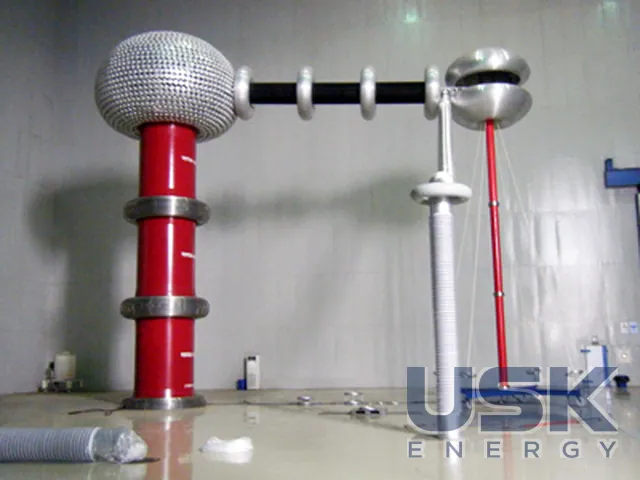
The design office works in 3D and calculates components by finite element analysis, and where needed makes rapid prototypes to agree the design with the customer before manufacture. The factory laboratory has mechanical and high-voltage equipment. Type and sample tests of fittings are carried out here and reports are issued, and the laboratory can also be engaged for third-party testing.
The factory and laboratory are in Tunstall (Stoke-on-Trent, Staffordshire). The company is part of a Swedish group and supplies products to customers in the UK and abroad. Production and laboratory operate under ISO 9001 and ISO 14001 management systems, and the occupational health and safety system is aligned with ISO 45001. Sizes, conductor cross-section ranges and rated currents are selected on request for the specific conductor, apparatus terminal and substation voltage class.
Technical specifications
| Voltage class | up to 500 kV |
|---|---|
| Materials | bronze, aluminium; bimetallic Al–Cu |
| Standards | international standards for substation fittings; special versions on request |
Request a price and lead time
Substation clamps and connectors of bronze and aluminium up to 500 kV, bimetallic transition types. We reply within one business day.
Or email sales@usk.ua or call 044 339-50-20.
Customs codes
| UKTZED (Ukraine) | 8535 90 00 00 |
|---|---|
| HS, 6 digits | 8535 90 |
| CN (EU) | 8535 90 00 |
| HTSUS (USA) | 8535 90 80 00 |
| China customs tariff | 8535 90 00 90 |
Codes are for reference: the final code is determined at declaration for the specific model.
Questions and answers
What voltage class are the connectors used for?
For transmission and distribution substations up to 500 kV. The post insulators they are supplied with are made up to 800 kV.
Are there transition connectors between aluminium and copper?
Yes, bimetallic Al–Cu connectors eliminate electrochemical corrosion where an aluminium busbar meets a copper apparatus terminal.
What equipment are these clamps connected to?
To the terminals of transformers, circuit breakers, disconnectors, current and voltage transformers. They are also used for taps and busbar joints.
Similar equipment from other manufacturers