Composite insulating crossarms and V-shaped insulating structures for HV/EHV overhead lines
Composite insulating crossarms replace a metal crossarm with suspension strings and themselves carry the overhead line conductors. This increases the conductor clearance to ground without replacing or extending towers, and on new lines it lowers tower height. The company references cover 132–420 kV lines.
- Application
- increasing clearance, raising the ampacity and voltage of overhead lines, compact and low-profile towers
- Voltage class (references)
- 132–420 kV
- Scope of work
- concept design, global modelling, FEM, design of cast components, manufacturing, testing, installation support
Price, availability and lead time on request. We help with analogue selection, customs clearance and delivery.
Description
The increased clearance gives the network operator several options. The crossarm is installed on the same tower instead of a metal one, and the conductor is attached directly to the end of the composite insulators. The permissible operating temperature of the conductors can be raised, and with it the current-carrying capacity (ampacity). Clearance violations can be eliminated without costly replacement or extension of steel towers. The voltage of existing circuits can be raised and the transmitted power increased. For polluted areas, the crossarm insulators are designed with an increased creepage distance.
On new overhead lines, composite crossarms make it possible to significantly lower the height of conventional towers. The line becomes lower and more compact, which improves its appearance and public acceptability. A lower tower is less conspicuous in the landscape, and a new route is easier to approve. The manufacturer links the development of new lines and cross-border interconnections in Europe precisely with such aesthetic towers.
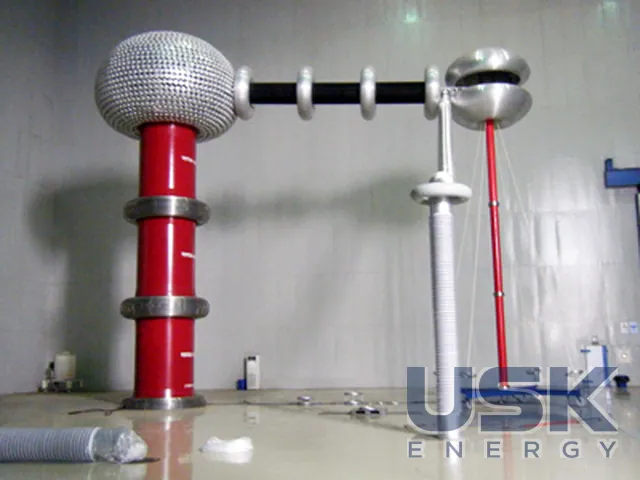
The company works through the full cycle, relying on its own joint developments in other sectors. First comes the concept design and techno-economic study, then global overhead line modelling for climatic and emergency loading conditions. Insulators, fittings and related components are modelled in 3D and calculated by the finite element method, and complex cast parts are designed separately. The calculations are confirmed on prototypes, then the series is launched. Individual insulators and assemblies undergo full-scale mechanical and electrical tests to national and international standards, and during loading and installation the company's specialists support the work on site.
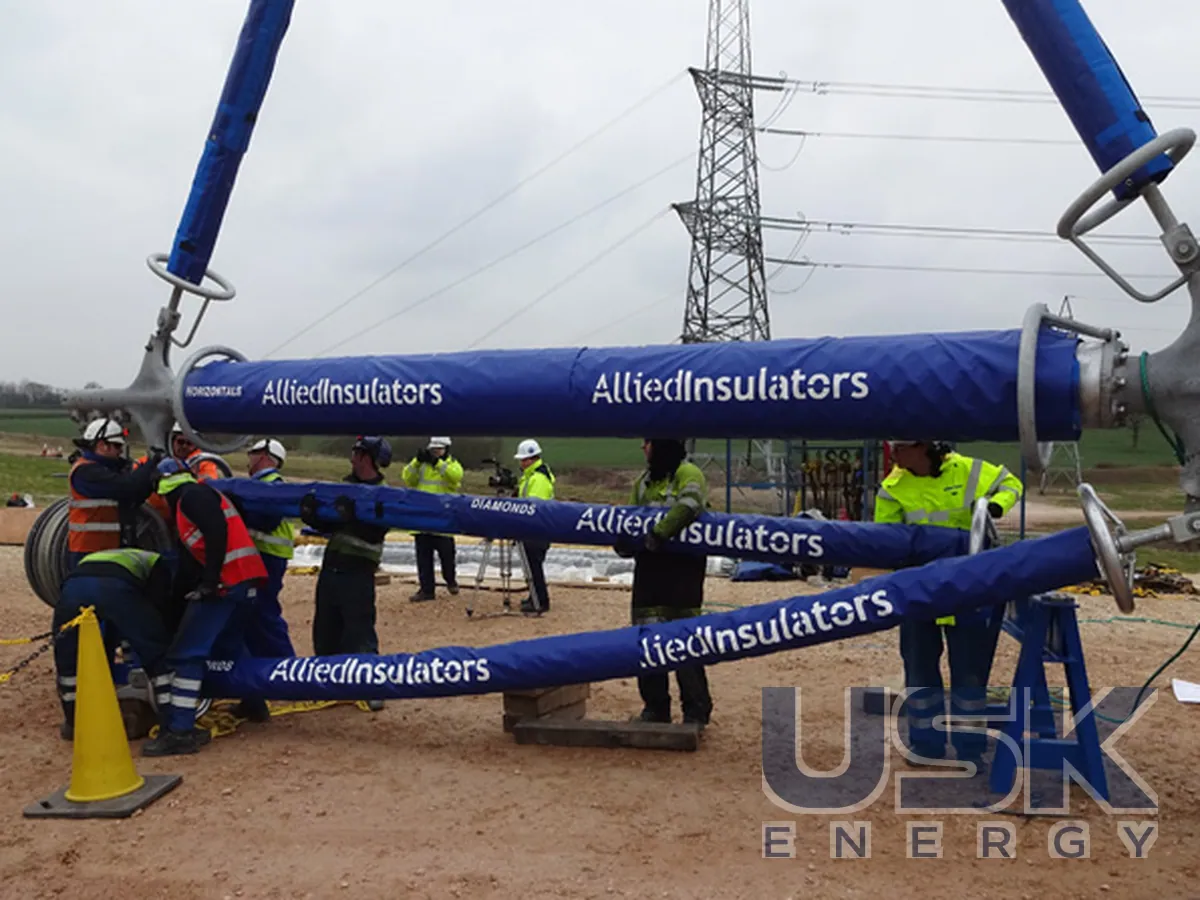
For the Danish Kassø–Frøslev 420 kV interconnector (Energinet, Eagle Pylon towers) the company, together with GD Powernet, designed and supplied V-shaped insulating structures of the crossarm type. For the National Grid 400 kV T-Pylon pilot project it made insulating diamonds and strings. The geometry there is non-standard and the mechanical loads are extreme, so new test equipment and methods were developed to verify resistance to combined loads in climatic and emergency conditions. Alongside the standard tests of individual insulators, the assembly was fully tested electrically for compliance with National Grid requirements. The insulators and fittings are made at the plant in Tunstall, Staffordshire.
Technical specifications
| Application | increasing clearance, raising the ampacity and voltage of overhead lines, compact and low-profile towers |
|---|---|
| Voltage class (references) | 132–420 kV |
| Scope of work | concept design, global modelling, FEM, design of cast components, manufacturing, testing, installation support |
Request a price and lead time
Composite insulating crossarms and V-shaped insulating structures for HV/EHV overhead lines. We reply within one business day.
Or email sales@usk.ua or call 044 339-50-20.
Customs codes
| UKTZED (Ukraine) | 8546 90 10 00 |
|---|---|
| HS, 6 digits | 8546 90 |
| CN (EU) | 8546 90 10 |
| HTSUS (USA) | 8546 90 00 00 |
| China customs tariff | 8546 90 00 00 |
Codes are for reference: the final code is determined at declaration for the specific model.
Questions and answers
What voltage did the company deliver composite crossarm projects for?
The references cover 132–420 kV lines, including the Kassø–Frøslev 420 kV interconnector in Denmark and the National Grid 400 kV T-Pylon pilot line.
What does replacing a metal crossarm with a composite one give on an existing line?
The conductor clearance to ground increases without replacing or extending towers. This allows the operating temperature and ampacity of the conductors to be raised, or the circuit voltage to be increased.
What tests do the crossarms undergo?
Individual insulators and assemblies undergo full-scale mechanical and electrical tests to national and international standards. For T-Pylon the assemblies were additionally tested for combined loads.
Similar equipment from other manufacturers