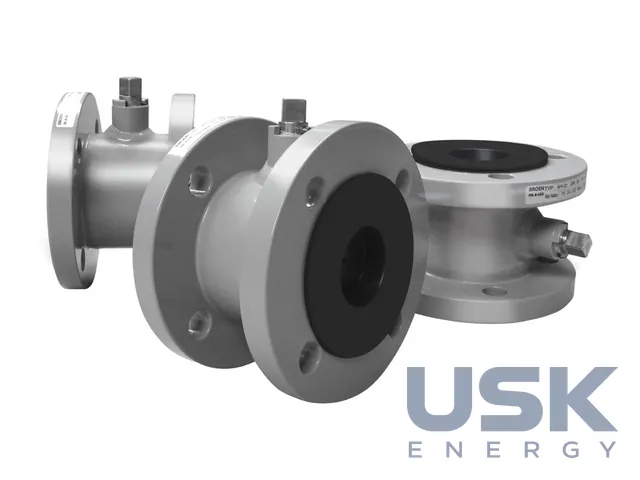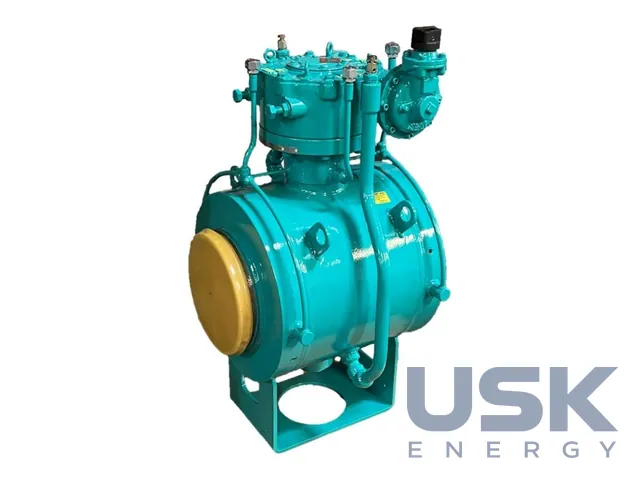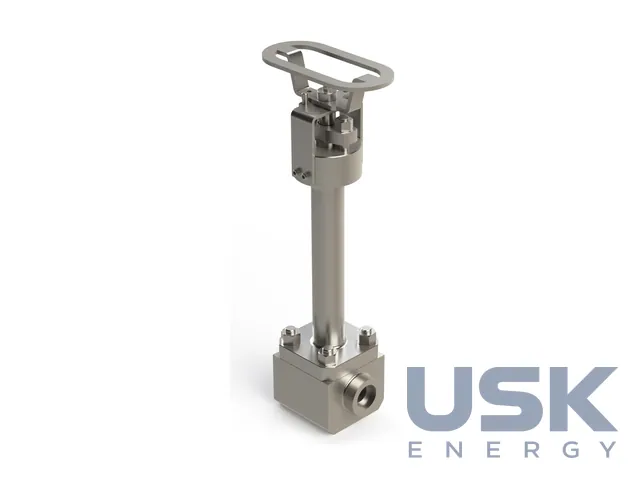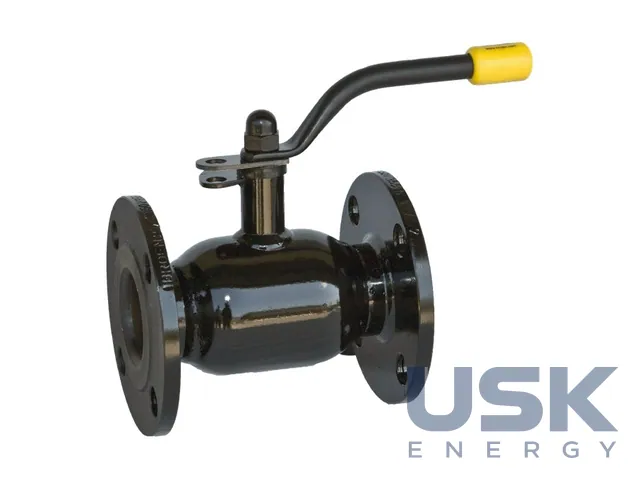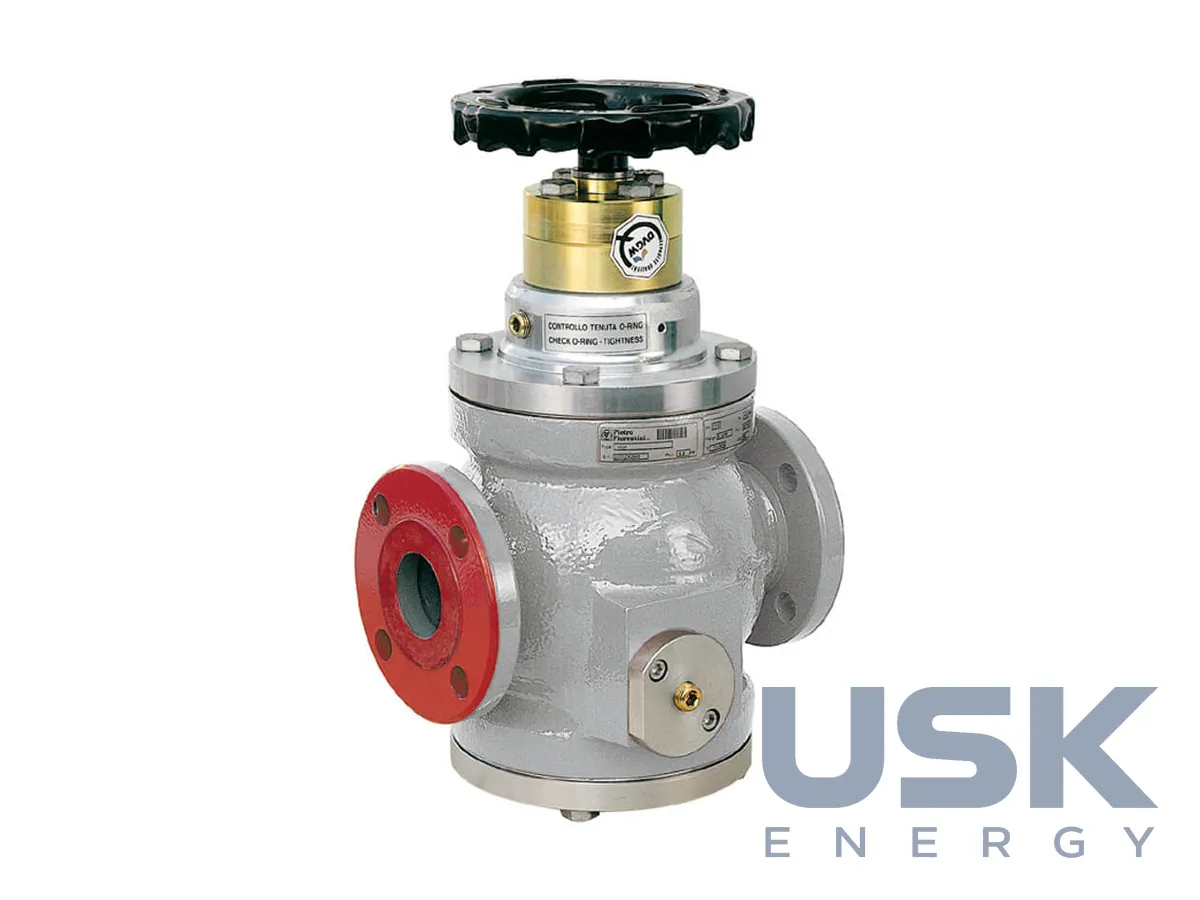
VLM — shut-off and throttling (bypass) gas valve, inlet up to 100 bar
Shut-off and throttling bypass gas valve with a balanced obturator and a top-entry body. Maximum inlet pressure up to 100 bar, sizes from DN 25 to DN 200. Installed on bypass lines of pressure reduction stations, GDS, compressor stations and LNG terminals.
- Type
- shut-off and throttling valve (bypass valve), balanced obturator, top entry
- Max. inlet pressure
- up to 100 bar
- Nominal sizes
- DN 25, 50, 80, 100, 150, 200
- Connections
- class 150/300/600 RF or RTJ (ANSI B16.5); PN 16 (EN 1092, ISO 7005)
Price, availability and lead time on request. We help with analogue selection, customs clearance and delivery.
Description
The manufacturer classes VLM as a bypass valve. It shuts off and manually throttles the gas flow in natural gas distribution plants and in gas supply networks of municipal and industrial consumers. The most typical use is the bypass lines of pressure reduction stations. While the main line is being serviced or repaired, the gas supply there has to be maintained by hand with a controlled pressure drop. The valve is also installed on the primary reduction line.
It is used at compressor stations, first-stage stations (GDS), power plants, gas liquefaction plants, marine LNG transport terminals, in heavy industry, at underground storage facilities and at regasification plants. Special versions are available for natural gas and hydrogen blends, and a hydrogen compatibility declaration has been issued for VLM.
The body has a top entry design with flanged connections. The seat carries a soft insert for better tightness, and the obturator is balanced, so it opens and closes more easily. A silencer, a safety shut-off valve or a second obturator installed in series with the main one can be built into the valve. The design is compact, the noise level is low, and maintenance is carried out without removing the body from the line. Throttling is done by hand, so the operator sets the pressure drop across the bypass personally.
Maximum inlet pressure is up to 100 bar. Nominal sizes are DN 25, 50, 80, 100, 150 and 200 (1″–8″). Connections are flanged, classes 150, 300 and 600 RF or RTJ per ANSI B16.5 and PN 16 per EN 1092 and ISO 7005. Ambient and gas temperature ranges from −20 to +60 °C. Tightness meets class VI per ANSI/FCI 70-2, and the product is certified under the PED 2014/68/EU directive.
For ANSI classes 600 and 300 the body is made of ASTM A352 LCB steel, and for class 150 and PN 16 of ASTM A216 WCB steel or GS 400-18 ductile iron per ISO 1083. The control assembly and obturator are made of nickel-plated ASTM A350 LF2 steel, the stem is AISI 416, the seat is nitrile rubber vulcanized onto a metal base, and the sealing rings are NBR.
Technical specifications
| Type | shut-off and throttling valve (bypass valve), balanced obturator, top entry |
|---|---|
| Max. inlet pressure | up to 100 bar |
| Nominal sizes | DN 25, 50, 80, 100, 150, 200 |
| Connections | class 150/300/600 RF or RTJ (ANSI B16.5); PN 16 (EN 1092, ISO 7005) |
| Temperature | from −20 to +60 °C |
| Materials | body: ASTM A352 LCB (600/300), ASTM A216 WCB or ductile iron GS 400-18 (150, PN 16); obturator: nickel-plated ASTM A350 LF2; seat: NBR on metal |
| Tightness | class VI per ANSI/FCI 70-2 |
| Certificates | PED 2014/68/EU |
| Options | built-in silencer, SSV, second obturator in series; versions for hydrogen blends |
Request a price and lead time
VLM — shut-off and throttling (bypass) gas valve, inlet up to 100 bar. We reply within one business day.
Or email sales@usk.ua or call 044 339-50-20.
Questions and answers
What are the maximum inlet pressure and the sizes of VLM?
Maximum inlet pressure is up to 100 bar. Nominal sizes are DN 25, 50, 80, 100, 150 and 200 (1″–8″).
What tightness class and which directives apply?
Tightness is class VI per ANSI/FCI 70-2, and the product is certified under PED 2014/68/EU.
Which lines is the valve intended for?
For bypass lines of pressure reduction stations, where the gas supply is throttled manually while the main line is under repair, and for primary reduction lines. Ambient and gas temperature ranges from −20 to +60 °C.
Similar equipment from other manufacturers