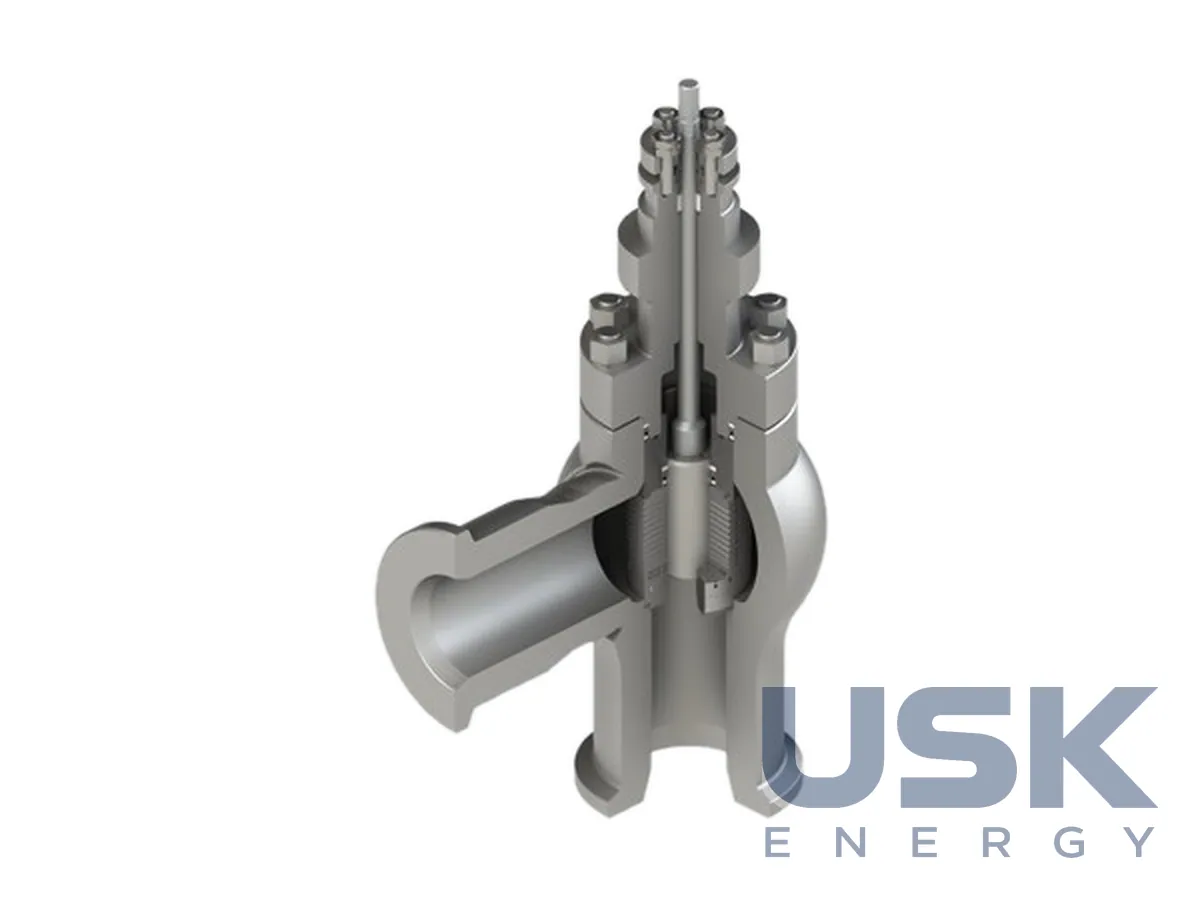
Choke — choke control valves for wellheads and high pressure drops, 1–24 inches, up to API 20k
Choke control valves for wellheads and high pressure drops, 1 to 24 inches, up to ANSI 4500, PN 420 and API 20k. Multi-stage and labyrinth trims, erosion-resistant tungsten carbide versions. They handle solids, cavitation, condensate and hydrate formation.
- DN
- 1–24″
- Pressure
- up to ANSI 4500, PN 420, API 20k
- Body
- angle, straight-through, axial; one- or two-piece bolted
- Trim
- plunger or cage; multi-stage, labyrinth, tungsten carbide, for slurries
Price, availability and lead time on request. We help with analogue selection, customs clearance and delivery.
Description
Choke valves are designed for the heaviest applications: high wellhead pressure, aggressive or erosive media, cavitating and noisy flows, and entrained solids. Flow velocity is controlled by multi-stage or labyrinth trims, which extends service life and gives accurate control. The company patented its own choke valve design as early as the 1970s.
The body is angle, straight-through or axial, in one or two bolted parts; the bonnet is standard or self-sealing. The trim is unbalanced or pressure-balanced, of plunger or cage type. Low-noise and anti-cavitation single- and multi-cage trims are available, as well as erosion-resistant trims of solid tungsten carbide (plunger and cage) and special trims for slurries. The characteristic is quick opening, linear or equal percentage, with an individual Cv curve on request, and the control range is good. The valves are suitable for throttling gas and liquid. Leakage class is up to V for a metal seat and VI for a soft seat.
The size range is 1 to 24 inches, with pressure up to ANSI 4500, PN 420 and API 20k. Materials cover carbon, low-temperature and low-alloy steels, austenitic stainless steels, duplex and super duplex steels, and nickel alloys. Connections are ANSI/DIN flanges (RF/RTJ), API 6A flanges and hub. Actuators are pneumatic, electric, hydraulic, electro-hydraulic or a manual gearbox.
The valves have passed fugitive emission testing to ISO 15848-1 and PR2 testing to API 6A, and have a SIL assessment to IEC 61508 with PFD values up to the SIL 3 range. The line also includes chemical injection valves with MicroGamma and Epsilon trims (straight-through or angle, with hub or autoclave connections) and valves for FPSO floating units.
In the gas industry, choke valves are installed at the wellhead of gas and gas condensate wells, on flowlines, on underground gas storage wells during gas withdrawal and injection, and at integrated gas treatment plants. They are needed wherever very high pressure must be reduced in the presence of sand, condensate and hydrate formation. Erosion-resistant solid tungsten carbide trims withstand the sand load in the flow.
Technical specifications
| DN | 1–24″ |
|---|---|
| Pressure | up to ANSI 4500, PN 420, API 20k |
| Body | angle, straight-through, axial; one- or two-piece bolted |
| Trim | plunger or cage; multi-stage, labyrinth, tungsten carbide, for slurries |
| Characteristic | quick opening, linear, equal percentage, individual Cv curve |
| Tightness | up to class V (metal), VI (soft) |
| Testing | ISO 15848-1; SIL (IEC 61508); PR2 to API 6A |
Request a price and lead time
Choke — choke control valves for wellheads and high pressure drops, 1–24 inches, up to API 20k. We reply within one business day.
Or email sales@usk.ua or call 044 339-50-20.
Questions and answers
What sizes and pressures do Choke valves cover?
From 1 to 24 inches, pressure up to ANSI 4500, PN 420 and API 20k.
Which trims are used against erosion and cavitation?
Low-noise and anti-cavitation single- and multi-cage trims, erosion-resistant solid tungsten carbide trims and special trims for slurries.
What testing has been done and what is the leakage class?
Fugitive emission testing to ISO 15848-1 and PR2 to API 6A, SIL assessment to IEC 61508 up to the SIL 3 range. Leakage class is up to V for a metal seat and VI for a soft seat.
Similar equipment from other manufacturers