KSTAR EMS, cloud management system for solar plants and storage systems (SCADA)
KSTAR EMS (Energy Management System) is an energy management system for solar plants and energy storage. It consists of upper-level SCADA, a local EMS controller and the KSTAR cloud. The system works 24/7 and supports peak and frequency regulation, peak/valley arbitrage and demand management.
- Composition
- upper-level software (SCADA), local EMS controller, KSTAR cloud
- Connected subsystems
- PV, BESS (BMS, PCS, HVAC, fire suppression), diesel generator, meters, DAQ
- Control modes
- peak and frequency regulation, peak/valley arbitrage, demand management
- Monitoring
- 24/7 in real time, alarm signals
Price, availability and lead time on request. We help with analogue selection, customs clearance and delivery.
USK ENERGY supplies KSTAR equipment as an official partner of the manufacturer. All KSTAR products
Description
The EMS (Energy Management System) from KSTAR combines three components, namely upper-level software (SCADA), a local EMS controller and the KSTAR cloud platform. The system controls all subsystems of the site from a single convenient operator interface.
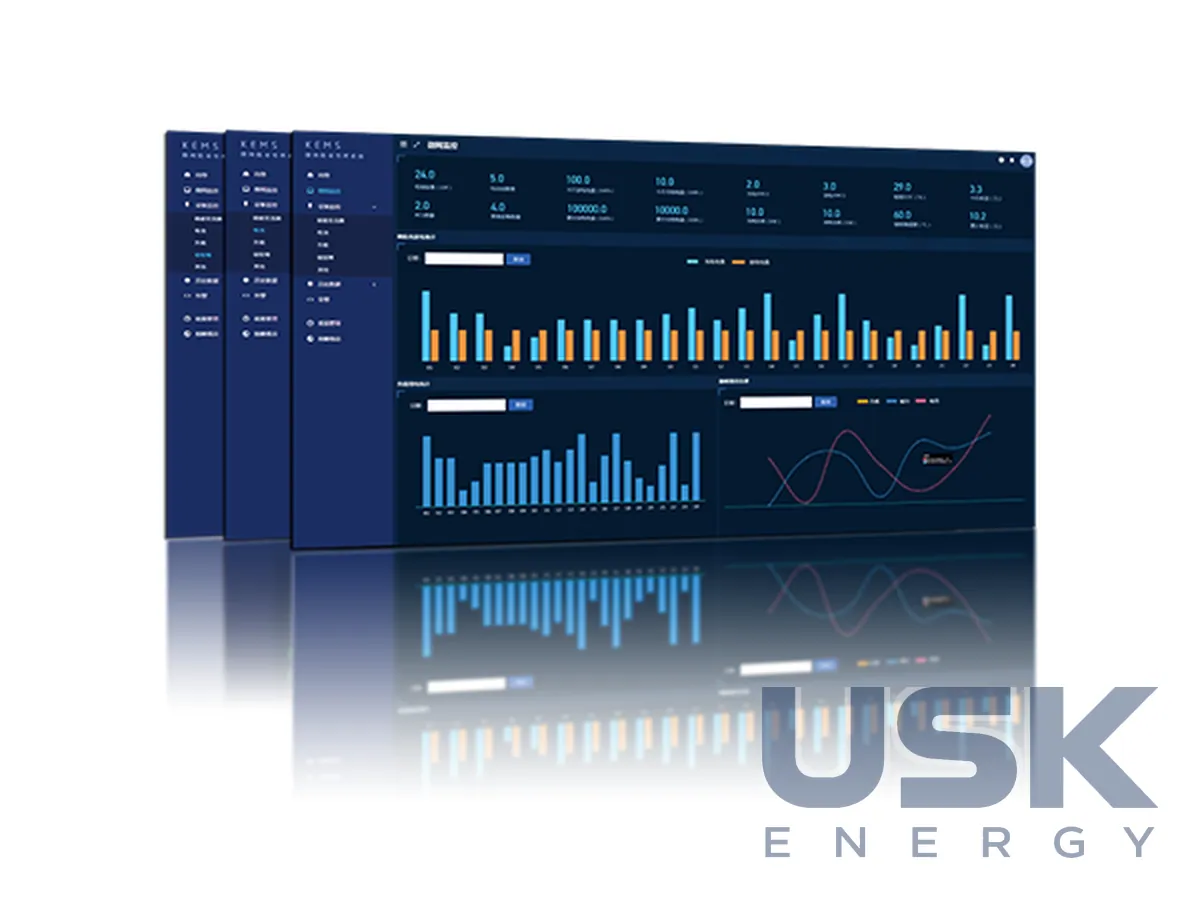
The EMS connects photovoltaic arrays with auxiliary equipment, namely meters, data acquisition (DAQ) and meteorological monitoring, the BESS energy storage system together with BMS, PCS, climate control and fire protection systems, and also a diesel generator. The local controller collects data in real time from the PCS, BMS and transformer monitoring devices. Data from the BMS is passed to the PCS. The processed values, that is, current readings, historical statistics, trends and alarm events, are shown on the screen and stored on a historical data server.
Control strategies are implemented for different scenarios. On the generation side, the EMS controls charging and discharging of the BESS or the output of other generation in order to smooth the output power. On the consumer side, the system controls the storage to shift the peak load. With tariffs that change during the day, it starts different charge and discharge modes, and the user gets arbitrage between peak and valley prices. There is also participation in peak and frequency regulation and demand management.
In grid-connected operation, the EMS executes commands from the dispatch center and takes into account data on SOC, SOH, the charge and discharge state and alarm signals. When a microgrid is connected to the grid, the system satisfies the load by increasing the charging power of the storage or reducing the generation output. In case of sudden load fluctuations in a microgrid with solar or wind generation, it applies emergency measures and returns the system to the safe range. If the EMS cannot control the battery, the PCS conducts charging and discharging on its own, keeping the SOC within reasonable limits.
Monitoring is carried out around the clock (24/7) in real time, and alarm signals are processed immediately. The data exchange structure has two levels. The local controller and on-site monitoring, and above them a remote browser, a mobile app and a northbound interface to the KSTAR cloud. Application: commercial and industrial energy storage, hybrid 'solar + storage + generator' plants and sites that need integration with dispatching and optimization of electricity costs.
Technical specifications
| Composition | upper-level software (SCADA), local EMS controller, KSTAR cloud |
|---|---|
| Connected subsystems | PV, BESS (BMS, PCS, HVAC, fire suppression), diesel generator, meters, DAQ |
| Control modes | peak and frequency regulation, peak/valley arbitrage, demand management |
| Monitoring | 24/7 in real time, alarm signals |
| Integration | accepts dispatch center commands |
Request a price and lead time
KSTAR EMS, cloud management system for solar plants and storage systems (SCADA). We reply within one business day.
Or email sales@usk.ua or call 044 339-50-20.
Questions and answers
What does the KSTAR EMS consist of?
Upper-level software (SCADA), a local EMS controller and the KSTAR cloud. Monitoring works 24/7.
Which subsystems can be connected to the EMS?
Photovoltaic arrays with meters, data acquisition and meteorological monitoring, a BESS with BMS, PCS, climate control and fire protection systems, and also a diesel generator.
Which control strategies are implemented?
Peak and frequency regulation, arbitrage between peak and valley tariffs, and demand management. The system also executes commands from the dispatch center.
Similar equipment from other manufacturers