PCS-9651 / PCS-9655 / PCS-9659 — automatic transfer, fast bus transfer and synchronising devices
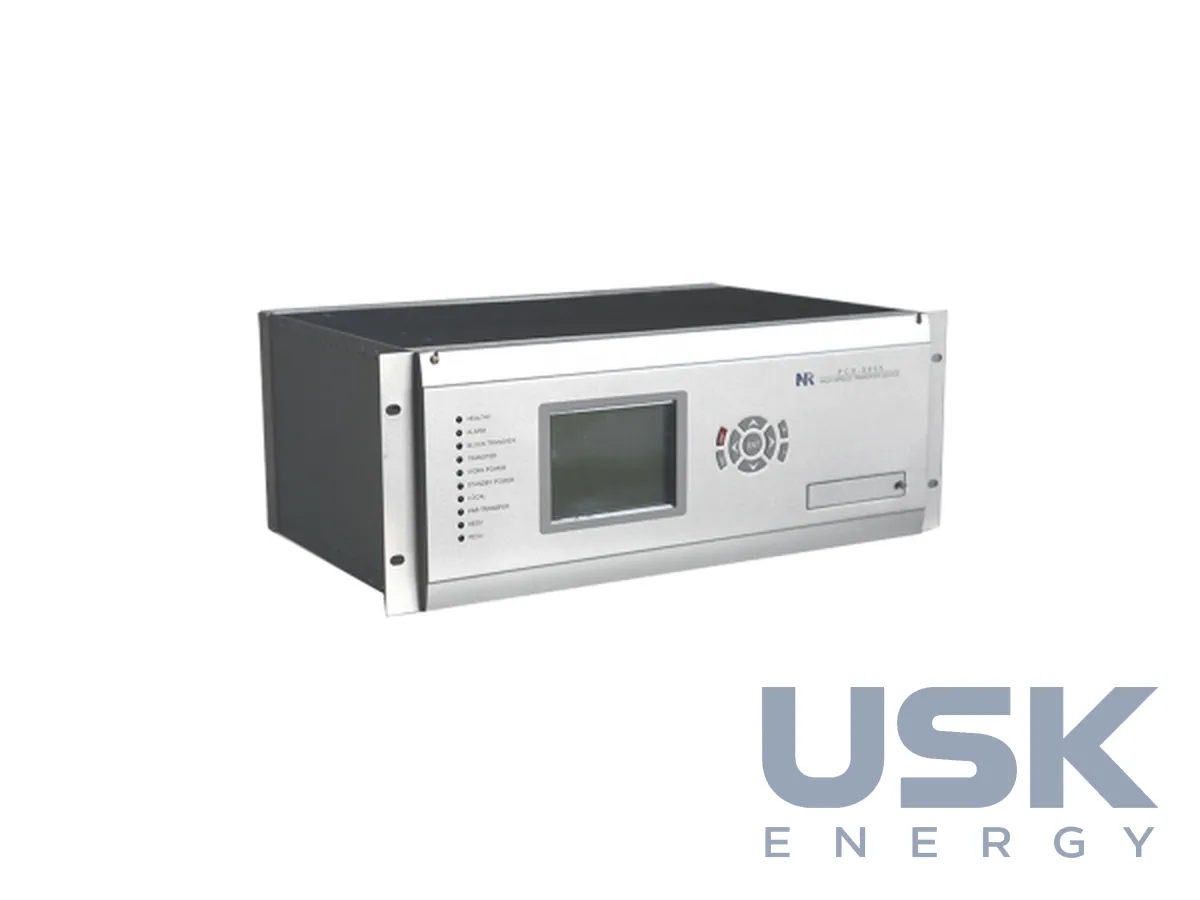
The NR PCS-9651, PCS-9655 and PCS-9659 group ensures continuity of power supply and correct connection of sources for parallel operation. It includes an automatic transfer device, a fast transfer device for auxiliary power sections and a digital synchroniser. The devices are used at thermal, hydro and nuclear power plants, substations and in industry.
- PCS-9651
- automatic transfer to standby, up to 4 typical transfer modes
- PCS-9655
- fast transfer of power plant auxiliary sections: normal, emergency, on loss of voltage, on spontaneous breaker trip, with load shedding on voltage
- PCS-9659
- digital synchroniser: automatic, semi-automatic and manual modes, pulses to frequency and voltage regulators
- Recording
- 64 oscillograms, 1024 SOE events
Price, availability and lead time on request. We help with analogue selection, customs clearance and delivery.
Description
All three devices are built on the manufacturer's terminal platform. They support IEC 61850 with separate interfaces for the station bus and process bus, IEC 61850-8-1 (MMS, GOOSE), IEC 61850-9-2 (SV) and IEC 60870-5-103. The recorder stores 64 oscillograms and 1024 SOE events for subsequent analysis of transfers. Time is synchronised via SNTP, IEEE 1588 v2, PPS and IRIG-B. Ethernet and RS-485 ports provide communication with the SCADA system, and the front RJ45 port is used for setting.
The PCS-9651 continuously monitors the load supply lines. If a fault occurs on the main incomer or voltage is lost, the device transfers the load to the standby source. Up to 4 typical transfer schemes are provided, and the abnormal condition is determined from voltage inputs and breaker auxiliary contacts. Analogue quantities come from conventional CTs and VTs or from electronic transformers via a merging unit. Local and remote breaker control, supervision of trip circuits and VT circuits and automatic compensation of voltage and current drift are provided. Terminals are either pluggable or screw type, and pluggable ones simplify commissioning and replacement. The device receives and sends GOOSE messages, so it fits easily into a digital substation scheme.
The PCS-9655 is installed at power plants where auxiliary sections supply large motors. After the working incomer trips, the motors keep rotating by inertia and generate a residual voltage that gradually decays. Closing the standby at the wrong moment causes a large inrush because of the difference between the residual busbar voltage and the standby source voltage, so the device selects the moment taking into account the differences in voltage, frequency and angle. The standby may be in hot or cold state. Manual (normal) transfer, emergency transfer, transfer on loss of busbar voltage and on spontaneous breaker trip, tripping of part of the load on voltage drop and protection during switching onto a fault are supported.
The PCS-9659 determines the moment of issuing the close command to the breaker when connecting a generator to the busbars or closing a line transit. The synchroniser monitors frequency, voltage and angle and generates correction pulses for the turbine speed governor and the generator excitation regulator. The operating modes are automatic, semi-automatic and manual, so the operator can perform synchronisation personally or only confirm the command of the device.
Technical specifications
| PCS-9651 | automatic transfer to standby, up to 4 typical transfer modes |
|---|---|
| PCS-9655 | fast transfer of power plant auxiliary sections: normal, emergency, on loss of voltage, on spontaneous breaker trip, with load shedding on voltage |
| PCS-9659 | digital synchroniser: automatic, semi-automatic and manual modes, pulses to frequency and voltage regulators |
| Recording | 64 oscillograms, 1024 SOE events |
| Protocols | IEC 61850-8-1 MMS/GOOSE, IEC 61850-9-2 SV, IEC 60870-5-103 |
| Time synchronisation | SNTP, IEEE 1588 v2, PPS, IRIG-B |
Request a price and lead time
PCS-9651 / PCS-9655 / PCS-9659 — automatic transfer, fast bus transfer and synchronising devices. We reply within one business day.
Or email sales@usk.ua or call 044 339-50-20.
Customs codes
| UKTZED (Ukraine) | 8537 10 98 00 |
|---|---|
| HS, 6 digits | 8537 10 |
| CN (EU) | 8537 10 98 |
| HTSUS (USA) | 8537 10 91 70 |
| China customs tariff | 8537 10 90 90 |
Codes are for reference: the final code is determined at declaration for the specific model.
Questions and answers
How many transfer schemes does the PCS-9651 support?
Up to 4 typical schemes of transfer from the main source to the standby. The abnormal condition is determined from voltage inputs and breaker auxiliary contacts.
How does the PCS-9655 differ from a conventional automatic transfer device?
The PCS-9655 takes into account the residual voltage of motors rotating by inertia and closes the standby taking into account the differences in voltage, frequency and angle. This makes the transfer of auxiliary sections fast and free of unacceptable current inrush.
Which modes does the PCS-9659 synchroniser have?
Automatic, semi-automatic and manual. The synchroniser issues correction pulses to the turbine speed and generator excitation regulators.
Similar equipment from other manufacturers