SRF612, SRF614 and SRF615 Wireless Transmitters for Temperature, Humidity and CO2
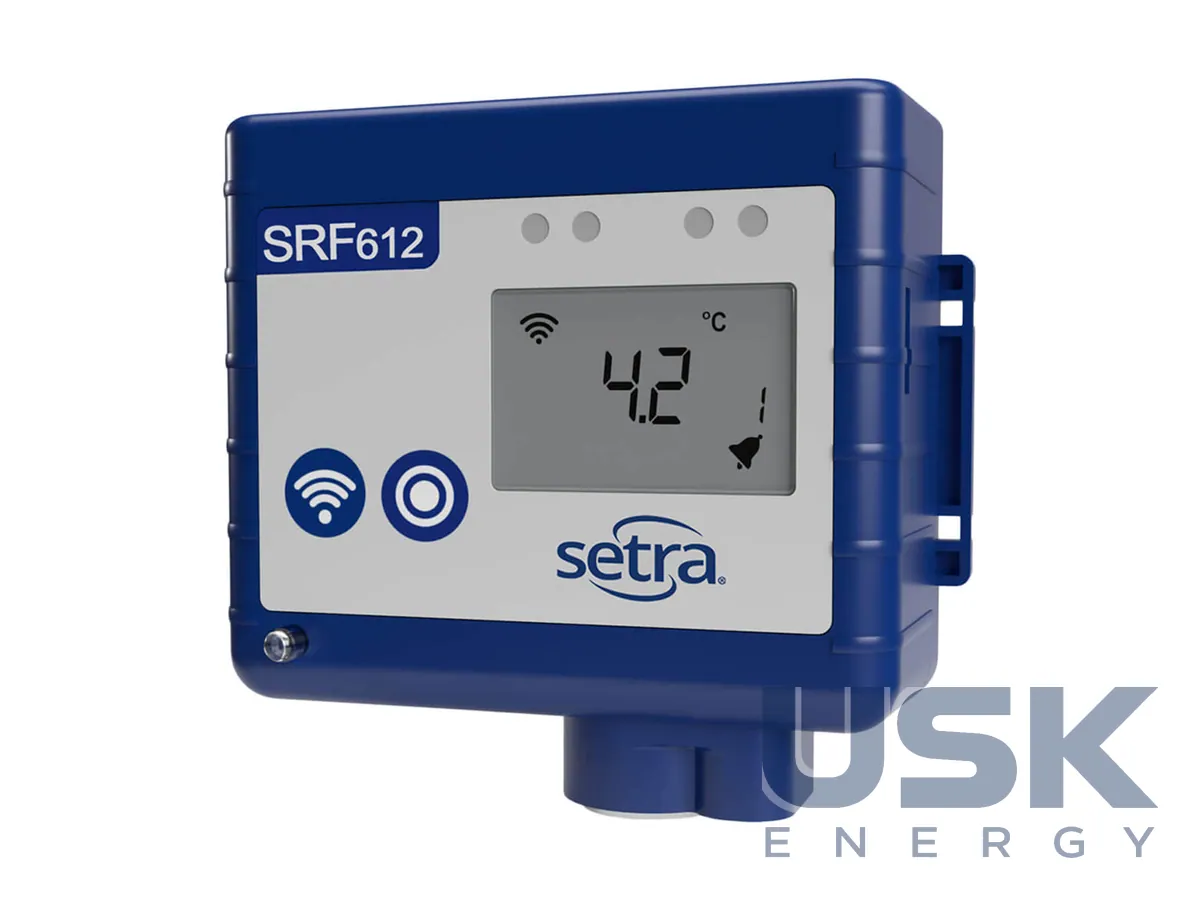
Wireless transmitters of the SRF600 series log temperature and humidity, plus CO2 and door openings. Readings reach a local gateway through Wi-Fi and then the continuous monitoring software, and each transmitter has its own light and sound alarm.
- Models
- SRF612, SRF614, SRF615
- Measured values
- temperature and humidity, plus CO2 and door status
- Communication
- Wi-Fi
- Local alarm
- light and sound
Price, availability and lead time on request. We help with analogue selection, customs clearance and delivery.
Description
Such transmitters are used where regulators set storage conditions for products and samples: compounding pharmacies, vaccine stores, research labs, blood and tissue banks, biopharmaceutical plants and medical device manufacturing. A hospital pharmacy can watch its refrigerators and freezers with the system, and cleanroom production areas can run it to meet FDA 21 CFR Part 11.
Every transmitter reaches a local gateway through Wi-Fi, and from there the data goes to cloud storage. Present and archived values can be viewed in the continuous monitoring software. The user assigns alarm thresholds to each measuring point, so products and samples remain within the defined conditions. Once a reading leaves its range, the transmitter gives a local light and sound signal, while the software sends remote alarms and text messages.
The series has three models. The SRF612 measures temperature inside refrigeration equipment and in the surrounding environment. The SRF614 is designed for ultra-low temperatures in freezers, cryogenic vessels and incubators. The SRF615 can be configured for user-defined parameters, most often temperature, humidity and CO2 inside incubators and cabinets. External probes and accessories can be connected. The PST air probe carries a thermistor on a 2.0 m cable, and a duplex version with two 2 m leads is available. A separate air probe covers ultra-low temperature freezers, and a type T adapter serves thermocouples. The SRF600 DR1 standard door sensor and a heavy-duty version record door events on refrigerators and freezers, and an SRF520 mains power unit can supply a transmitter.
Electronic records replace manual logs and paper checks. Records are kept in the system without transfer errors and meet the requirements of the Joint Commission, the FDA and the CDC. The system can be deployed for a single room or for a large site with many measuring points.
Technical specifications
| Models | SRF612, SRF614, SRF615 |
|---|---|
| Measured values | temperature and humidity, plus CO2 and door status |
| Communication | Wi-Fi |
| Local alarm | light and sound |
| Remote alarms | via monitoring software, text messages |
| SRF614 | ultra-low temperatures, cryogenic vessels |
| PST air probe | thermistor, 2.0 m cable |
| Door sensor | SRF600 DR1 |
| Mains power unit | SRF520 |
| Compliance | FDA 21 CFR Part 11 |
Part numbers
Show all part numbers (5)
SRF612, SRF614, SRF615, SRF600 DR1, SRF520
Request a price and lead time
SRF612, SRF614 and SRF615 Wireless Transmitters for Temperature, Humidity and CO2. We reply within one business day.
Or email sales@usk.ua or call 044 339-50-20.
Questions and answers
Which model should I choose for an ultra-low temperature freezer?
The SRF614 is intended for freezers, cryogenic vessels and incubators. A separate air probe for ultra-low readings is attached to it.
How does the transmitter alert staff when a limit is exceeded?
On site, the transmitter gives a light and sound signal. Remote alarms and text messages are sent by the monitoring software.
Can CO2 be monitored in an incubator?
Yes. The SRF615 can be configured for temperature, humidity and CO2, and it works inside incubators and other equipment.
Similar equipment from other manufacturers