Flanged Circulation Heater with Baffles, 3 to 8 Inch, Sheath up to 870 °C
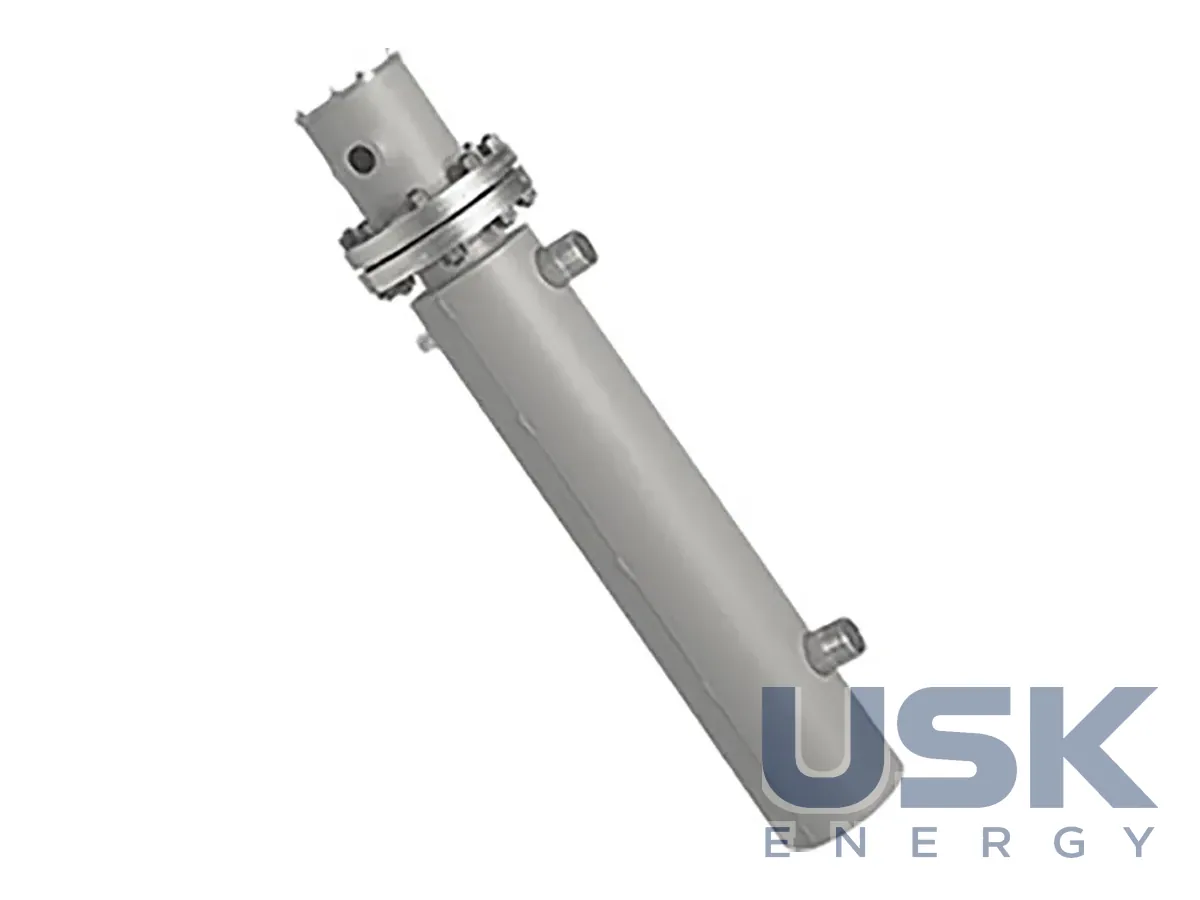
This circulation heater assembly uses an ANSI flanged heating block of 3 to 8 inches and a vessel with internal baffles. It heats air, gases and liquids in forced circulation, can be installed in line or on a bypass, and is built to ASME VIII Div. 1 with PED certification.
- Type
- circulation heater with ANSI flanged heating block
- Flange size
- 3 to 8 inch
- Internal baffles
- yes
- Medium
- air, gases, liquids in forced circulation
Price, availability and lead time on request. We help with analogue selection, customs clearance and delivery.
Description
The heater electrically heats process media flowing through a system, including air, inert and process gases, water, oils and other liquids. It is used in chemical, oil and gas and power plants where the medium is pumped or blown through and has to be warmed before it enters the process.
The unit is supplied as a complete assembly that includes the heating elements, a pressure vessel, thermal insulation, a terminal box, mounting brackets and inlet and outlet connections. The heating block is an ANSI flange joined to the vessel. Inside the vessel, baffles direct the medium past the WATROD or FIREBAR tubular elements, which gives a fast response and an even distribution of heat. It can be installed in the line or on a branch.
The maximum sheath temperature depends on the sheath material. For 316 stainless steel it is 650 °C (1200 °F), for Alloy 800/400 it reaches 870 °C (1600 °F), and for steel sheaths it is 400 °C (750 °F). The maximum surface watt density is 18.6 W/cm² (120 W/in²). Sheaths are also available in Alloy 600 and titanium.
Each heater is built to order. The buyer selects the sheath material, power, size and vessel material, which is either carbon steel or 316 stainless steel, along with a pressure class up to ANSI Class 600 after application review, the terminal box type and the control system. The supply is three-phase AC at 50 or 60 Hz. Temperature is sensed with three-wire RTDs, and a duplex Type K thermocouple is available as an option. The vessel is designed to ASME VIII Div. 1 and has PED certification. For hazardous areas, terminal boxes are available with Ex d IIC protection to ATEX and IEC, or Class 1, Div. 1 and 2, Groups B, C, D, with temperature class T2, T3 or T4. When ordering, state the medium, inlet temperature, working pressure and flow rate, since these decide the power and materials.
Technical specifications
| Type | circulation heater with ANSI flanged heating block |
|---|---|
| Flange size | 3 to 8 inch |
| Internal baffles | yes |
| Medium | air, gases, liquids in forced circulation |
| Heating elements | WATROD or FIREBAR |
| 316 stainless steel sheath | up to 650 °C (1200 °F) |
| Alloy 800/400 sheath | up to 870 °C (1600 °F) |
| Steel sheath | up to 400 °C (750 °F) |
| Maximum watt density | 18.6 W/cm² (120 W/in²) |
| Sheath materials | 316 SS, Alloy 800, Alloy 600, titanium, steel |
| Vessel materials | carbon steel, 316 stainless steel |
| Pressure class | up to ANSI Class 600 (after application review) |
| Power supply | 3-phase AC, 50 or 60 Hz |
| Sensors | 3-wire RTDs; duplex Type K thermocouple optional |
| Compliance | ASME VIII Div. 1, Directive 2014/68/EU (PED) |
| Explosion protection | ATEX/IEC Ex d IIC; Class 1, Div. 1 and 2, Groups B, C, D |
Request a price and lead time
Flanged Circulation Heater with Baffles, 3 to 8 Inch, Sheath up to 870 °C. We reply within one business day.
Or email sales@usk.ua or call 044 339-50-20.
Questions and answers
Which media can the heater warm?
Air, gases and liquids in forced circulation. Vessel and sheath materials are selected for the specific medium.
What is the maximum sheath temperature?
Up to 650 °C for 316 stainless steel, up to 870 °C for Alloy 800/400 and up to 400 °C for a steel sheath.
Can the heater be used in hazardous areas?
Yes, terminal boxes are available with Ex d IIC protection to ATEX and IEC, or Class 1, Div. 1 and 2, with temperature class T2, T3 or T4.
Similar equipment from other manufacturers