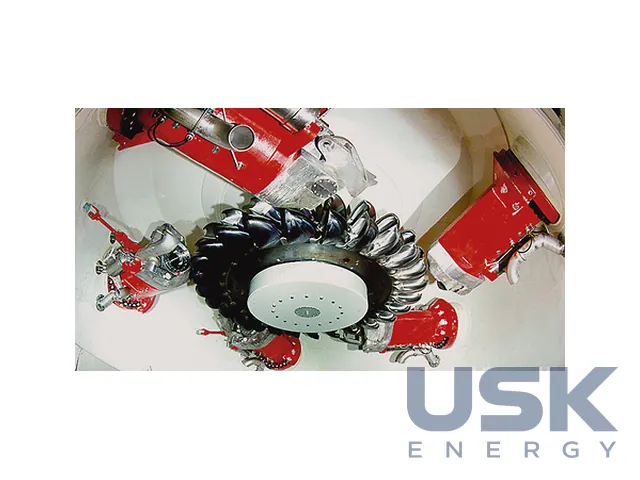
Hybrid and dual electric servomotors for turbine wicket gates
Wicket gate drives for hydro turbines that replace the oil pressure unit. The hybrid servomotor has a built-in bidirectional pump, the dual electric one works on two synchronous electric servomotors. For new units and modernisation of hydro plants.
- Hybrid servomotor
- hydraulic cylinder directly driven by a reversible pump, no oil pressure unit
- Dual electric servomotor
- two synchronously controlled electric servomotors
- Equipment eliminated
- oil pumps, pressure tanks, receivers, compressors, pipelines
- Deliveries
- Tsukabaru plant (Kyushu Electric), Senju plant (JR East)
Price, availability and lead time on request. We help with analogue selection, customs clearance and delivery.
Description
The manufacturer has developed wicket gate drives for hydro turbines that make it possible to do without the classic oil pressure unit (OPU). This is one of the company's eco-friendly directions, applied both on new units and in modernisation of existing hydro plants.
In the hybrid servomotor the hydraulic cylinder is driven directly by a bidirectional pump built into the drive. Therefore a centralised pressurised oil supply system, a pressure tank, an air receiver, compressors and extended oil piping are not needed, and space is freed in the machine hall. The high-pressure design reduces the oil volume needed to control the unit and lowers the environmental risk of leaks.
Electric servomotors increasingly replace hydraulic ones for opening and closing the wicket gate vanes. Oil pumps, tanks, compressors and pipelines disappear, and the maintenance volume is reduced. The scope of electrification is limited by the force of a single electric servomotor, so the manufacturer created a scheme in which two electric servomotors work synchronously. This made it possible to convert to electric drive turbines of a power that previously could not be electrified.
Dual electric servomotors have been supplied to the Tsukabaru plant (Kyushu Electric) and the Senju plant (East Japan Railway Company). For new hydro units and reconstruction of hydro plants without an OPU, such drives are combined with water-lubricated bearings and air cooling of the generator.
The choice between the hybrid and dual electric version depends on the turbine rating and the plant's requirements for machine hall equipment. For the plant this means fewer places where oil may appear and less equipment to be tested and maintained. The drives meet the demand for better controllability and lower environmental harm. In the hybrid drive the pump and the hydraulic cylinder form one unit, and in the electric one there is no oil in the drive, so there is no risk of its leakage. Giving up the OPU is a decision taken at the design or reconstruction stage, because it affects other systems of the unit, including generator cooling and bearings. Both options reduce the number of auxiliary systems around the wicket gate, simplify operation and lower the environmental load compared with classic hydraulics.
Technical specifications
| Hybrid servomotor | hydraulic cylinder directly driven by a reversible pump, no oil pressure unit |
|---|---|
| Dual electric servomotor | two synchronously controlled electric servomotors |
| Equipment eliminated | oil pumps, pressure tanks, receivers, compressors, pipelines |
| Deliveries | Tsukabaru plant (Kyushu Electric), Senju plant (JR East) |
Request a price and lead time
Hybrid and dual electric servomotors for turbine wicket gates. We reply within one business day.
Or email sales@usk.ua or call 044 339-50-20.
Questions and answers
What equipment is not needed with the hybrid servomotor?
A centralised pressurised oil supply system, a pressure tank, an air receiver, compressors and extended oil piping.
Why use a dual electric servomotor?
A single electric servomotor is limited in force. Two synchronously controlled servomotors make it possible to electrify turbines of a power that previously could not be electrified.
At which plants are dual electric servomotors installed?
At the Tsukabaru plant (Kyushu Electric) and the Senju plant (East Japan Railway Company).
Similar equipment from other manufacturers