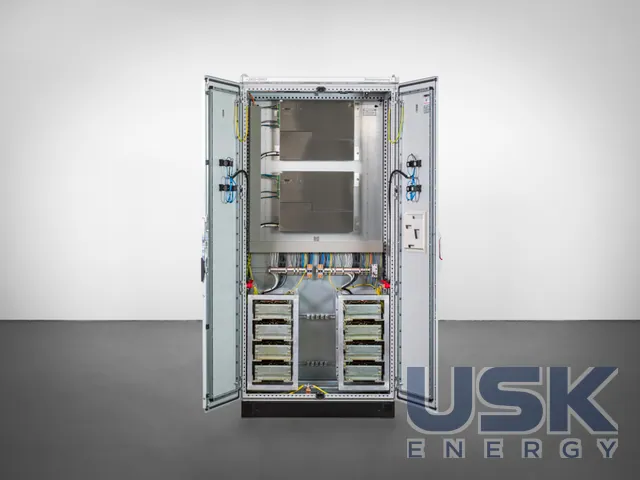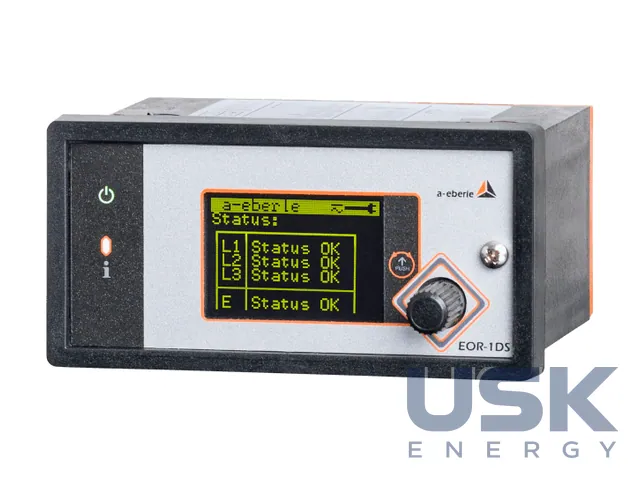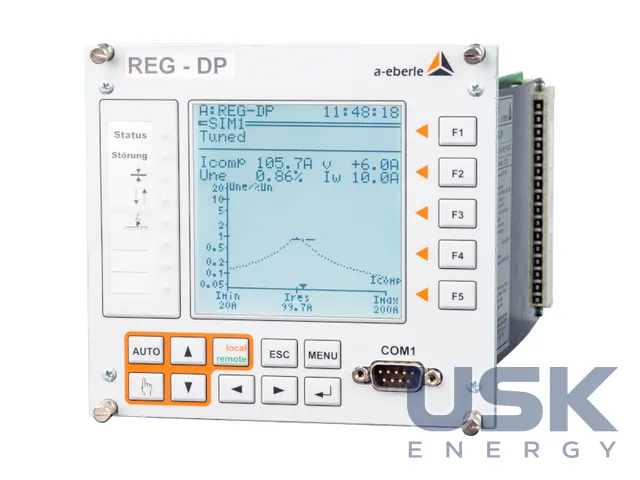
SPR10 — current-transformer-powered feeder protection relay
SPR10 is a digital protection relay powered directly from current transformers, without an external auxiliary supply. The relay draws energy from standard CTs with a rated secondary current of 1 A or 5 A. It is intended for radial networks and protects feeders and power transformers.
- Supply
- from standard 1 A or 5 A CTs, no auxiliary supply; optional dual supply
- Application
- feeders and power transformers of radial networks
- Functions
- overcurrent, zero-sequence protection (including calculated 50N)
- Io inputs
- 2, can be included in or excluded from the supply circuit
Price, availability and lead time on request. We help with analogue selection, customs clearance and delivery.
Description
The SPR10 digital relay works without external auxiliary voltage, unlike relays with a separate auxiliary supply, so it is installed at remote facilities with no auxiliary power sources. It takes energy from standard CTs with a rated secondary current of 1 A or 5 A. The relay is designed for radial networks, where it protects feeders and power transformers and also provides earth fault protection based on zero-sequence current.
In solidly earthed neutral networks the protection is applied on feeders of any length. In networks with an isolated neutral or a neutral earthed through a reactor or resistor, it is limited to short feeders, to exclude false operation caused by capacitive current during external earth faults. Calculated zero-sequence protection (50N) is available. There are two zero-sequence current inputs, and each can be included in or excluded from the supply circuit.
The main properties of the CT-powered version are as follows. No auxiliary voltage is required, and independence from the UPS reduces the vulnerability of the system. The absence of external supply circuits gives high immunity to electromagnetic interference. The relay operates quickly, including when the breaker is closed onto a fault. A version with dual supply, from CTs and from an auxiliary source, is optionally available. The design is compact. The specification lists overcurrent and zero-sequence protection, including calculated 50N. Independence from the UPS means that loss of auxiliary supply at the facility does not take the protection out of service. The choice of whether to include the zero-sequence current in the supply circuit is made separately for each of the two Io inputs.
A front USB port is used for local communication with ThyVisor software. A pulse output is provided for an external trip indicator (flag). Bistable LCD flags that keep the indication without power are optionally installed: no flags, 1 flag or 3 flags in red and black. The relay is installed in RMU ring main units and packaged transformer substations of distribution networks, on step-up transformers of solar and wind plants and at remote sectionalizing points without storage batteries.
Technical specifications
| Supply | from standard 1 A or 5 A CTs, no auxiliary supply; optional dual supply |
|---|---|
| Application | feeders and power transformers of radial networks |
| Functions | overcurrent, zero-sequence protection (including calculated 50N) |
| Io inputs | 2, can be included in or excluded from the supply circuit |
| Indication | pulse output to an external flag; bistable LCD flags (0, 1 or 3) |
| Communication | front USB (ThyVisor) |
Request a price and lead time
SPR10 — current-transformer-powered feeder protection relay. We reply within one business day.
Or email sales@usk.ua or call 044 339-50-20.
Questions and answers
What powers the SPR10 relay?
It is powered directly from standard CTs with a rated secondary current of 1 A or 5 A, and no external auxiliary source is needed. A dual-supply version is optionally available.
What trip indication options does SPR10 have?
A pulse output for an external indicator and optional bistable LCD flags that keep the indication without power. Configurations are without flags, with 1 flag or with 3 flags in red and black.
On which feeders does SPR10 protect against earth faults?
In solidly earthed neutral networks on feeders of any length, and in networks with an isolated neutral or a neutral through a reactor or resistor only on short ones.
Similar equipment from other manufacturers