PCS-921 / PCS-924 / PCS-9830 — breaker protection and control terminals
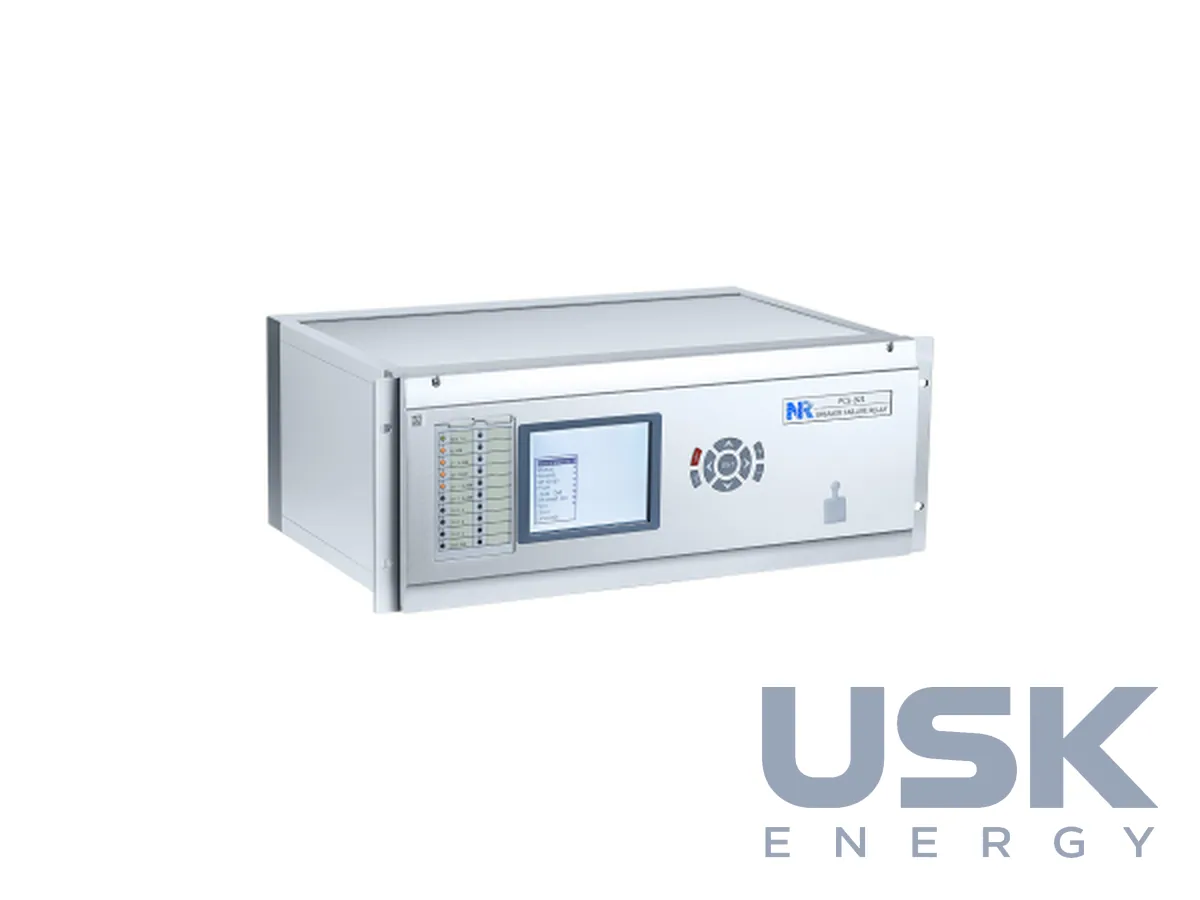
The NR PCS-921, PCS-924 and PCS-9830 group protects and serves the circuit breaker and the adjacent busbar sections at 110–750 kV substations. The PCS-921 performs breaker failure protection and associated breaker protections, the PCS-924 protects the T-zone in one-and-a-half breaker and polygon schemes, and the PCS-9830 closes and opens each phase at a set point on the voltage wave. The devices are also used in power plant switchgear.
- PCS-921 / 921S
- breaker failure protection (50BF), open-phase protection (62PD), dead zone protection (50DZ), overcurrent protection, zero-sequence overcurrent protection, voltage and frequency protection, auto-reclosing (79), synchro-check (25)
- PCS-924 / 924S
- T-zone (stub) differential protection in one-and-a-half breaker schemes and polygons, 3 CT groups
- PCS-9830
- controlled switching device: closing/opening at a set phase of the sine wave
- Breakers
- with single-pole or three-pole operating mechanisms, all voltage classes
Price, availability and lead time on request. We help with analogue selection, customs clearance and delivery.
Description
The PCS-921 and the new-generation PCS-921S are designed for breakers with single-pole and three-pole operating mechanisms at all voltage classes. They perform breaker failure protection (50BF), open-phase protection (62PD), dead zone protection between the current transformer and the breaker (50DZ), stepped overcurrent protections of phase, negative-sequence and earth currents, and voltage and frequency protections. Single- and three-phase auto-reclosing (79) works with synchro-check (25). Programmable logic, configurable inputs and outputs and three-colour LEDs adapt the terminal to a specific scheme, and frequency tracking reduces the measurement error when the frequency deviates.
The PCS-924 and PCS-924S protect the so-called T-zone, i.e. the section between two breakers and the outgoing line or transformer in a one-and-a-half breaker or polygon scheme. The terminal has three groups of current inputs for connection to three sets of CTs and switches automatically between three-end and two-end differential protection depending on the position of the line disconnector. When the disconnector is open, two-stage feeder end protection (50FLE) is activated. It clears faults between the CT and the disconnector while the breakers of the bay remain in service. Overcurrent protection on the sum of the currents of two CTs is used for energising the circuit and as backup.
The PCS-9830 is a controlled (synchronised) switching device. It issues close and open commands to each phase of the breaker at a set moment relative to the voltage wave. This reduces inrush currents and overvoltages when switching capacitor banks, reactors, transformers and lines, and extends breaker service life. The device corrects the command timing using current and voltage feedback, control circuit voltage, ambient temperature at the operating mechanism and idle time, and automatically calibrates current zero drift. It stores 1024 records each of operations, self-supervision and binary signal changes, and the enclosure is fully sealed and vibration resistant.
The terminals support IEC 61850-8-1 (MMS, GOOSE) and IEC 61850-9-2 (SV), IEC 60870-5-103, DNP3.0 and Modbus, and IRIG-B, SNTP, PPS and IEEE 1588 synchronisation. The S models have PRP/HSR redundancy, extended recording with COMTRADE oscillograms and 1024 events, and breaker condition monitoring. The front RJ45 port is used for testing and setting during commissioning and maintenance.
Technical specifications
| PCS-921 / 921S | breaker failure protection (50BF), open-phase protection (62PD), dead zone protection (50DZ), overcurrent protection, zero-sequence overcurrent protection, voltage and frequency protection, auto-reclosing (79), synchro-check (25) |
|---|---|
| PCS-924 / 924S | T-zone (stub) differential protection in one-and-a-half breaker schemes and polygons, 3 CT groups |
| PCS-9830 | controlled switching device: closing/opening at a set phase of the sine wave |
| Breakers | with single-pole or three-pole operating mechanisms, all voltage classes |
| Protocols | IEC 61850-8-1, IEC 61850-9-2, IEC 60870-5-103, DNP3.0, Modbus; PRP/HSR (S series) |
| Recording | 64 COMTRADE oscillograms, 1024 events (S series) |
Request a price and lead time
PCS-921 / PCS-924 / PCS-9830 — breaker protection and control terminals. We reply within one business day.
Or email sales@usk.ua or call 044 339-50-20.
Customs codes
| UKTZED (Ukraine) | 8537 10 98 00 |
|---|---|
| HS, 6 digits | 8537 10 |
| CN (EU) | 8537 10 98 |
| HTSUS (USA) | 8537 10 91 70 |
| China customs tariff | 8537 10 90 90 |
Codes are for reference: the final code is determined at declaration for the specific model.
Questions and answers
Which breakers is the PCS-921 designed for?
For breakers with single-pole or three-pole operating mechanisms at all voltage classes. The terminal performs breaker failure protection (50BF), open-phase protection (62PD), dead zone protection (50DZ) and auto-reclosing with synchro-check.
What does the PCS-924 protect in a one-and-a-half breaker scheme?
The T-zone between two breakers and the outgoing line or transformer. The terminal has 3 groups of current inputs and switches between three-end and two-end differential protection according to the line disconnector position.
Why is the PCS-9830 controlled switching needed?
The device closes and opens each phase of the breaker at a set point of the voltage wave. This reduces inrush currents and overvoltages when switching capacitor banks, reactors, transformers and lines.
Similar equipment from other manufacturers