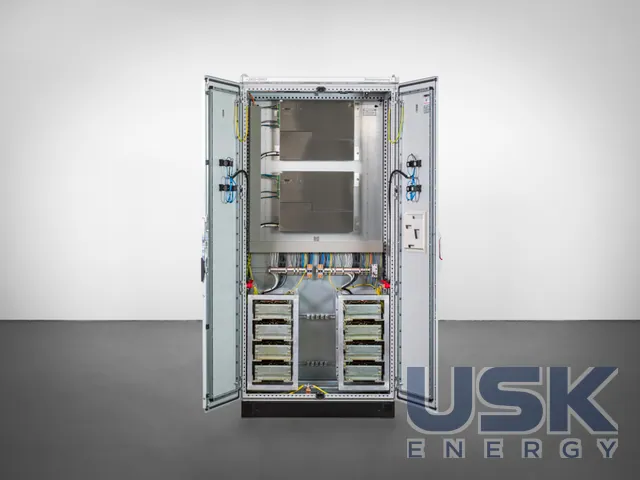
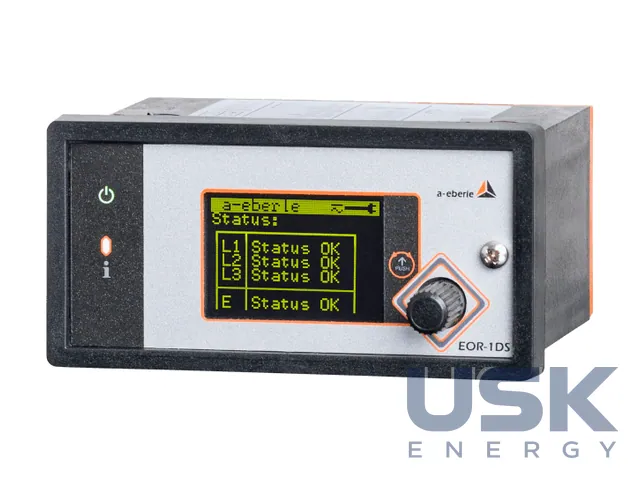
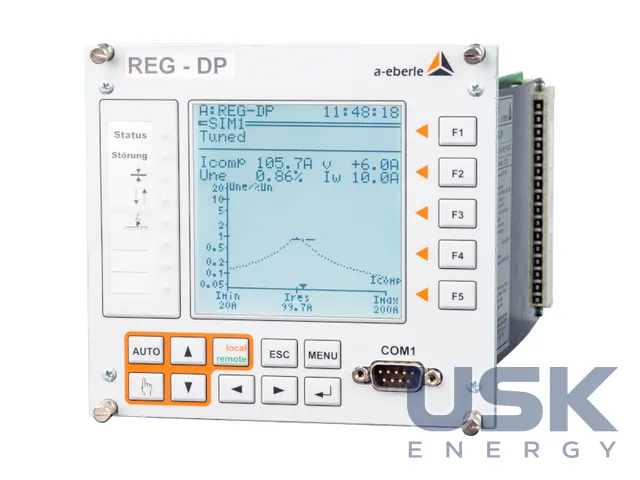
iBU (BCU, BMU) — bay controllers and disturbance recorders
The iBU family combines BCU bay controllers and BMU monitoring units for substation automation systems. BCU controls and supervises the power equipment of the bay, and BMU records electrical parameters and protection behavior during transients. BMU is certified by Terna.
- Versions
- iBU 4U, iBU 6U with LCD (BCU), BMU-op (recorder)
- Design
- 19″ cassette, redundant power supply, modular boards
- BMU
- recording per Annex A.7 of the Terna grid code, certified by Terna
- Record format
- COMTRADE (IEEE C37.111-2013), names per IEEE C37.232
Price, availability and lead time on request. We help with analogue selection, customs clearance and delivery.
Description
The BCU bay controller performs control according to commands arriving from the control network to the equipment, and supervision of the power equipment of the bay. An electrical substation consists of primary and auxiliary circuits, and BCU combines all auxiliary functions of the bay in one device, namely collection of position signals, control of switching devices, operational interlocking and data transmission to the upper-level system. The controllers are produced in iBU 4U and iBU 6U versions with an LCD. The iBU 4U and iBU 6U versions differ in the height of the cassette, and both have an LCD. This brings two substation automation tasks together in one family, bay control and analysis of fault events.
The BMU monitoring unit (BMU-op) is responsible for monitoring and recording electrical parameters and the behavior of protection devices during transients. The oscillographic records comply with Annex A.7 of the grid code of the Italian operator Terna, so the requirements of the system operator are fully met. BMU is certified by Terna and works both at private substations and at Terna substations within SAS and DIGIS systems.
Like BCU, BMU belongs to the iBU family and is housed in a 19-inch cassette with redundant power supplies and modular boards. The device is connected to the station LAN, which serves as the channel for transmitting records to the operator's central control systems. Redundant power supplies are needed so that the recorder does not miss events when one of them fails. Records are transmitted in COMTRADE format (IEEE C37.111-2013), and the naming conventions of IEEE C37.232 are used for their storage and transmission to the system operator's central control systems. Such records provide material for fault analysis and for checking the operation of protections.
The recorder is needed at 132–380 kV substations of transmission networks and at power evacuation substations of power plants and renewables, where recording of disturbances is required by the system operator. BCU remains the bay control device while BMU performs recording, so on one bay they work as a pair.
Technical specifications
| Versions | iBU 4U, iBU 6U with LCD (BCU), BMU-op (recorder) |
|---|---|
| Design | 19″ cassette, redundant power supply, modular boards |
| BMU | recording per Annex A.7 of the Terna grid code, certified by Terna |
| Record format | COMTRADE (IEEE C37.111-2013), names per IEEE C37.232 |
| Communication | station LAN |
Request a price and lead time
iBU (BCU, BMU) — bay controllers and disturbance recorders. We reply within one business day.
Or email sales@usk.ua or call 044 339-50-20.
Questions and answers
Which BCU versions are available in the iBU family?
iBU 4U and iBU 6U with an LCD.
In which format does BMU transmit records?
In COMTRADE format (IEEE C37.111-2013) with IEEE C37.232 naming conventions, via the station LAN.
Does BMU meet the requirements of the operator Terna?
The oscillographic records comply with Annex A.7 of the Terna grid code, and BMU itself is certified by Terna.
Similar equipment from other manufacturers