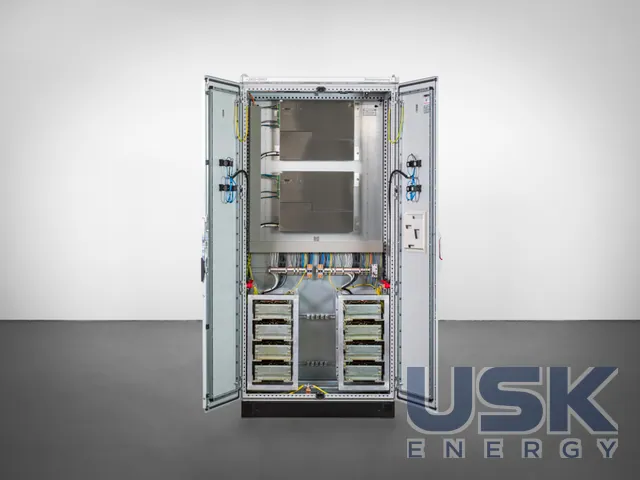
EMS/SCADA and distribution automation systems (DAS)
The manufacturer supplies hardware and software complexes for power system dispatch control, namely EMS, SCADA and DAS distribution automation systems. The complexes are built as geographically distributed open systems with mutual backup of the centres. They cover grid control from operating mode planning to operational dispatch control.
- Composition
- EMS, SCADA, distribution automation systems (DAS)
- Architecture
- geographically distributed open system with mutual backup of the centres
- Related solutions
- DERMS, multi-area EMS, demand and balance management, microgrids, control systems for large energy storage
Price, availability and lead time on request. We help with analogue selection, customs clearance and delivery.
Description
The complex consists of three systems of different levels. The EMS (Energy Management System) runs the grid from operating mode planning to operational control. It combines computing hardware, software and a carefully elaborated architecture, and the control of the transmission grid relies on it. SCADA collects data from facilities and performs supervisory control tuned to a specific grid so that the power supply remains stable. DAS monitors and controls extensive distribution networks in real time, which improves the quality of service to consumers. Together the three systems cover both HV transmission grids and MV distribution networks.
The architecture is geographically distributed and open. Network technologies allow computing facilities and operation centres to be placed at different sites. The centres back each other up, so when one node is taken out of service its functions are taken over by another, and operation can be flexibly redistributed between the centres. For a utility with several dispatch points this means that a single system works from several cities without duplicating separate complexes. The open architecture also simplifies extending the system with new substations and connecting equipment of other manufacturers.
Around EMS, SCADA and DAS the company develops products for power systems with a large share of distributed generation. These include DERMS distributed energy resource management systems for distribution companies, multi-area EMS, demand and power balance management systems, microgrids, and control systems for large energy storage used to stabilize the grid. As the number of solar plants, wind farms and storage systems grows, these modules take over the balancing previously performed by large thermal units. In such a scheme the storage is controlled from the same dispatch level as the grid.
Development is carried out by the Power ICT Center, the company centre for information and communication technologies for power systems. The same centre is responsible for the BLEnDer AMI smart metering system and the storage control systems, so the dispatch level and metering can be built on products of one manufacturer. For substations the company separately offers relay protection and automation systems of the MELPRO series, which complement the dispatch level with data and commands from every bay.
Technical specifications
| Composition | EMS, SCADA, distribution automation systems (DAS) |
|---|---|
| Architecture | geographically distributed open system with mutual backup of the centres |
| Related solutions | DERMS, multi-area EMS, demand and balance management, microgrids, control systems for large energy storage |
Request a price and lead time
EMS/SCADA and distribution automation systems (DAS). We reply within one business day.
Or email sales@usk.ua or call 044 339-50-20.
Customs codes
| UKTZED (Ukraine) | 8537 10 98 00 |
|---|---|
| HS, 6 digits | 8537 10 |
| CN (EU) | 8537 10 98 |
| HTSUS (USA) | 8537 10 91 70 |
| China customs tariff | 8537 10 90 90 |
Codes are for reference: the final code is determined at declaration for the specific model.
Questions and answers
What systems are included in the dispatch control complex?
EMS for operating mode planning and operational grid control, SCADA for supervisory control and data acquisition, and DAS for distribution network automation.
How is the backup of dispatch centres organized?
The system is geographically distributed, and computing facilities and operation centres are placed at different sites. The centres back each other up.
Is the system suitable for grids with a large share of renewables?
Yes, for such grids the company offers DERMS, multi-area EMS, demand and power balance management, microgrids and control of large energy storage.
Similar equipment from other manufacturers