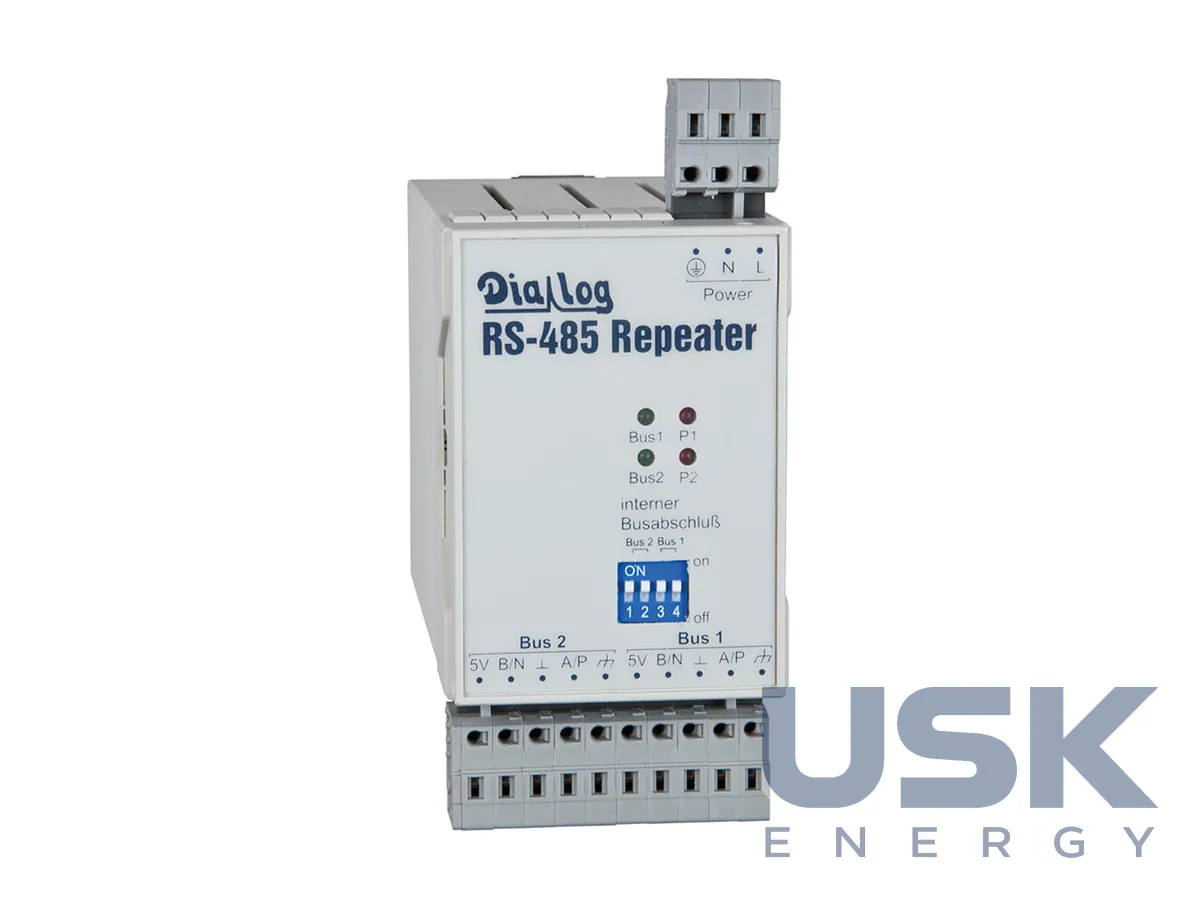
DI-1DL RS-485 interface repeater for BMS bus and Modbus RTU
The DI-1DL amplifies signals on an RS-485 interface (BMS bus, Modbus RTU). Each unit adds 1200 m of bus cable and 31 bus nodes. Input, output and supply circuits are galvanically separated.
- Supply voltage Us
- AC 85…260 V, 50…60 Hz
- Power consumption
- 0.1 A/7 W
- Interface/protocol
- 2 x RS-485/BMS
- Baud rate
- dynamic
Price, availability and lead time on request. We help with analogue selection, customs clearance and delivery.
Description
On a BMS bus or Modbus RTU network, the DI-1DL becomes necessary once the bus cable exceeds 1200 m or more than 31 nodes are connected. Each repeater extends the permissible cable by a further 1200 m and adds 31 nodes, the exact node count depending on the transceivers used. Because repeaters can be cascaded, the number of nodes is practically unlimited. Typical use is in BMS systems with EDS, RCMS and MEDICS®.
Galvanic separation between the input circuit, the output circuit and the supply protects the bus against voltage spikes. The repeater has two RS-485/BMS ports, switches the data direction automatically and sets the baud rate dynamically, so it can be used on the internal BMS bus. Stub lines can also be built with it.
Two DIP switches per bus segment control the terminating resistor and the bus bias. Both must always be switched on together. For BMS use the rotary switch for baud rate and interference suppression is set to position 4. The green LED shows bus activity with direction and fault detection, and the red LED shows the internal operating voltage.
Supply is AC 85…260 V, 50…60 Hz at 0.1 A/7 W. Cable length is up to 1200 m, and shielded J-Y(St)Y of at least 2 x 0.8, with the shield earthed at one end to PE, is recommended. Connection is by spring and plug-in terminals.
The plastic enclosure takes a standard 32 mm DIN rail to IEC 60715 and measures approx. 110 x 75 x 55. Any mounting position is permitted and the duty is continuous. Weight is approx. 90 g and the operating temperature is 0…+70 °C.
Technical specifications
| Supply voltage Us | AC 85…260 V, 50…60 Hz |
|---|---|
| Power consumption | 0.1 A/7 W |
| Interface/protocol | 2 x RS-485/BMS |
| Baud rate | dynamic |
| Cable length | ≤ 1200 m |
| Additional bus nodes | 31 per repeater |
| Cascading | yes |
| Operating temperature | 0…+70 °C |
| Enclosure | for 32 mm DIN rail, approx. 110 x 75 x 55 |
| Weight | approx. 90 g |
Part numbers
Show all part numbers (1)
B95012047
How it compares with similar models
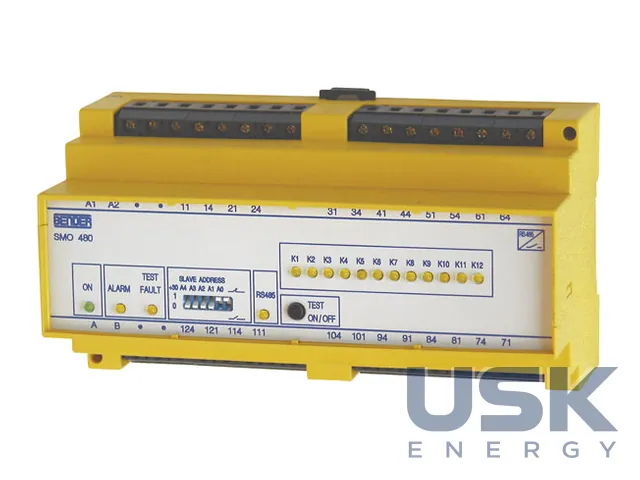
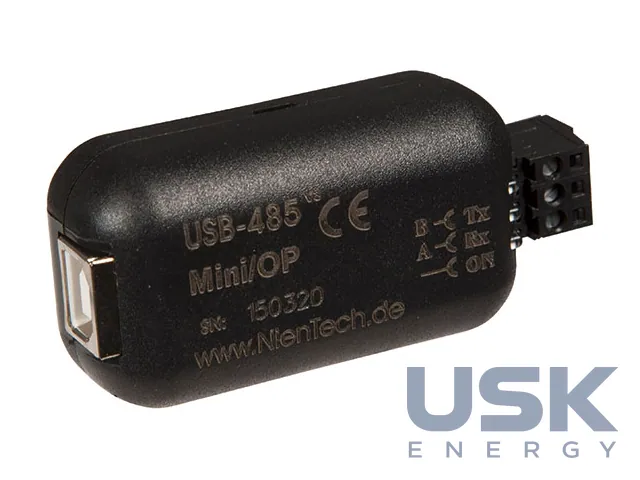
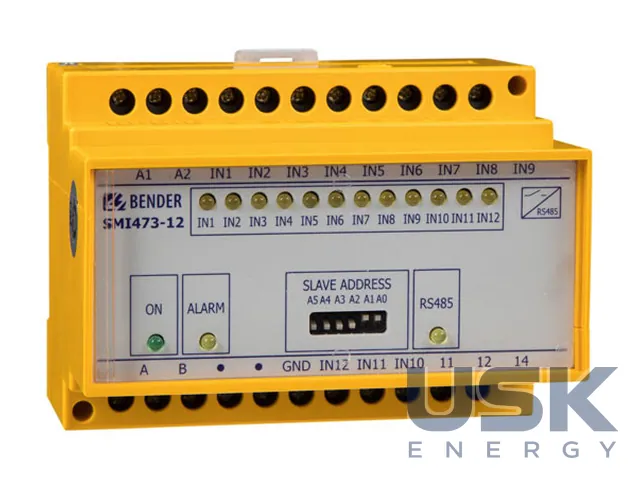
| Parameter | DI-1DL RS-485 interface repeater for BMS bus and Modbus RTU | SMO482-12 BMS bus signal converter with 12 relay outputs | DI-2USB USB to RS-485 interface converter with galvanic separation | SMI473 signal converter, 12 digital inputs to BMS bus, RS-485 |
|---|---|---|---|---|
| Supply voltage Us | AC 85…260 V, 50…60 Hz | AC 230 V, 50…60 Hz | — | SMI473-12: DC 77…286 V/AC 85…265 V, 50…60 Hz; SMI473-1221: DC 12.5…80 V |
| Power consumption | 0.1 A/7 W | ≤ 8 VA | — | ≤ 3 W |
| Interface/protocol | 2 x RS-485/BMS | RS-485/BMS | — | RS-485/BMS |
| Baud rate | dynamic | 9.6 kbit/s | 9.6…115.2 kbit/s | 9.6… 57.6 kbit/s |
| Operating temperature | 0…+70 °C | -10…+55 °C | -10…+55 °C | -10 … +55 °C |
| Weight | approx. 90 g | 350 g | ≤ 25 g | ≤ 320 g |
Request a price and lead time
DI-1DL RS-485 interface repeater for BMS bus and Modbus RTU. We reply within one business day.
Or email sales@usk.ua or call 044 339-50-20.
Questions and answers
When is a DI-1DL needed?
When the RS-485 bus cable is longer than 1200 m or the bus has more than 31 nodes. One repeater adds 1200 m of cable and 31 nodes.
Can several repeaters be cascaded?
Yes, the unit is cascadable, so the number of nodes is practically unlimited. The exact count depends on the transceivers used.
Is the DI-1DL suitable for the internal BMS bus?
Yes, the baud rate changes over automatically. For BMS use, the rotary switch for baud rate is set to position 4.
Similar equipment from other manufacturers