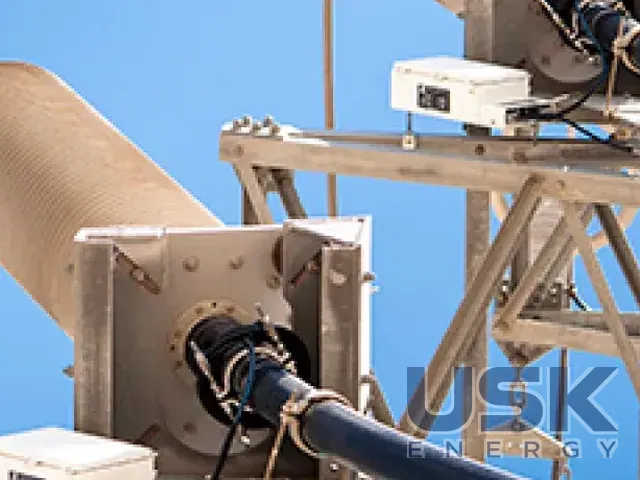
FPI active earth fault passage indicator for MV networks
An active earth fault passage indicator for medium voltage distribution networks. It detects faults with a fault resistance of 0–25 kΩ at a current sensitivity of 500 mA or better, so it also works in compensated networks.
- Purpose
- localizing the network section with an earth fault
- Sensitivity to earth fault resistance
- 0–25 kΩ
- Current sensitivity
- ≤ 500 mA
- Networks
- MV distribution networks with resonant neutral, including GFN/REFCL
Price, availability and lead time on request. We help with analogue selection, customs clearance and delivery.
Description
Active Fault Passage Indicator (FPI) is an active earth fault passage indicator. It is intended for accurately determining the faulty section of a medium voltage distribution network. The device is installed along the line: at sectionalizing points, on branches and in transformer substations. It signals whether a single-phase earth fault current has passed through this point. From the readings of a chain of indicators, the dispatcher or the field crew narrows the search area to the section between two devices. A single indicator does not localize a fault by itself, the benefit comes from a chain of devices on the feeder. The fault location lies between the last indicator that registered the passage of current and the first one that did not.
FPI differs from traditional passive indicators in its ability to work at very low fault currents. In networks with resonant neutral earthing, and especially in networks with the GFN (REFCL) system, the current at the fault point is almost fully compensated, and ordinary short-circuit indicators do not operate. The indicator is designed for such conditions. According to the manufacturer, it detects faults with a fault resistance of 0–25 kΩ, and the current sensitivity is 500 mA or better. This is how high-resistance faults are found, for example a conductor falling onto dry ground, tree branches touching the line or damaged insulators. These are the faults that pose the greatest ignition risk.
The manufacturer offers FPI as a means of meeting fire prevention requirements in high-voltage distribution networks. The indicator complements the GFN system at the substation. The GFN quickly suppresses the fault current, while FPI helps to quickly find the fault location on the line without disconnecting consumers. For line personnel this shortens the patrol, since instead of inspecting the whole feeder only the section between two indicators is checked.
The manufacturer's official website publishes the main sensitivity characteristics and an overview video presentation. There is no detailed datasheet in the available materials, so power supply, communication and mounting parameters are clarified with the manufacturer when making a request. The manufacturer (Kungsängen, Sweden) operates under an ISO 9001 quality management system and supplies equipment to network companies in Europe, Australia and the USA.
Technical specifications
| Purpose | localizing the network section with an earth fault |
|---|---|
| Sensitivity to earth fault resistance | 0–25 kΩ |
| Current sensitivity | ≤ 500 mA |
| Networks | MV distribution networks with resonant neutral, including GFN/REFCL |
| Fire safety purpose | requirements for preventing ignition in MV networks |
Request a price and lead time
FPI active earth fault passage indicator for MV networks. We reply within one business day.
Or email sales@usk.ua or call 044 339-50-20.
Questions and answers
What faults can FPI detect?
According to the manufacturer, it detects faults with a fault resistance of 0–25 kΩ. The current sensitivity is 500 mA or better.
In which networks is FPI used?
In MV distribution networks with resonant neutral earthing, including networks with the GFN (REFCL) system. Ordinary short-circuit indicators do not operate there.
Where on the line are the indicators installed?
At sectionalizing points, on branches and in transformer substations. From the readings of a chain of indicators, the search area is narrowed to the section between two devices.
Similar equipment from other manufacturers