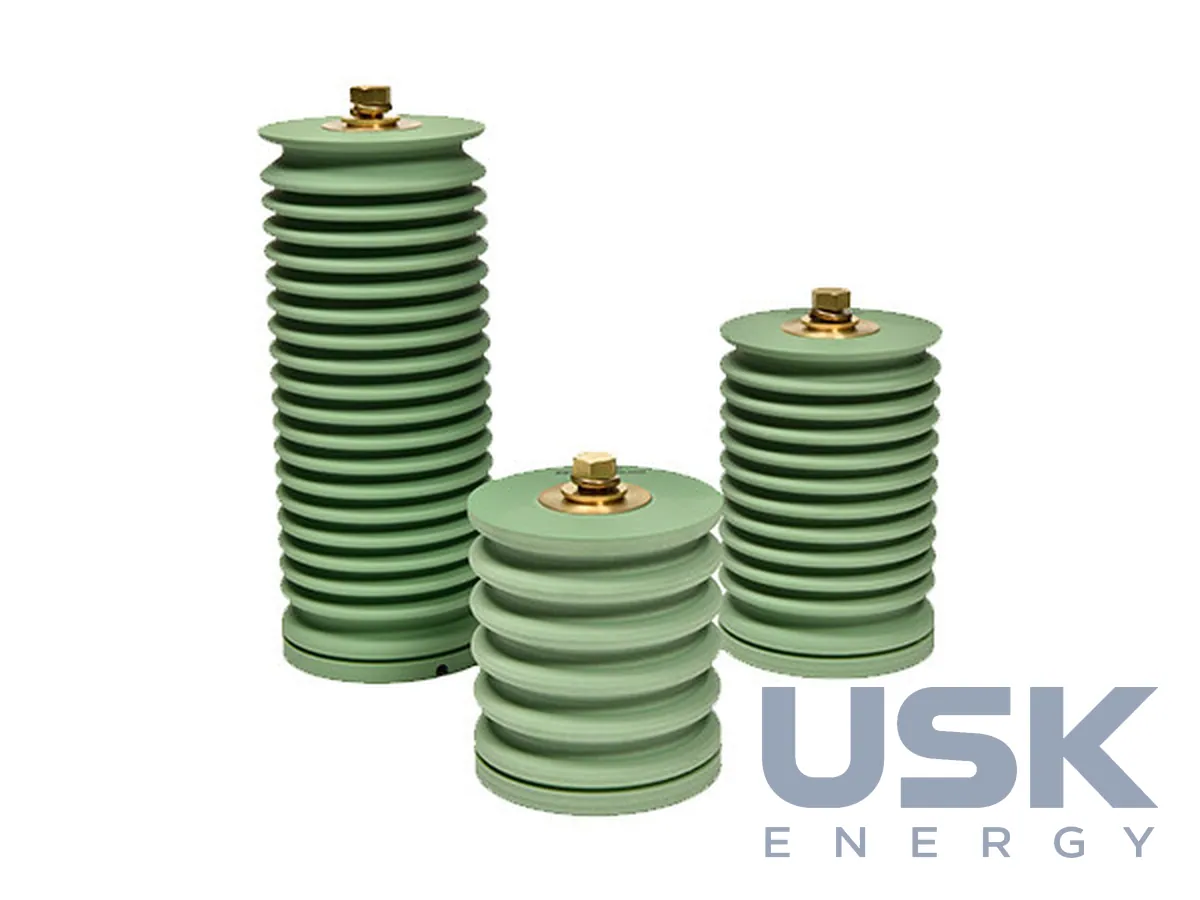
EMC 80 pF Epoxy Mica Capacitor Partial Discharge Sensor, 6.9 to 28 kV
Epoxy mica capacitors (EMC) of 80 pF detect partial discharge activity in motor and generator stator windings, in switchgear and in isolated phase bus. They block the 50/60 Hz power frequency and pass only high frequency signals above 40 MHz to a portable instrument or continuous monitor.
- Type
- Epoxy mica capacitor partial discharge sensor
- Capacitance
- 80 pF ±4 pF
- Dissipation factor
- 0.10%
- Sensitivity
- 1 pC (ASTM D1868, IEC 60270)
Price, availability and lead time on request. We help with analogue selection, customs clearance and delivery.
Description
EMC sensors are installed permanently, at least one per phase, as close to the stator winding as possible to achieve the greatest sensitivity. They operate at working voltage and do not affect the running of the machine. The sensors meet the requirements for partial discharge sensors set out in IEC TS 60034-27-2 and IEEE 1434, and the requirements of ANSI C37.20.2.
The main dielectric of the capacitor is epoxy-impregnated mica sheet. Capacitance is 80 pF ±4 pF, the dissipation factor is 0.10%, and discharge sensitivity is 1 pC to ASTM D1868 and IEC 60270. The bandwidth into 50 ohms at the 3 dB level runs from 40 MHz to 500 MHz. Four versions cover the rated voltages of machines at 6.9, 16, 25 and 28 kV. The 6.9 kV version has an AC withstand of 15 kV, a BIL of 95 kV and a mass of 1.1 kg. Heights run from 80 mm for the 6.9 kV version to 206 mm for the 28 kV version, and masses from 1.1 kg to 2.0 kg. Each version is 86 mm in diameter, and the 16, 25 and 28 kV versions have AC withstands of 33, 51 and 57 kV.
Overvoltage endurance was tested for over 1000 hours at 30 kVrms on the 16 kV sensor, and the calculated life is 60,000 years to IEEE 930-1987. The operating temperature runs from -50 to +130°C, and thermal cycling tests were carried out between -40 and +150°C. The inclined plane tracking test gives 300 minutes (ASTM D2303-85), and the comparative tracking index is 600 minutes (IEC 60112).
Sensors are supplied as kits with all the materials needed for installation, including a silicone rubber insulating cover. Kits for nuclear generating stations include installation materials to IEEE 323-1983. The sensors can be used in hazardous areas and certified as part of an installation.
Technical specifications
| Type | Epoxy mica capacitor partial discharge sensor |
|---|---|
| Capacitance | 80 pF ±4 pF |
| Dissipation factor | 0.10% |
| Sensitivity | 1 pC (ASTM D1868, IEC 60270) |
| Bandwidth into 50 ohms (3 dB) | 40–500 MHz |
| Rated voltage versions | 6.9, 16, 25, 28 kV |
| Test voltage | 15, 33, 51, 57 kV |
| BIL | 95 kV (6.9 and 16 kV), 125 kV (25 and 28 kV) |
| Mass | 1.1, 1.6, 2.0, 2.0 kg |
| Height | 80, 95, 127, 206 mm |
| Diameter | 86 mm |
| Operating temperature | −50 to +130°C |
| Thermal cycling | −40 to +150°C |
| Overvoltage endurance | >1000 hours at 30 kV (16 kV version) |
| Calculated life | 60,000 years (IEEE 930-1987) |
| Inclined plane tracking | 300 min (ASTM D2303-85) |
| Comparative tracking index | 600 (IEC 60112) |
| Standards | IEC TS 60034-27-2, IEEE 1434, ANSI C37.20.2 |
Part numbers
Show all part numbers (1)
EMC-Sensors
Request a price and lead time
EMC 80 pF Epoxy Mica Capacitor Partial Discharge Sensor, 6.9 to 28 kV. We reply within one business day.
Or email sales@usk.ua or call 044 339-50-20.
Questions and answers
How many sensors are fitted to a machine?
At least one per phase, placed as close to the stator winding as possible for the greatest sensitivity.
How do I choose the right version?
By the machine's rated voltage: 6.9, 16, 25 or 28 kV. Each version has its own AC withstand, BIL and dimensions.
Can the sensors be used at nuclear power stations?
Yes. Kits for nuclear generating stations include installation materials to IEEE 323-1983.
Similar equipment from other manufacturers