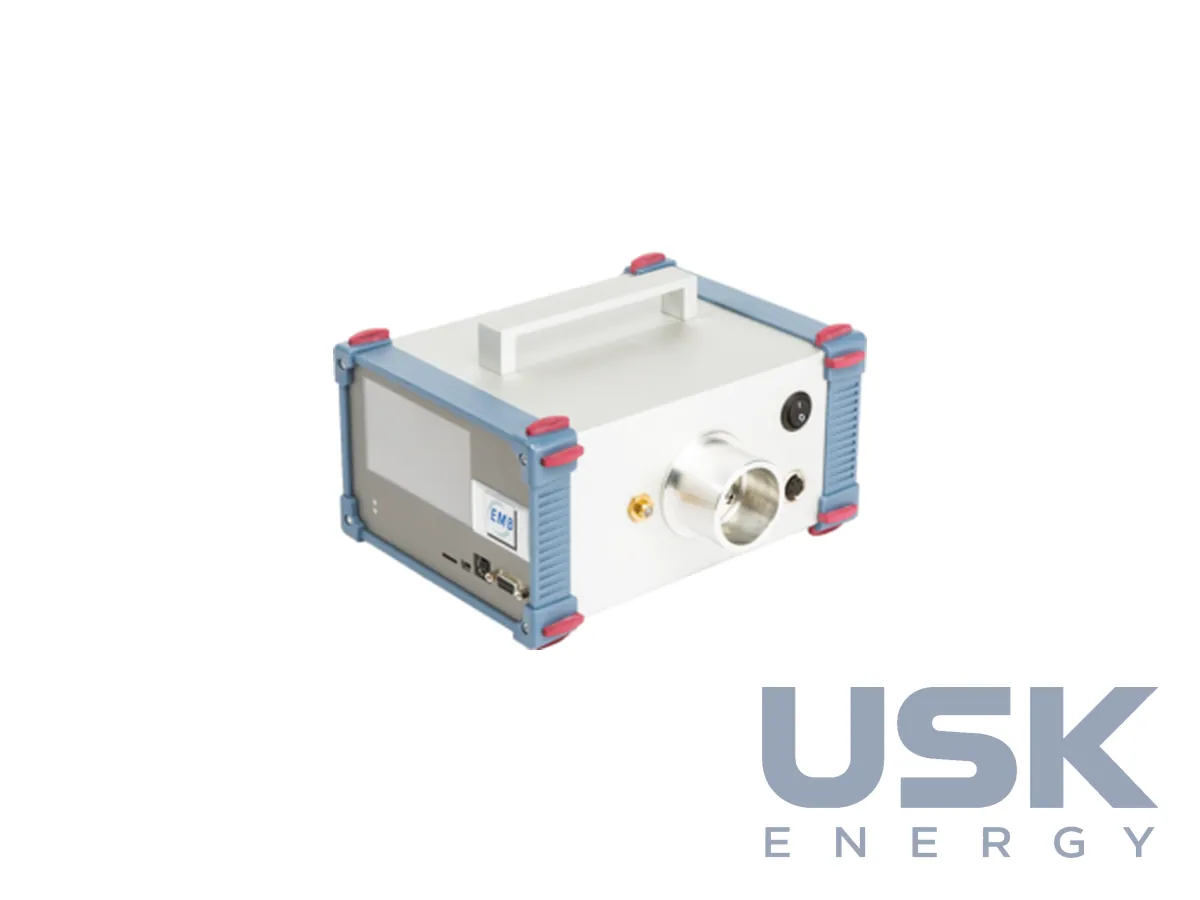
BGT 4.1 / BGT 4.2 with BGS sampler, portable gas analyser for Buchholz relays
The Buchholz Gas Tester BGT is a portable analyser with which gas from a Buchholz relay is analysed right at the transformer. The result quickly shows whether the relay operation was caused by real damage or by air ingress, so a decision can be made on whether to re-energise the transformer.
- BGT 4.1
- hydrogen H2 concentration (criterion "fault gas or air")
- BGT 4.2
- H2, CO2, CO, C2H2 and the sum of hydrocarbons
- BGS sampler
- up to 100 ml, sample storage up to 5 days; ≈ 65 ml needed for analysis
- Power supply
- 100–230 V AC through an adapter; 12 V DC through an inverter
Price, availability and lead time on request. We help with analogue selection, customs clearance and delivery.
Description
Gases appear in oil-filled equipment also during natural ageing of the oil, but with a serious fault there is far more of them. Free gas rises and collects in the Buchholz relay. It is best to take the sample immediately, because some components gradually dissolve in the oil and the characteristic pattern of fault gases disappears.
The BGT 4.1 measures the hydrogen concentration in the sampled gas. Hydrogen forms in all kinds of faults, so this is enough to conclude "fault gas or air". The BGT 4.2 additionally determines carbon dioxide and monoxide, acetylene and the sum of hydrocarbons. This set allows the nature of the fault to be judged, that is, arcing, low-energy discharges, a thermal fault or involvement of solid cellulose insulation. A second sensor measures gas humidity and compensates the error. Calibration is single-point in air, and hydrogen calibration is performed by the user.
The gas is fed into the instrument with the Buchholz Gas Sampler BGS, which is part of the set. It is a cylinder with a piston and a check valve that hermetically separates the sample from the atmosphere. An oil trap on the connector keeps oil residues out of the cylinder. The capacity is up to 100 ml; about 65 ml is needed for on-site analysis, and the rest can be sent to a laboratory for chromatographic analysis. The sample composition is preserved for up to five days. The same sampler is used to calibrate the analyser in air and to take gas from the accumulator of the TGM monitor. The sampler is screwed through the oil trap onto the relay test valve. After the valve is opened, the piston is pushed out by the pressure of the oil column in the transformer or pulled out by hand, and the gas enters the cylinder through the check valve. After the valve is closed, the sampler is unscrewed first and only then is the oil trap removed. The graduations on the rod divide the volume into 6 parts of 15 ml and a remainder of 10 ml.
The analyser has a touch screen, a microSD slot, a mini-USB port and the BGT Logger program for Windows. It is powered from the mains at 100–230 V through an adapter or from a 12 V vehicle supply through an inverter, and the sensors warm up for about 30 minutes. The company developed the instruments together with a partner specialising in transformer gases. They are used by substation operating services and by service and diagnostic organisations.
Technical specifications
| BGT 4.1 | hydrogen H2 concentration (criterion "fault gas or air") |
|---|---|
| BGT 4.2 | H2, CO2, CO, C2H2 and the sum of hydrocarbons |
| BGS sampler | up to 100 ml, sample storage up to 5 days; ≈ 65 ml needed for analysis |
| Power supply | 100–230 V AC through an adapter; 12 V DC through an inverter |
| Warm-up | ≈ 30 min |
| Interfaces | mini-USB, microSD, touch screen; BGT Logger software |
| Calibration | single-point in air, H2 by the user |
Request a price and lead time
BGT 4.1 / BGT 4.2 with BGS sampler, portable gas analyser for Buchholz relays. We reply within one business day.
Or email sales@usk.ua or call 044 339-50-20.
Customs codes
| UKTZED (Ukraine) | 9027 10 10 00 |
|---|---|
| HS, 6 digits | 9027 10 |
| CN (EU) | 9027 10 10 |
| HTSUS (USA) | 9027 10 20 00 |
| China customs tariff | 9027 10 00 90 |
Codes are for reference: the final code is determined at declaration for the specific model.
Questions and answers
How does the BGT 4.1 differ from the BGT 4.2?
The BGT 4.1 measures only hydrogen H2 and shows whether the relay holds fault gas or air. The BGT 4.2 additionally determines CO2, CO, C2H2 and the sum of hydrocarbons, which indicates the nature of the fault.
How much gas is needed for analysis and how long is the sample stable?
The BGS sampler holds up to 100 ml, and about 65 ml is needed for on-site measurement. The sample keeps its composition for up to 5 days.
How is the analyser powered at a substation?
From the mains at 100–230 V through an adapter or from a 12 V vehicle supply through an inverter. Sensor warm-up takes about 30 minutes.
Similar equipment from other manufacturers