AGTracII Continuous Air Gap Monitoring System for Hydrogenerators
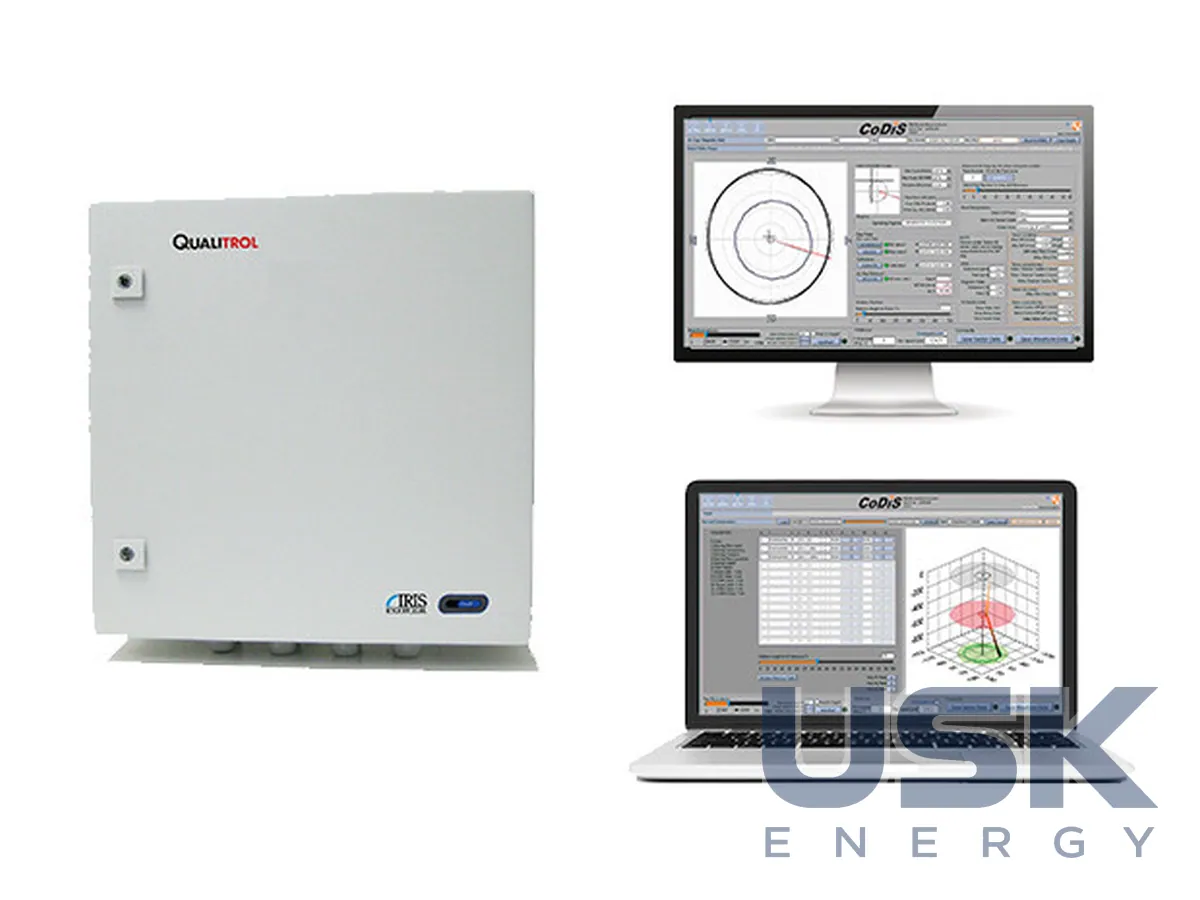
A continuous online system that monitors the air gap between rotor and stator in hydrogenerators. The kit includes 4 to 16 capacitive sensors, a sync sensor, signal conditioners, a measuring instrument and data management software that passes alarms to plant SCADA.
- Application
- Hydrogenerators
- Number of gap sensors
- 4–16
- Sync sensors
- 1
- Sensor type
- Capacitive, printed circuit board
Price, availability and lead time on request. We help with analogue selection, customs clearance and delivery.
Description
The air gap is the distance between the outer diameter of the rotor and the inner diameter of the stator. In hydrogenerators the rotor and stator are quite flexible, and their shape and position shift under centrifugal and thermal forces, magnetic effects and mechanical faults. Eccentricity or out-of-roundness reduces efficiency and, in severe cases, leads to overheating from magnetic forces or rubbing between rotor and stator. AGTracII follows the condition of the unit during operation, so gap problems are found long before failure and repairs can be planned.
The system has five parts: capacitive gap sensors (4 to 16), signal conditioners, one sync sensor, a continuous monitoring instrument and data management software. Each low-profile sensor is built on a printed circuit board and is bonded to the stator core bore with a special epoxy resin. The linear measuring range of the sensors runs from 2 to 50 mm, with an operating temperature of 0 to 125 °C.
Sensors come in four sizes. The AGS-10, 93 × 32 × 1.2 mm with a 10 m cable, measures 2–10 mm with ±1% tolerance at 6 mm. The AGS-15, 135 × 32 × 1.2 mm with a 10 m cable, covers 3–15 mm with ±1% at 8 mm. The AGS-25, 232 × 32 × 3.2 mm with a 12 m cable, covers 5–25 mm with ±1.5% at 15 mm, and the AGS-50, 175 × 60 × 4.1 mm with a 12 m cable, covers 10–50 mm with ±3% at 30 mm. Non-linearity is below ±1.5%, ±1.5%, ±3% and ±5% respectively.
The instrument processes signals in real time and recognises the machine's operating modes: stationary, run-up, normal operation, transient and coast-down. It determines alarm and trip conditions, sends signals to the plant SCADA system, and passes condition data to the data management software. The system works as a stationary monitor with a protection function, and also with a computer to view data in real time during commissioning, operation and repairs.
The data management software displays and prints data, configures the set-up from the unit's data, keeps a database by unit number, feeds data to a local network, accepts time sync signals and identifies faulty sensors. The analysis module builds a rotor pole profile and rotor geometry, the stator and rotor shape with eccentricity, performs dynamic rotor analysis and detects pole movement.
Technical specifications
| Application | Hydrogenerators |
|---|---|
| Number of gap sensors | 4–16 |
| Sync sensors | 1 |
| Sensor type | Capacitive, printed circuit board |
| Linear range | 2–50 mm |
| Ranges | 2–10 mm (AGS-10), 3–15 mm (AGS-15), 5–25 mm (AGS-25), 10–50 mm (AGS-50) |
| Dimensions AGS-10 / AGS-15 | 93×32×1.2 mm / 135×32×1.2 mm |
| Dimensions AGS-25 / AGS-50 | 232×32×3.2 mm / 175×60×4.1 mm |
| Cable length | 10 m (AGS-10, AGS-15), 12 m (AGS-25, AGS-50) |
| Tolerance | ±1% at 6 mm, ±1% at 8 mm, ±1.5% at 15 mm, ±3% at 30 mm |
| Non-linearity | Under ±1.5% (AGS-10, AGS-15), under ±3% (AGS-25), under ±5% (AGS-50) |
| Sensor operating temperature | 0…125 °C |
| Recognised modes | Stationary, run-up, normal operation, transient, coast-down |
| Communication | Plant SCADA system, local network |
Part numbers
Show all part numbers (5)
AGTracII, AGS-10, AGS-15, AGS-25, AGS-50
Request a price and lead time
AGTracII Continuous Air Gap Monitoring System for Hydrogenerators. We reply within one business day.
Or email sales@usk.ua or call 044 339-50-20.
Questions and answers
How is the right AGS sensor type chosen?
By the machine's nominal air gap: AGS-10 for 2–10 mm, AGS-15 for 3–15 mm, AGS-25 for 5–25 mm and AGS-50 for 10–50 mm. The tightest tolerance, ±1%, applies to the AGS-10 and AGS-15.
How is a sensor fitted in the generator?
The printed-circuit sensor is bonded to the stator core bore with a special epoxy resin. Sensor thickness is between 1.2 and 4.1 mm depending on type.
Does the system send alarms to SCADA?
Yes. The instrument identifies alarm and trip conditions and sends them to the plant SCADA system, while condition data goes to the data management software.
Similar equipment from other manufacturers