Diaphragm compressors for hydrogen and pure gases, up to 5000 bar
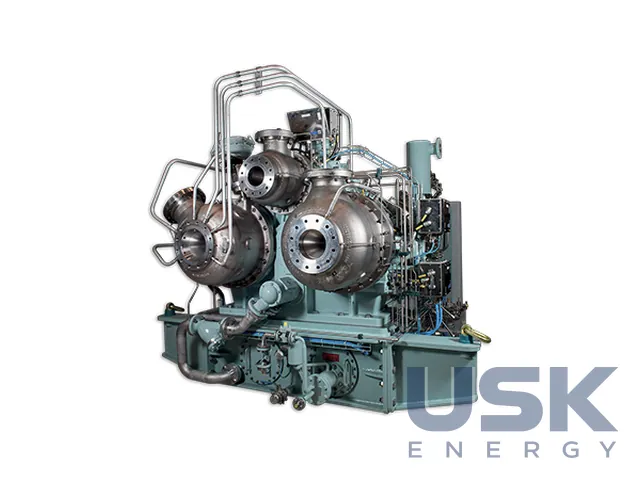
Positive displacement diaphragm compressors with a final pressure of up to 5000 bar for hydrogen, helium, argon and other pure, toxic and explosive gases. Compression is oil-free, and the gas space is hermetically separated from the oil space by a metal diaphragm. Up to 7 per stage and up to four stages on one running gear.
- Principle
- gas separated from oil by a hydraulically driven metal diaphragm; static seals in the gas path
- Final pressure
- up to 5000 bar (up to 1000 bar for H2)
- Compression ratio
- up to 7 per stage; up to 4 stages on one running gear
- Tightness
- leakage 10⁻⁴ mbar·l/s, up to 10⁻⁶ on request
Price, availability and lead time on request. We help with analogue selection, customs clearance and delivery.
Description
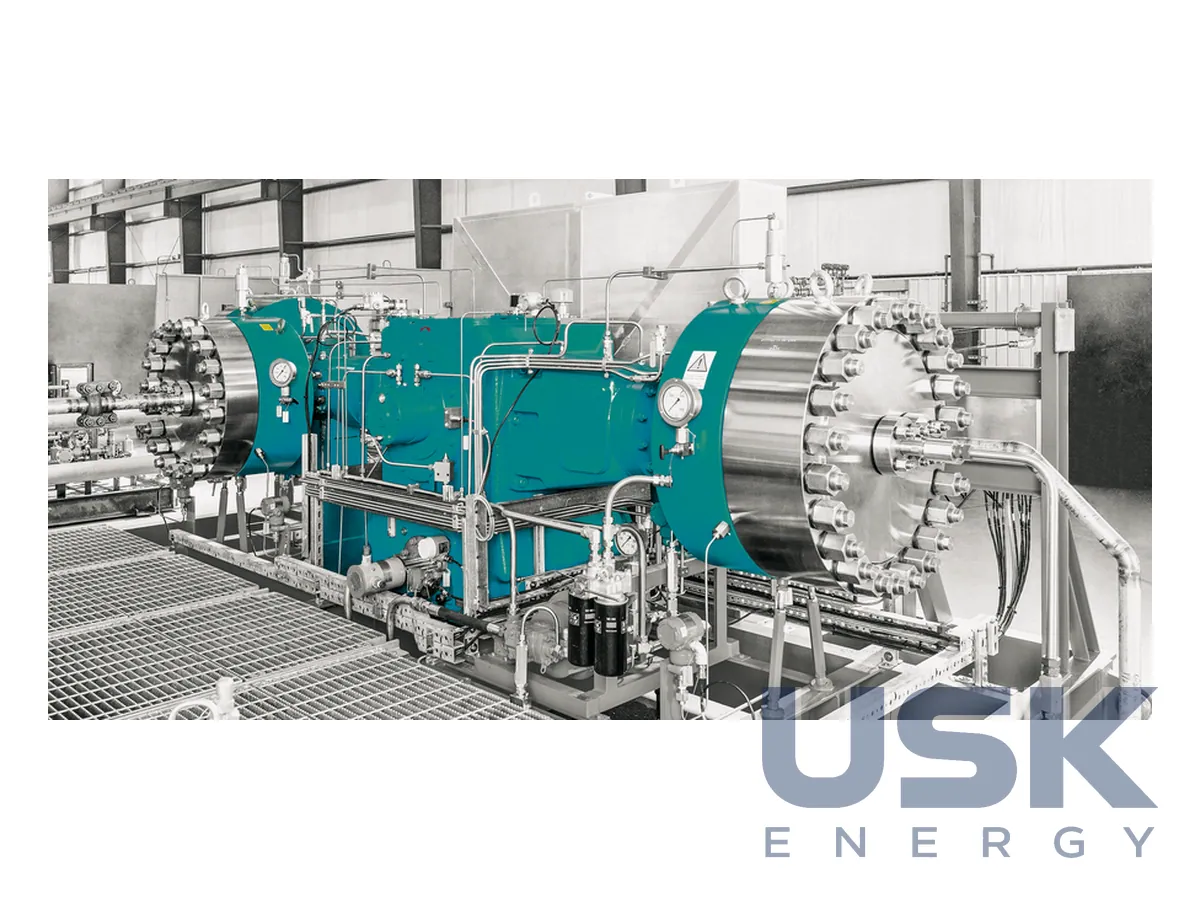
The positive displacement diaphragm compressor is especially suitable for processes with relatively small gas flows but very high pressure, above all where no contamination may enter downstream processes. Such machines are made in Mülheim an der Ruhr. The basis is a hydraulically driven metal diaphragm that hermetically separates the gas space from the oil space. The key points of this design are diaphragm life and high quality standards.
Gas and lubricant are hermetically separated, so compression is oil-free. The gas path contains only static seals, and there is no abrasive wear. Leakage is not more than 10⁻⁴ mbar·l/s, up to 10⁻⁶ on request, and no purge or barrier gas is required. Heat is removed through the large surface of the diaphragm head and a coil in the oil space, and the cover is not weakened by cooling channels. If a diaphragm ruptures, the machine stops automatically. The final pressure reaches 5000 bar, the compression ratio per stage is up to 7, and up to four stages can be fitted on one running gear. Mass balancing allows the machine to be installed without a foundation, low piston speeds give low wear and quiet running, and water cooling provides heat removal and a low noise level.
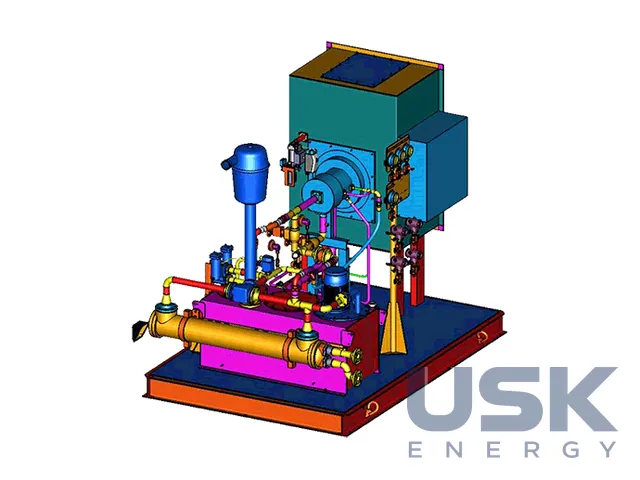
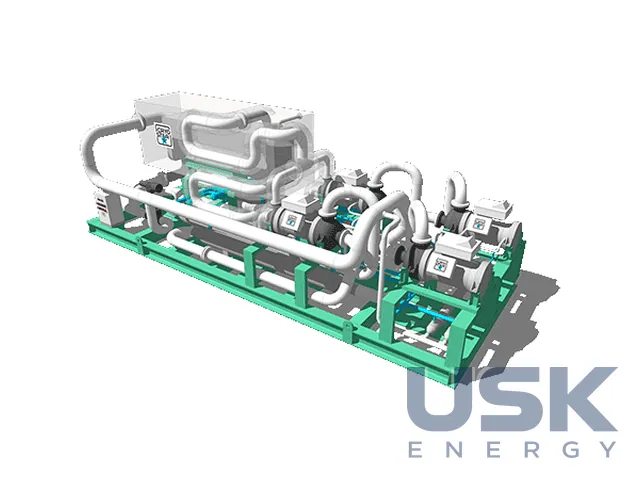
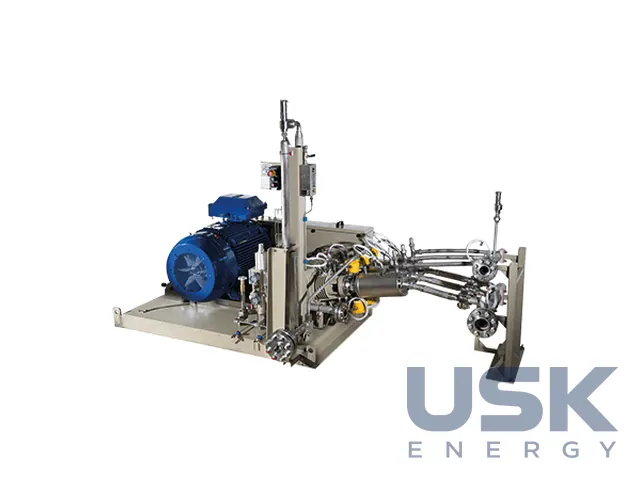
The compressors comply with the Machinery Directive 2006/42/EG (applied standards DIN EN 1012-1, DIN EN 12100-1, DIN EN 60204-1 and others) and, if needed, are supplied in an explosion-proof version to ATEX 2014/34/EU. Before shipment, every compressor undergoes a load test on the manufacturer's own test bench. Delivery is as a single machine or as a complete package on a frame with drive, pulsation dampers, coolers, valves, instruments and controls.
The high-purity gas does not come into contact with lubricant at any stage of compression. Tightness makes diaphragm compressors suitable for high-purity, explosive, toxic and expensive gases: hydrogen, helium, argon, ethylene, fluorine, hydrogen sulphide, chlorine, monosilane, nitrogen trifluoride. Typical applications are filling of cylinders and trailers (for hydrogen up to 400 bar into cylinders), feeding continuous processes, circulation compressors and hydrogen refuelling stations (up to 500 bar for buses and trucks, up to 550 bar for rail).
Technical specifications
| Principle | gas separated from oil by a hydraulically driven metal diaphragm; static seals in the gas path |
|---|---|
| Final pressure | up to 5000 bar (up to 1000 bar for H2) |
| Compression ratio | up to 7 per stage; up to 4 stages on one running gear |
| Tightness | leakage 10⁻⁴ mbar·l/s, up to 10⁻⁶ on request |
| Safety | automatic stop on diaphragm rupture |
| Cooling | water, coil in the oil space of the head |
| Standards | Machinery Directive 2006/42/EG, DIN EN 1012-1, DIN EN 12100-1, DIN EN 60204-1; ATEX 2014/34/EU (on request) |
| Media | hydrogen, helium, argon, ethylene, fluorine, H2S, chlorine, monosilane, NF3, nitrogen |
Request a price and lead time
Diaphragm compressors for hydrogen and pure gases, up to 5000 bar. We reply within one business day.
Or email sales@usk.ua or call 044 339-50-20.
Questions and answers
What pressure do diaphragm compressors reach?
Final pressure is up to 5000 bar, and up to 1000 bar for hydrogen. The compression ratio is up to 7 per stage, with up to four stages on one running gear.
How tight are they, and is barrier gas needed?
Leakage is not more than 10⁻⁴ mbar·l/s, up to 10⁻⁶ on request. No purge or barrier gas is needed, and if a diaphragm ruptures the machine stops automatically.
What standards do these compressors comply with?
The Machinery Directive 2006/42/EG and the standards DIN EN 1012-1, DIN EN 12100-1, DIN EN 60204-1. An explosion-proof version to ATEX 2014/34/EU is available if needed.
Similar equipment from other manufacturers