LVTS heat cycling test sets for cables, low voltage and high current up to 6000 A
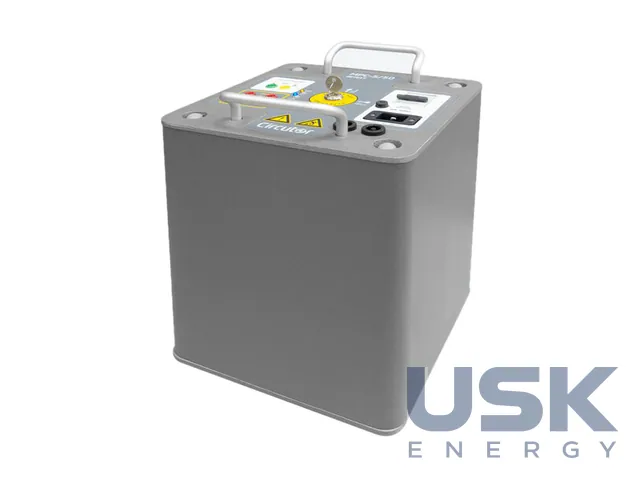
LVTS test sets induce current in a test loop around a cable sample to reproduce operating current. They are used in cable laboratories for type tests and thermal cycling of samples, joints and accessories, with five models covering 2000 to 6000 A.
- Purpose
- cable heat cycling and type tests
- Principle
- current induced in a sample loop
- Current
- 2000 to 6000 A
- Output voltage
- 18 to 36 V
Price, availability and lead time on request. We help with analogue selection, customs clearance and delivery.
Description
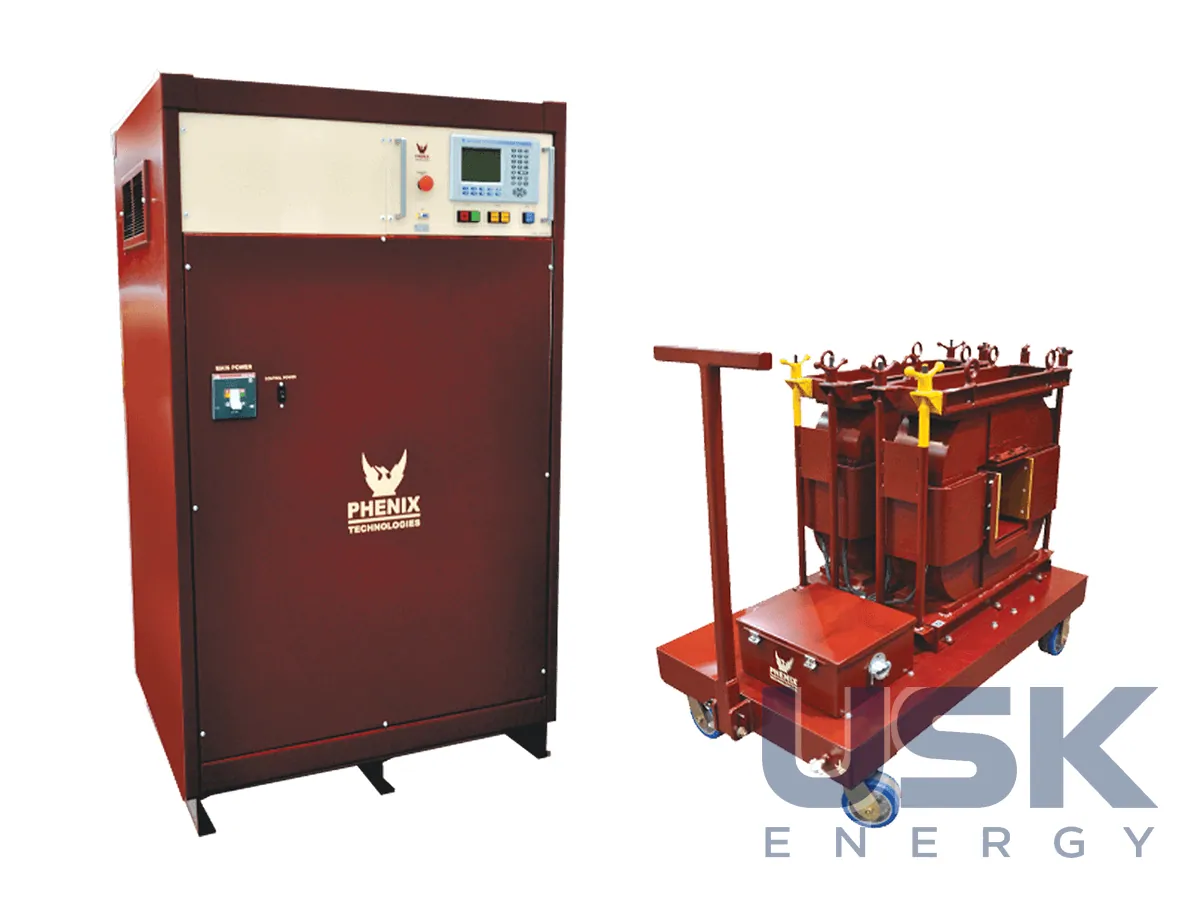
LVTS heat cycling test sets are built for laboratory testing of power cables. Current is induced in a closed loop formed around the cable sample, so the conductor heats up in the same way as in operation. Typical sample tests follow standards such as VDE, EDF, IEC, IEEE, IPCEA and AEIC, and the sets also perform inductive heating of cables and cable accessories.
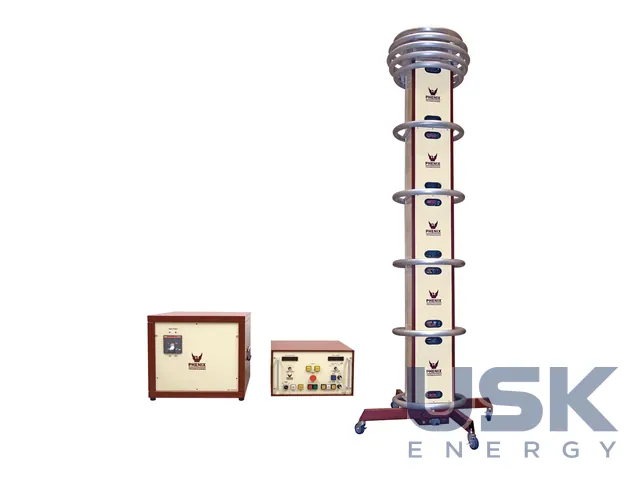
A heated cable can also be stressed with high voltage in either DC or AC form, or with impulse voltage. This needs the appropriate options or separate high voltage equipment. The series covers five models: LVTS15-2000 (2000 A at 18 V), LVTS30-3000 (3000 A at 36 V), LVTS25-4000 (4000 A at 30 V), LVTS20-5000 (5000 A at 24 V) and LVTS17-6000 (6000 A at 30 V).
The actual set-up depends on the type and cross section of the conductor, the type and thickness of insulation, the length of the sample, the ambient temperature and the test, and the time allowed for the sample to reach temperature. Protective functions include an incoming circuit breaker, accurate output measurement, an interlock that blocks starting from a non-zero output, and thermal overload protection.
Installation can be indoor or outdoor, and the sets come with automated control systems and temperature controllers. Output is regulated either by a thyristor controller (SCR) or by a variable autotransformer. The thyristor circuit has fast rise and instant return to zero and is compact, but it is incompatible with capacitive compensation, so it is usually used in smaller systems. The column or toroidal autotransformer gives a sine wave across the whole output range, works at very low impedance and supports capacitive compensation, which cuts input power and regulator size. Several units can be combined in a master slave arrangement.
Technical specifications
| Purpose | cable heat cycling and type tests |
|---|---|
| Principle | current induced in a sample loop |
| Current | 2000 to 6000 A |
| Output voltage | 18 to 36 V |
| LVTS15-2000 | 2000 A at 18 V |
| LVTS30-3000 | 3000 A at 36 V |
| LVTS25-4000 | 4000 A at 30 V |
| LVTS20-5000 | 5000 A at 24 V |
| LVTS17-6000 | 6000 A at 30 V |
| Regulation | SCR or variable autotransformer |
| Version | indoor and outdoor |
| Test standards | VDE, EDF, IEC, IEEE, IPCEA and AEIC |
| Protection | incoming circuit breaker, interlock against start from non-zero, thermal protection |
Part numbers
Show all part numbers (5)
LVTS15-2000, LVTS30-3000, LVTS25-4000, LVTS20-5000, LVTS17-6000
Request a price and lead time
LVTS heat cycling test sets for cables, low voltage and high current up to 6000 A. We reply within one business day.
Or email sales@usk.ua or call 044 339-50-20.
Questions and answers
How do I choose an LVTS model for a particular cable?
Consider the conductor type and cross section, the insulation type and thickness, the sample length, the ambient and test temperature and the time allowed to reach temperature. The standard range runs from 2000 to 6000 A.
Can heating be combined with a high voltage test?
Yes. The heated cable can be stressed with high voltage in DC or AC form, or with impulse voltage, but this needs the appropriate options or separate high voltage equipment.
What is the difference between SCR and autotransformer regulation?
SCR control gives fast rise and a compact unit but is incompatible with capacitive compensation. An autotransformer gives a sine wave across the whole range, allows capacitive compensation and supports master slave operation.
Similar equipment from other manufacturers