TAG triggered arc gaps for lightning protection of 11–33 kV overhead lines
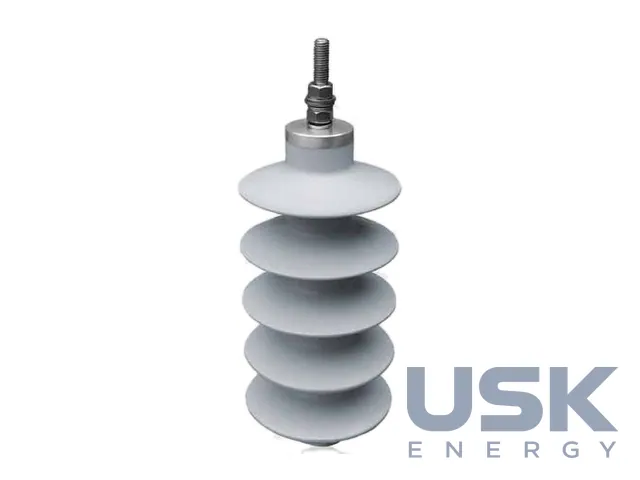
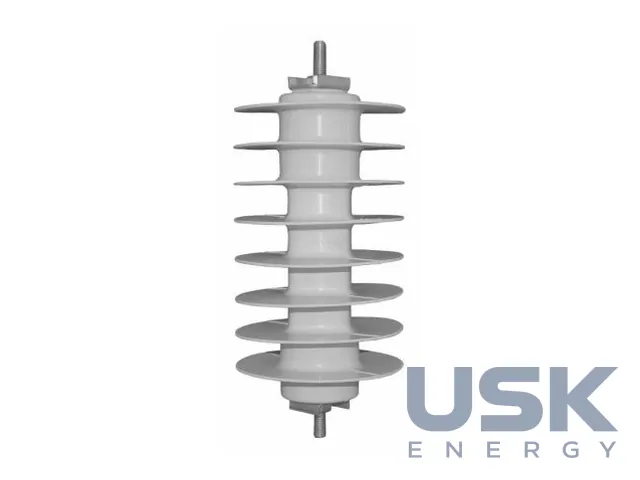
TAG (Triggered Arc Gap) is a triggered arc gap for protecting 11 and 33 kV distribution overhead lines and connected transformers from induced lightning overvoltages. The main arc is extinguished within 10 ms at most, so the upstream protection has no time to trip the line.
- Voltage class
- 11 kV and 33 kV (settings available for 20 kV)
- Principle
- porcelain element with a main and two auxiliary electrodes (four-arm capacitive bridge)
- Arc extinguishing time
- at the first current zero crossing, 10 ms at most
- Installation
- on the middle phase approximately every 1 km of line
Price, availability and lead time on request. We help with analogue selection, customs clearance and delivery.
Description
In 11–33 kV networks most lightning damage is caused not by direct strikes to the conductors but by induced overvoltages from lightning strikes to ground near the line. The induced overvoltage is bipolar, with a negative peak and usually a smaller positive one, and flashovers occur on different phases. The TAG is designed precisely for this kind of impact. It does not protect equipment from direct strikes, and that part remains with surge arresters.
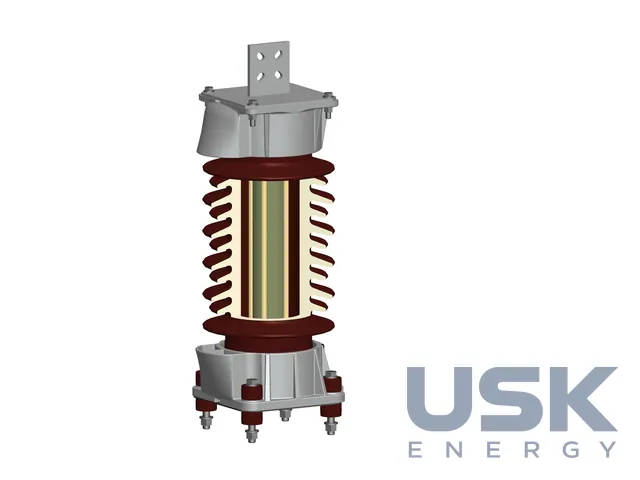
The basis of the device is a special porcelain element with a high-potential electrode, an earthed electrode and two auxiliary electrodes that form a four-arm capacitive bridge. When an impulse sufficient to break down the main gap arrives, the overstressed auxiliary gap breaks down first. It provides an abundant source of electrons and irradiation in the middle of the main gap, so the auxiliary arc quickly transfers to the main arc. The main arc is extinguished at the first voltage zero crossing of the first half-cycle. The upstream protection operates in 100–200 ms, that is 5–10 cycles, and the line does not trip.
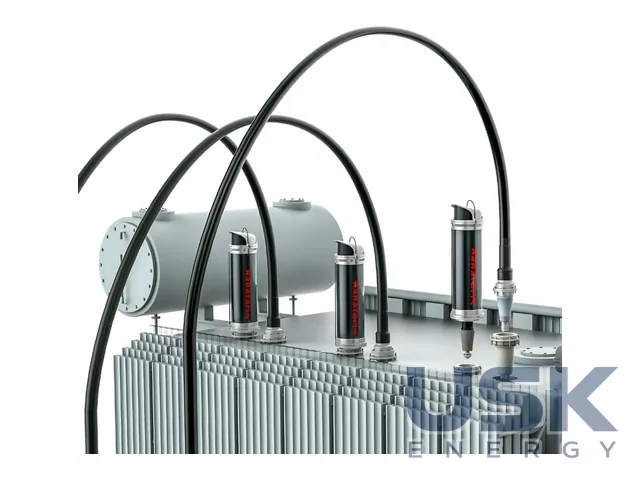
A breakdown to the middle phase discharges its capacitance to earth, and the potential of the outer phases falls by about half through the interphase capacitance. The TAG is therefore connected to the middle phase of a three-phase line approximately every 1 km. It is earthed to driven electrodes near the pole with a resistance below 20 Ω, because above 40 Ω the effectiveness drops noticeably. A group of transformers supplying a village is protected by a gap at the centre of a circle 1 km in diameter, and a single transformer at the first pole from it.
The ignition gap setting is 3 mm for 11 kV and 10 mm for 20 kV, and the horn gap is 50 and 65 mm respectively. The device is installed live, needs no maintenance, and its operation is not affected by rain or pollution. According to the manufacturer, the protection level of the TAG is better than that of a surge arrester.
More than 10,000 such devices are in service in the United Kingdom. According to the manufacturer, they reduce the number of lightning incidents by up to 30 %. The TAG is made in England and supplied with a bracket and a line connection kit, in versions for 11 and 33 kV.
Technical specifications
| Voltage class | 11 kV and 33 kV (settings available for 20 kV) |
|---|---|
| Principle | porcelain element with a main and two auxiliary electrodes (four-arm capacitive bridge) |
| Arc extinguishing time | at the first current zero crossing, 10 ms at most |
| Installation | on the middle phase approximately every 1 km of line |
| Earthing resistance | below 20 Ω (not more than 40 Ω) |
| Ignition gap | 3 mm (11 kV), 10 mm (20 kV) |
| Horn gap | 50 mm (11 kV), 65 mm (20 kV) |
| Service experience | more than 10,000 units in the United Kingdom |
| Reduction in lightning damage | up to 30 % |
Request a price and lead time
TAG triggered arc gaps for lightning protection of 11–33 kV overhead lines. We reply within one business day.
Or email sales@usk.ua or call 044 339-50-20.
Customs codes
| UKTZED (Ukraine) | 8535 40 00 00 |
|---|---|
| HS, 6 digits | 8535 40 |
| CN (EU) | 8535 40 00 |
| HTSUS (USA) | 8535 40 00 00 |
| China customs tariff | 8535 40 00 00 |
Codes are for reference: the final code is determined at declaration for the specific model.
Questions and answers
How often is the TAG installed on a line?
Approximately every 1 km on the middle phase of a three-phase overhead line. A group of transformers is protected by a gap at the centre of a circle 1 km in diameter.
What earthing resistance is required for the TAG?
Below 20 Ω for the best transformer protection. Above 40 Ω the effectiveness drops noticeably.
Does the TAG protect against a direct lightning strike?
No, the TAG is designed for induced overvoltages from lightning strikes to ground near the line. They cause most lightning damage in 11–33 kV networks.
Similar equipment from other manufacturers