Integrated distributed synchronous condenser systems for renewable plants: control, excitation, SFC, protection
The manufacturer's Nanjing division supplies new-generation integrated distributed synchronous condenser systems for power systems with a high share of wind and solar generation. The condensers give the grid the short-circuit power and moment of inertia that are lacking after traditional generators are replaced by inverter-based sources. This reduces the limits on power export from wind and solar plants, and the share of renewables grows.
- Purpose
- short-circuit power and inertia for grids with a high share of renewables, voltage support
- System composition
- centralised PLC control: machine, auxiliary systems, excitation, SFC, synchronisation, AVOC
- Protection
- separate main and backup protection
- Application
- renewable plants, photovoltaic hydrogen, source-grid-load-storage projects
Price, availability and lead time on request. We help with analogue selection, customs clearance and delivery.
Description
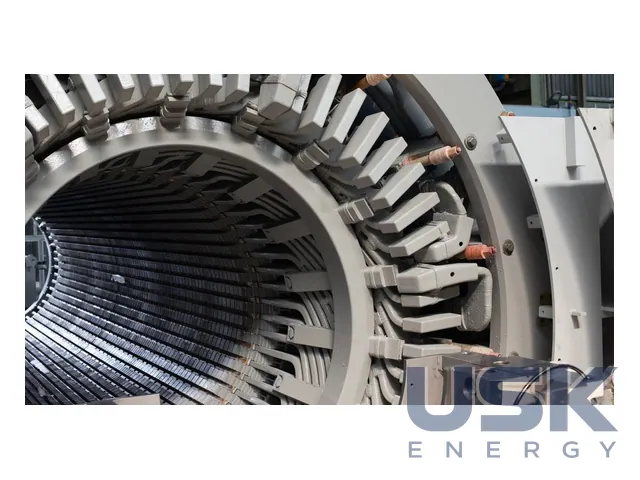
A synchronous condenser works as a rotating synchronous machine without a drive motor, connected to the grid. The active power it draws from the grid is converted into reactive power output. Unlike inverter-based sources, the machine has the moment of inertia of rotating masses and supplies short-circuit current, so it reduces the uncertainty and fragility of a system with a large share of wind and solar plants connected. When traditional generators with rotating masses give way to inverters, the short-circuit power and inertia in the grid fall, and this is the shortfall the condenser covers.
The system compensates reactive power and holds the voltage level. It supports the voltage during subtransient, transient and steady-state processes, and the high speed of transient response quickly returns the voltage to normal after disturbances. At groups of renewable plants whose power export is limited by voltage stability, the condensers increase the short-circuit ratio. According to the manufacturer's assessment, at comparable investment distributed synchronous condensers are technologically more mature than grid-forming energy storage and operate more stably, but do not provide the benefit of peak regulation. As a result, less wind and solar energy has to be curtailed, and the share of renewable generation in the balance grows.
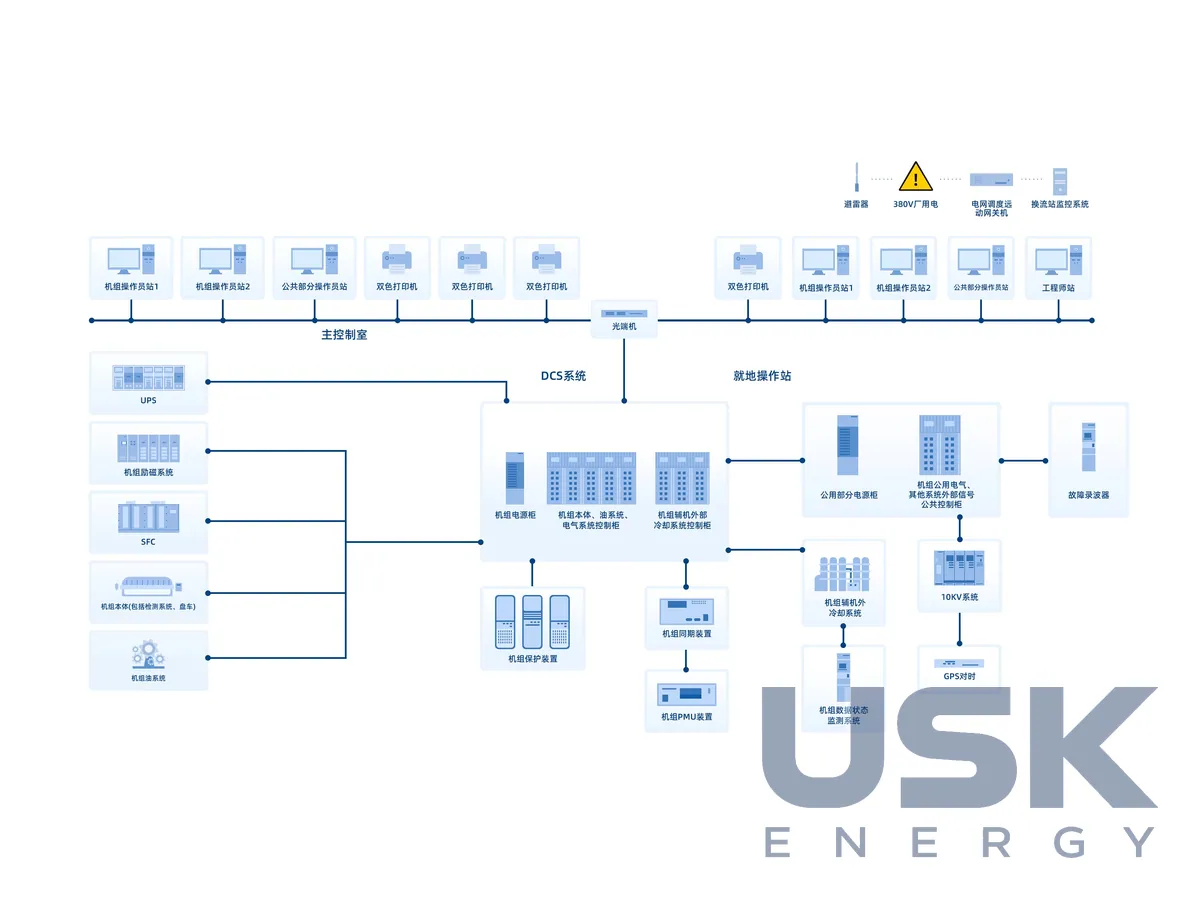
Control in the system has moved from a decentralised scheme to a relatively centralised one based on a universal PLC. One controller covers the machine itself, auxiliary systems, the excitation system, the static frequency converter for starting (SFC), the synchronisation system and the voltage and reactive power regulator (AVOC). Design and commissioning are carried out for the whole complex together, so there are fewer cabinets and commissioning is shorter. The subsystems are configured from one controller, without separate devices for each function.
On large synchronous condensers, two sets of combined main and backup protections are usually installed. The manufacturer applies separate main and backup protections, which makes the system cheaper without loss of protection quality. The system is developed by the company's Nanjing division.
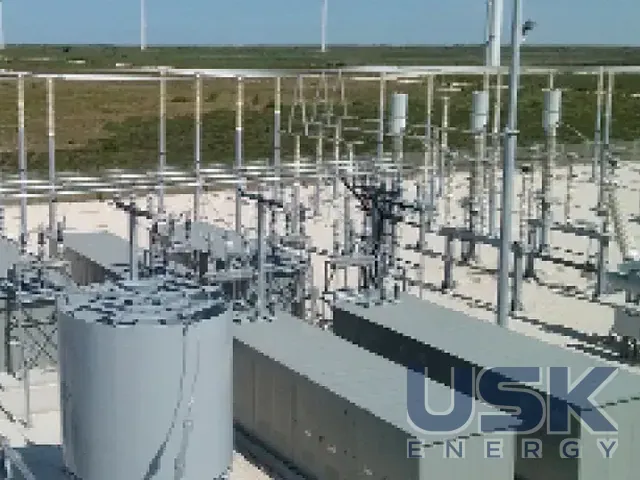
Distributed synchronous condensers already operate at renewable plants, in large solar hydrogen production projects and in regional projects integrating source, grid, load and storage. The manufacturer regards them as the basis for large-scale development of wind and solar plants in new power systems.
Technical specifications
| Purpose | short-circuit power and inertia for grids with a high share of renewables, voltage support |
|---|---|
| System composition | centralised PLC control: machine, auxiliary systems, excitation, SFC, synchronisation, AVOC |
| Protection | separate main and backup protection |
| Application | renewable plants, photovoltaic hydrogen, source-grid-load-storage projects |
| Developer | the manufacturer's Nanjing division |
Request a price and lead time
Integrated distributed synchronous condenser systems for renewable plants: control, excitation, SFC, protection. We reply within one business day.
Or email sales@usk.ua or call 044 339-50-20.
Customs codes
| UKTZED (Ukraine) | 8537 10 98 00 |
|---|---|
| HS, 6 digits | 8537 10 |
| CN (EU) | 8537 10 98 |
| HTSUS (USA) | 8537 10 91 70 |
| China customs tariff | 8537 10 90 90 |
Codes are for reference: the final code is determined at declaration for the specific model.
Questions and answers
Why is a synchronous condenser needed at a renewable plant?
It gives the grid the short-circuit power and moment of inertia that inverter-based sources lack. This reduces the limits on power export from wind and solar plants.
What does the condenser control system include?
A universal PLC controls the machine, auxiliary systems, excitation, the SFC starting converter, synchronisation and the AVOC regulator.
How is the condenser protection arranged?
Instead of two sets of combined protections, the manufacturer installs separate main and backup protections. This makes the system cheaper without loss of protection quality.
Similar equipment from other manufacturers