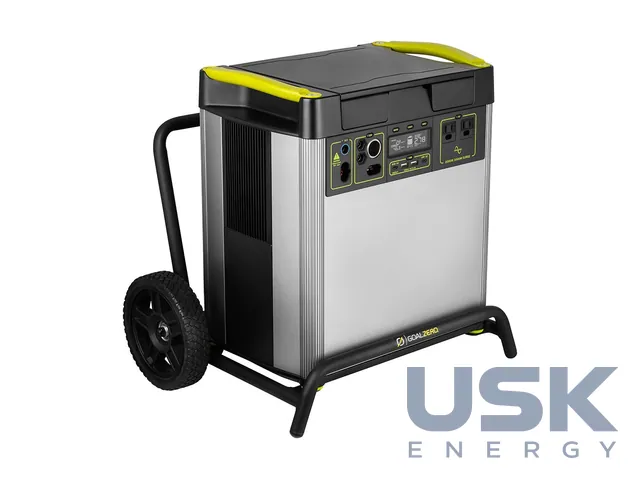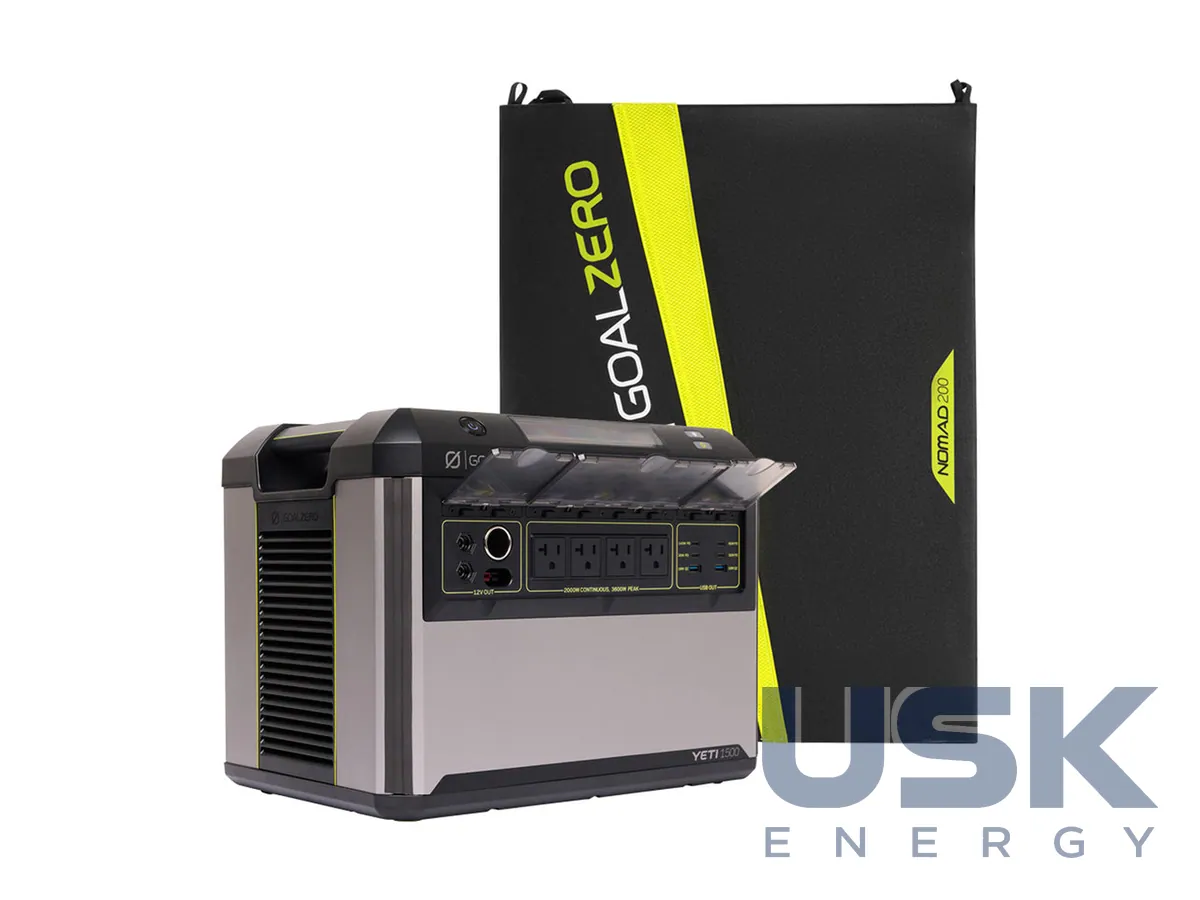
Yeti 1000 or Yeti 1500 LiFePO4 power station, 998 / 1505 Wh, 2000 W pure sine inverter
A pair of sixth-generation portable battery units built on one chassis: the Yeti 1000 (part 37200) stores 998 Wh and the Yeti 1500 (part 37300) stores 1505 Wh. Both run mains-type loads up to 2000 W and recharge from the grid, solar panels or a 12 V vehicle supply.
- Capacity
- 998 Wh (Yeti 1000) / 1505 Wh (Yeti 1500)
- Battery chemistry
- LiFePO4, 51.2 V
- Cycle life
- 4000 cycles to 80 % capacity
- Inverter
- 2000 W, 3600 W peak, pure sine wave
Price, availability and lead time on request. We help with analogue selection, customs clearance and delivery.
Description
Inside each unit sits a 51.2 V lithium iron phosphate pack, 19.5 Ah in the smaller model and 29.4 Ah in the larger. The cells are rated for 4000 cycles before capacity falls to 80 % at 25 °C, so the stations cope with daily cycling on site as well as standby duty.
Recharging is flexible. The mains fast-charge input accepts 50/60 Hz supplies of 100–120 V and draws up to 1000 W on the Yeti 1000 or 1500 W on the Yeti 1500, taking roughly 0.8 h from empty to 80 %. Solar and other DC sources can feed up to 900 W in total, while the high-voltage DC port handles 600 W within a 12.3–60 V window.
The pure sine inverter supplies 120 V, 60 Hz, 20 A, which marks this as a North American mains version; continuous rating is 2000 W with 3600 W available for start-up peaks. Low-voltage outlets comprise a 140 W USB-C port (260 W shared across all USB-C), plus 30 W and 60 W USB-C sockets, 18 W USB-A, a 405 W high-power 12 V port (30 A at 13.5 V), a 162 W car socket and a 135 W 6 mm port. When the grid drops out, the battery takes over in under 15 ms.
Typical users are field crews, mobile offices, camper vans, outdoor events and households needing backup during outages, running laptops, CPAP units, fridges, workshop tools, microwave ovens and heaters. Charge between 0 and 40 °C; discharge is permitted from -20 to 40 °C. The housing is rated IPX4, the design holds UL 2743 certification, and Bluetooth 4.2 plus Wi-Fi give app monitoring. Weight is 16 kg or 23.93 kg depending on model.
Technical specifications
| Capacity | 998 Wh (Yeti 1000) / 1505 Wh (Yeti 1500) |
|---|---|
| Battery chemistry | LiFePO4, 51.2 V |
| Cycle life | 4000 cycles to 80 % capacity |
| Inverter | 2000 W, 3600 W peak, pure sine wave |
| AC output | 120 V / 60 Hz, 20 A |
| USB-C | 140 W max per port, 260 W total |
| 12 V HPP port | 405 W, 30 A at 13.5 V |
| Mains charging | 1000 / 1500 W, 100–120 V 50/60 Hz |
| DC / solar input | up to 900 W total; 600 W at 12.3–60 V |
| Transfer to battery | <15 ms |
| Charge / discharge temperature | 0…40 °C / -20…40 °C |
| Enclosure rating | IPX4 |
| Weight | 16 / 23.9 kg |
Part numbers
Show all part numbers (1)
37200 / 37300
Request a price and lead time
Yeti 1000 or Yeti 1500 LiFePO4 power station, 998 / 1505 Wh, 2000 W pure sine inverter. We reply within one business day.
Or email sales@usk.ua or call 044 339-50-20.
Questions and answers
Which should I choose, the 1000 or the 1500?
The Yeti 1500 holds 1505 Wh against 998 Wh and accepts 1500 W mains charging instead of 1000 W, but weighs 23.9 kg rather than 16 kg. Inverter and outlets are identical.
What voltage do the AC sockets deliver?
120 V at 60 Hz, pure sine wave, continuous 2000 W, peak 3600 W; mains charging works from 50/60 Hz supplies of 100–120 V.
How much solar input can it take?
A combined 900 W from DC and solar sources, with the high-voltage input handling 600 W between 12.3 and 60 V.
Similar equipment from other manufacturers