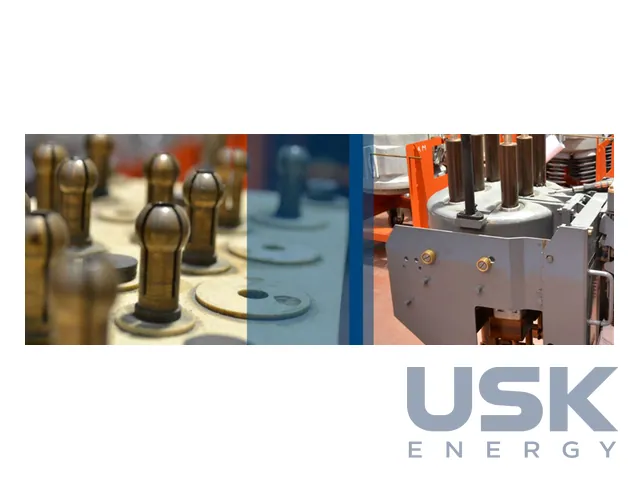
HHD-BV / HHZ-BV high-voltage fuse-links for voltage transformers
HHD-BV and HHZ-BV are BV-class high-voltage fuse-links for protecting voltage transformers in medium-voltage networks. They are partial-range Back-Up fuse-links that limit the short-circuit current and disconnect a faulty VT within a few milliseconds. They are installed in the metering panels of 6–36 kV switchgear.
- Class
- BV – Back-Up, short-circuit protection only
- Purpose
- protecting a VT against destruction on an internal short circuit
- Breaking time
- a few milliseconds
- Rated voltage
- not lower than the maximum operating voltage of the network
Price, availability and lead time on request. We help with analogue selection, customs clearance and delivery.
Description
Voltage transformers are installed primarily in the metering panels of switchgear. They measure voltage and power and supply the protection, automation and metering circuits. Their reliable operation is essential for monitoring, control and protection of the network, especially in smart grids, where accurate measurements and a fast response to faults are decisive. HHD-BV and HHZ-BV fuse-links are intended for exactly these transformers. A transformer in a metering panel is in service continuously, so the fuse-link must operate only on an internal fault of the VT itself and not on ordinary changes in the network operating conditions.
Operating principle. BV fuse-links work as partial-range Back-Up fuse-links and protect the transformer against rupture in the event of a short circuit in its circuits. The fault current is limited, and the faulty transformer is disconnected from the network within a few milliseconds, before neighbouring equipment is damaged. The arc is extinguished in quartz sand. Without a fuse-link, a short circuit in the VT winding could destroy the transformer and damage the adjacent equipment in the panel. Overload protection is, as a rule, not required, because in normal operation a voltage transformer draws a very small current.
Selection rules. The rated voltage of the fuse-link must not be lower than the maximum operating voltage of the network. The rated current is chosen as low as possible for fast operation on a fault, but the fuse-link must be time-lagged enough to withstand magnetizing inrush currents on energization without damage. Fuse-links for voltage transformers are governed by IEC 60282-1 and VDE 0670 part 4 and are partial-range fuse-links for short-circuit protection only.
The HHD and HHZ versions differ in design and connection method; dimensions are specified in the catalogue of the HH range. The range covers variants for oil-filled transformers, outdoor installations and enclosed switchgear. The fuse-links contain copper and silver, which are returned to the recycling loop through the NH/HH-Recycling e.V. initiative, of which the company is one of the co-founders. Applications: metering panels of air- and gas-insulated 6–36 kV switchgear, commercial metering points, substations of distribution networks and industrial plants, renewable energy facilities.
Technical specifications
| Class | BV – Back-Up, short-circuit protection only |
|---|---|
| Purpose | protecting a VT against destruction on an internal short circuit |
| Breaking time | a few milliseconds |
| Rated voltage | not lower than the maximum operating voltage of the network |
| Standards | IEC 60282-1, VDE 0670 part 4 |
Request a price and lead time
HHD-BV / HHZ-BV high-voltage fuse-links for voltage transformers. We reply within one business day.
Or email sales@usk.ua or call 044 339-50-20.
Questions and answers
What does a BV-class fuse-link protect against?
Against rupture of a voltage transformer in the event of a short circuit in its circuits. A faulty VT is disconnected from the network within a few milliseconds.
Does a voltage transformer need overload protection?
As a rule, no, because in normal operation a VT draws a very small current. BV fuse-links are partial-range and are intended only for short-circuit protection under IEC 60282-1 and VDE 0670 part 4.
How do I select the rated voltage and current of the fuse-link?
The fuse-link voltage must not be lower than the maximum operating voltage of the network. The current is chosen as low as possible for fast operation, but the fuse-link must withstand magnetizing inrush currents.
Similar equipment from other manufacturers