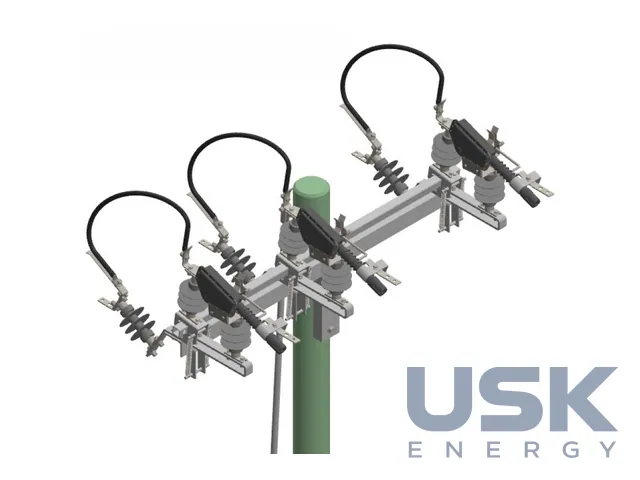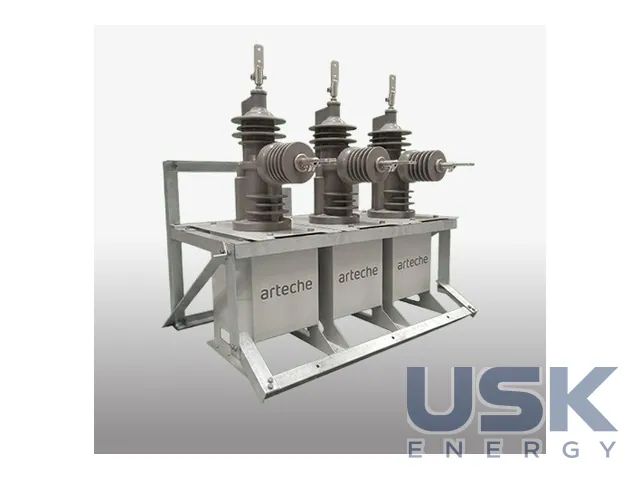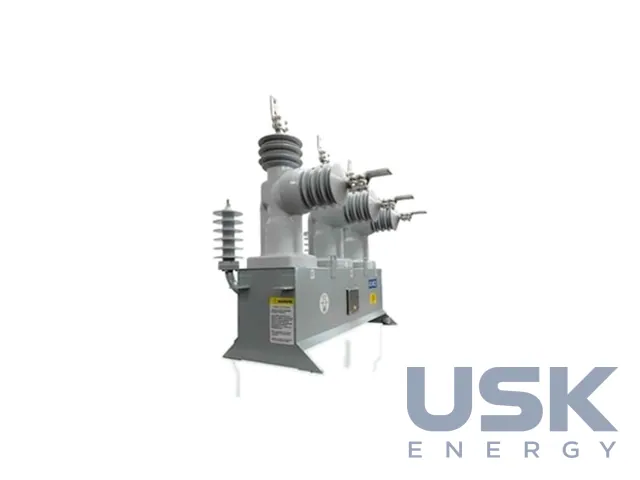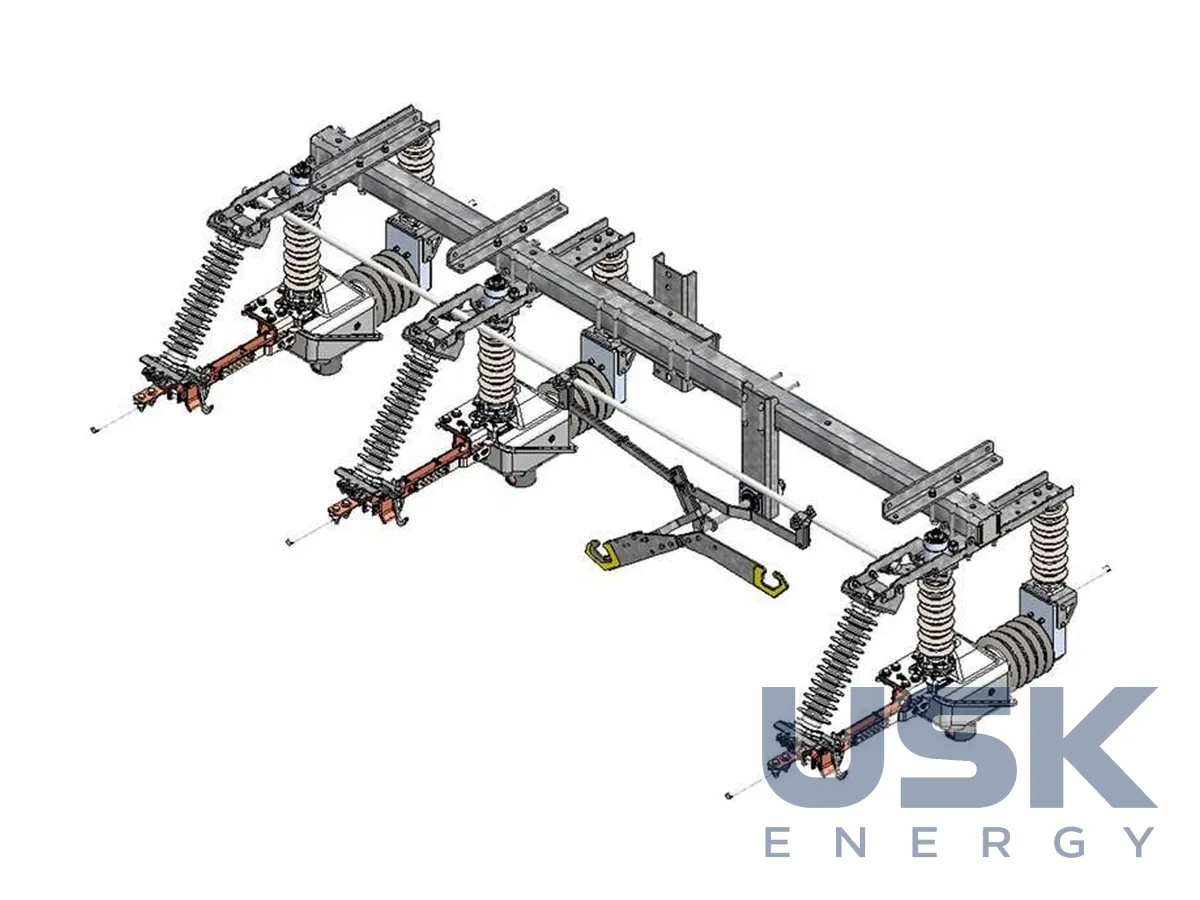
GOVB — three-pole vacuum load break switch with gang operation, 15/27 kV, 900 A
GOVB (Gang-Operated Vacuum Break) switches load and sectionalises overhead distribution networks of the 15/27 kV class at 900 A. Vacuum interrupters prevent open arcing, and optional line disconnects give a visible break. Versions with sensors and an MSO motor operator are suitable for remote-controlled sectionalising.
- Voltage class
- 15/27 kV
- BIL
- 150 kV
- Rated current
- 900 A
- Making on short circuit
- 20 kA asym., 5 operations (manual)
Price, availability and lead time on request. We help with analogue selection, customs clearance and delivery.
Description
GOVB (Gang-Operated Vacuum Break) is a three-pole load break switch with gang operation and vacuum interrupters. It is installed on overhead distribution networks for load switching and sectionalising of line sections. Vacuum interrupters exclude open arcing during opening, so GOVB is recommended as an element of utility programmes for reducing the risk of forest fires.
The device is made as a single three-phase unit on a crossarm. Line disconnects can optionally be fitted, which give a visible air gap when a section is taken out for repair. Operation can be by a traditional manual handle, a hot stick mechanism or an MSO motor operator with control equipment to the customer's specification.
Versions are designated by codes. V29SSUG3J78 denotes the GOVB with hot stick operation, and VD29SSUG3J78 the same with a disconnector. V29SSUGM23P3S has current and voltage sensors and an MSO motor operator, and VD29SSUGM23P4S additionally has a disconnector. VD29SSUGM23P5S has a disconnector, current and voltage sensors, additional voltage sensors and MSO. Versions with sensors and MSO are suitable for a remote-controlled sectionalising point in distribution automation and SCADA systems.
For all versions the voltage class is 15/27 kV, BIL 150 kV and rated current 900 A. Making current on short circuit is 20 kA asym., allowing five operations under manual control. Short-time current is 33 kA for 10 cycles and 12.5 kA for 3 s, with a mechanical life of 1000 close-open cycles. GOVB has been fully tested and certified to IEEE C37.30.1-2022, and test reports are provided on request. A data sheet, an overview brochure and drawings of each version are available for ordering. Switching takes place inside the vacuum bottle. Interlocking prevents accidental operation of the disconnector and the vacuum switch. The vacuum switch can replace an existing side-break contact set, which simplifies and cheapens modernisation. The device is also recommended for protection against fires, birds and animals on the line.
GOVB complements the ERGO line disconnect and bypass switch programme, and together they allow sectionalising under load, a visible break and bypassing of reclosers on one overhead line with devices from one manufacturer.
Technical specifications
| Voltage class | 15/27 kV |
|---|---|
| BIL | 150 kV |
| Rated current | 900 A |
| Making on short circuit | 20 kA asym., 5 operations (manual) |
| Short-time current | 33 kA for 10 cycles; 12.5 kA for 3 s |
| Mechanical life | 1000 cycles |
| Arc quenching | vacuum interrupters |
| Versions | with or without built-in line disconnectors; with current and voltage sensors; operation by handle, hot stick or MSO motor operator |
| Standard | IEEE C37.30.1-2022 |
Request a price and lead time
GOVB — three-pole vacuum load break switch with gang operation, 15/27 kV, 900 A. We reply within one business day.
Or email sales@usk.ua or call 044 339-50-20.
Questions and answers
What voltage class and current is the GOVB rated for?
Voltage class 15/27 kV, BIL 150 kV, rated current 900 A. These values are the same for all versions.
What short-time current and life does the switch have?
Short-time current 33 kA for 10 cycles and 12.5 kA for 3 s. Mechanical life is 1000 close-open cycles.
Can the GOVB be used for remote control?
Yes, versions with current and voltage sensors and an MSO motor operator are suitable for a remote-controlled sectionalising point in SCADA and automation systems. Basic versions are operated by handle or hot stick.
Similar equipment from other manufacturers