SF6 high-voltage circuit breakers (dead tank and live tank) 72–1100 kV
The manufacturer's high-voltage and extra-high-voltage SF6 circuit breakers (GCB) operate in outdoor switchyards of substations and power plants. They switch lines, transformers and shunt reactors and interrupt short-circuit currents. The range covers voltages from 72 to 1100 kV in dead tank and live tank versions.
- Rated voltage
- 72–1100 kV
- Design
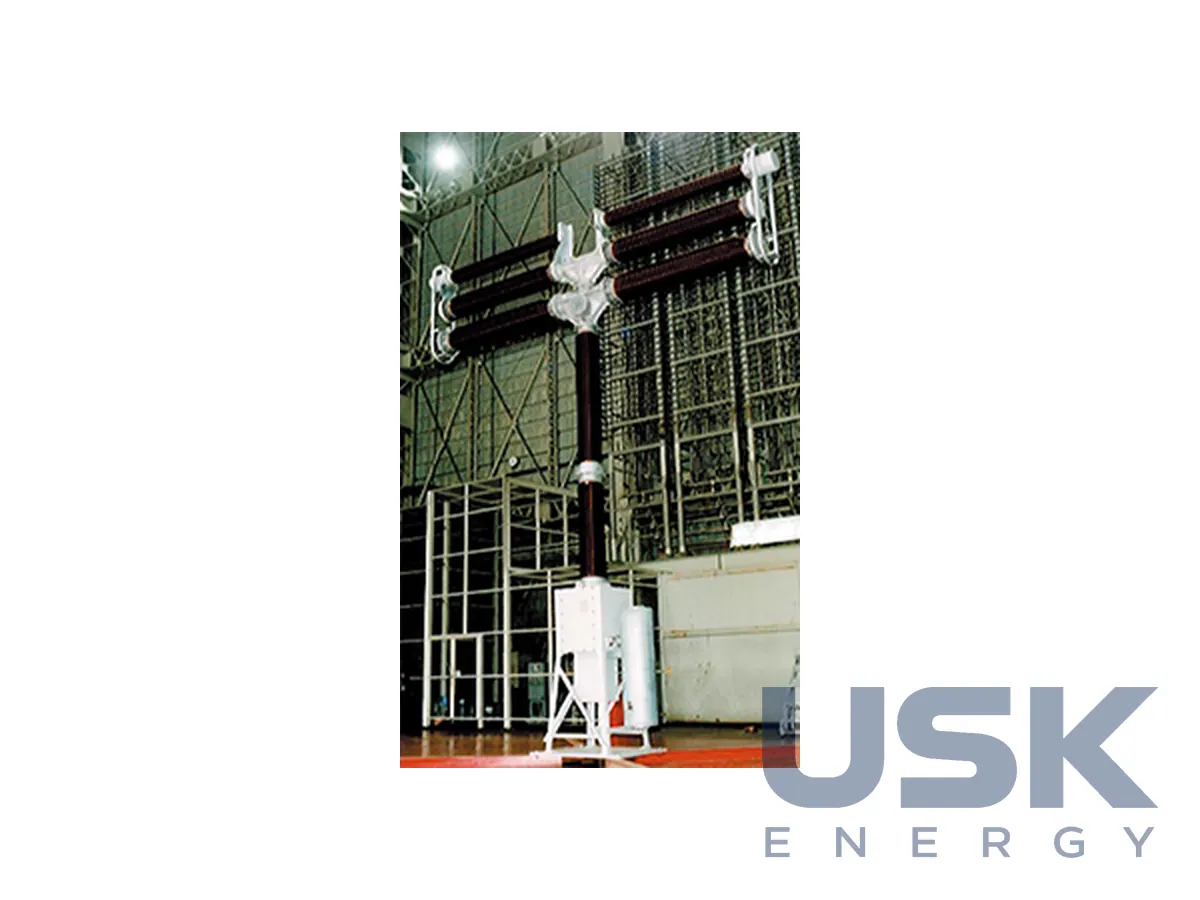
- dead tank and live tank, e.g. 550 kV
- Arc-quenching medium
- SF6
- Drive
- spring-type, including torsion type (for 145–550 kV at traction substations)
Price, availability and lead time on request. We help with analogue selection, customs clearance and delivery.
Description
The manufacturer commercialised the first SF6 circuit breaker in Japan in 1968. Since then the company has supplied breakers and GIS for voltages of 72–1100 kV. The arc-quenching medium is SF6, the drive is a spring mechanism, including the torsion type.
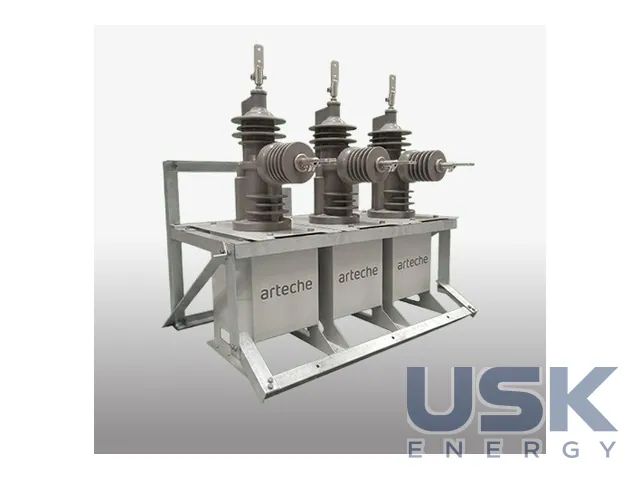
Dead tank breakers have an earthed metal tank housing the interrupter. The live parts of such a device are enclosed in an earthed shell. Built-in current transformers can be installed on the tank bushings, so separate CTs are not needed in the switchyard and the substation takes less space.
Live tank breakers hold the interrupter chambers on insulating columns, and the chambers are at network potential. The manufacturer's website shows, among others, 550 kV versions of both types. The choice between them depends on the switchyard layout, the need for built-in CTs and the customer's requirements for area and maintenance. The dead tank version has the advantage where built-in CTs are needed and the switchyard area is limited.
When developing interrupters, the manufacturer applies analysis of thermal gas flow during current interruption. According to the manufacturer, such calculation increases the stability of device characteristics. The portfolio of breakers and mechanisms is regularly updated. For substations receiving power from traction networks the company installs devices with a torsion-type spring mechanism for voltage classes from 145 to 550 kV, which feature high energy transmission efficiency.
Together with breakers the manufacturer produces surge arresters of various types, including 500 kV post-type arresters for transformer protection. In parallel the company develops high-voltage devices without SF6, based on vacuum interrupters and dry-air insulation. For substations with limited area the manufacturer also offers GIS for the same voltage classes. Such GIS take less space, have a flexible layout, need less installation work on site and minimal maintenance. A customer planning to abandon SF6 at new substations can discuss such devices with the manufacturer too. The technical data of a specific version, that is rated current, breaking current and drive type, are clarified from the questionnaire for the project.
Technical specifications
| Rated voltage | 72–1100 kV |
|---|---|
| Design | dead tank and live tank, e.g. 550 kV |
| Arc-quenching medium | SF6 |
| Drive | spring-type, including torsion type (for 145–550 kV at traction substations) |
| Development | analysis of thermal gas flow during interruption |
Request a price and lead time
SF6 high-voltage circuit breakers (dead tank and live tank) 72–1100 kV. We reply within one business day.
Or email sales@usk.ua or call 044 339-50-20.
Customs codes
| UKTZED (Ukraine) | 8535 29 00 00 |
|---|---|
| HS, 6 digits | 8535 29 |
| CN (EU) | 8535 29 00 |
| HTSUS (USA) | 8535 29 00 80 |
| China customs tariff | 8535 29 00 00 |
Codes are for reference: the final code is determined at declaration for the specific model.
Questions and answers
What voltages are SF6 circuit breakers made for?
The range covers rated voltages from 72 to 1100 kV. The manufacturer's website shows dead tank and live tank versions for 550 kV.
How does a dead tank breaker differ from a live tank breaker?
In a dead tank breaker the interrupter sits in an earthed metal tank, and current transformers can be built into the bushings. In a live tank breaker the interrupter chambers are on insulating columns at line potential.
Does the manufacturer have devices without SF6?
The company develops high-voltage devices based on vacuum interrupters and dry-air insulation. The breakers of this range use SF6.
Similar equipment from other manufacturers