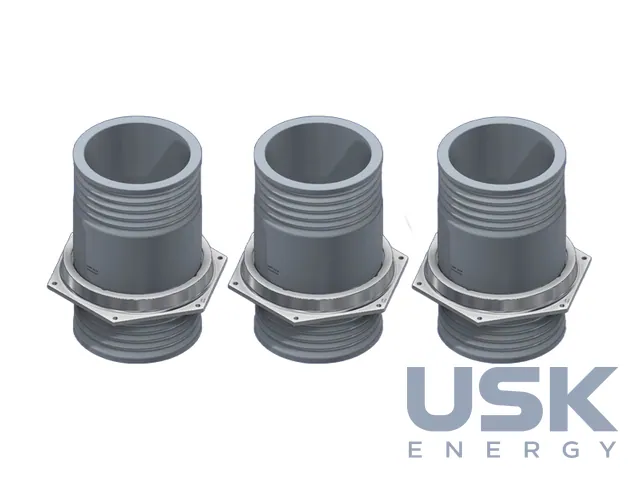
CRS dry resin + silicone bushings up to 72.5 kV / 6300 A
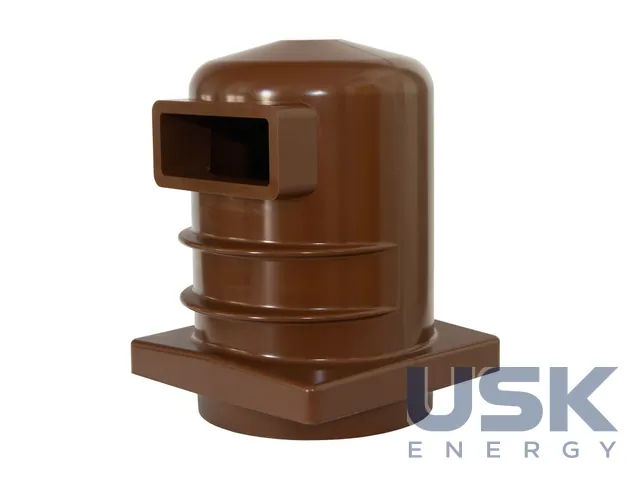
CRS are dry resin + silicone bushings for oil-filled power transformers up to 72.5 kV and 6300 A to IEC 60137. With no oil, paper or porcelain, they withstand cold down to −60 °C, humidity and heavy pollution.
- IEC range
- Um ≤ 72.5 kV, Ir ≤ 6300 A (24, 36, 52, 72.5 kV)
- IEEE range
- Um ≤ 34.5 kV, Ir ≤ 3000 A (25 and 34.5 kV)
- BIL
- 150 kV (24 kV) … 325 kV (72.5 kV)
- Partial discharge
- 10 pC (24–36 kV) … 90 pC (72.5 kV) at 1.5Um/√3
Price, availability and lead time on request. We help with analogue selection, customs clearance and delivery.
Description
CRS (Combined Resin Silicon) combines an inner body of epoxy resin with an outer ribbed shell of silicone rubber. The bushing is dry and non-condenser, with no oil, paper or porcelain in it. Consequently, in case of failure there is no oil explosion and no flying porcelain fragments. For this reason CRS is recommended for densely populated and restricted-access areas, and for marine and coastal sites.
To IEC the bushings are made for 24, 36, 52 and 72.5 kV with rated currents from 250 to 6300 A, and for 72.5 kV the maximum is 2000 A. To IEEE there are versions for 25 and 34.5 kV at 3000 A. The impulse withstand level (BIL) rises from 150 kV for the 24 kV class to 325 kV for 72.5 kV, and the power-frequency test voltage is from 55 to 155 kV.
The partial discharge level at 1.5Um/√3 is 10 pC for 24–36 kV, up to 40 pC for 52 kV and 90 pC for 72.5 kV. The creepage distance is from 710 to 2250 mm, pollution classes P2/P4, and the pollution test to IEC 60185 confirmed resistance from heavy to very heavy pollution. The oil temperature is −20…+100 °C or −40…+120 °C depending on type, and with FVMQ seals the arctic version works down to −60 °C. The contact parts in air are nickel-plated, tinned or silver-plated depending on current.
The bushings are qualified to IEC 60137 and IEEE C57.19.01-2000, and the list of standards is completed by IEC 62217 and IEC 60815-3 for the shed shape. The connection dimensions are compatible with EN and DIN, and production is organised under ISO 9001. The bushing needs no maintenance or constant monitoring. It can be transported and stored at any angle, which simplifies spare parts handling in the warehouse.
The field of application covers 6–72.5 kV power transformers in conditions of extreme cold down to −60 °C, high humidity and pollution, offshore and the tropics, new installations and upgrades.
Technical specifications
| IEC range | Um ≤ 72.5 kV, Ir ≤ 6300 A (24, 36, 52, 72.5 kV) |
|---|---|
| IEEE range | Um ≤ 34.5 kV, Ir ≤ 3000 A (25 and 34.5 kV) |
| BIL | 150 kV (24 kV) … 325 kV (72.5 kV) |
| Partial discharge | 10 pC (24–36 kV) … 90 pC (72.5 kV) at 1.5Um/√3 |
| Creepage distance | 710–2250 mm |
| Oil temperature | −40…+120 °C; version down to −60 °C (FVMQ seals) |
| Standards | IEC 60137, IEC 62217, IEC 60815-3, IEEE C57.19.01-2000; compatible with EN and DIN |
| Pollution | from heavy to very heavy (IEC 60185) |
Request a price and lead time
CRS dry resin + silicone bushings up to 72.5 kV / 6300 A. We reply within one business day.
Or email sales@usk.ua or call 044 339-50-20.
Customs codes
| UKTZED (Ukraine) | 8546 90 90 00 |
|---|---|
| HS, 6 digits | 8546 90 |
| CN (EU) | 8546 90 90 |
| HTSUS (USA) | 8546 90 00 00 |
| China customs tariff | 8546 90 00 00 |
Codes are for reference: the final code is determined at declaration for the specific model.
Questions and answers
What are the maximum voltage and current of the CRS?
To IEC up to 72.5 kV and 6300 A, with the current up to 2000 A for 72.5 kV. To IEEE, 25 and 34.5 kV at 3000 A.
Do the bushings work in severe frost?
Yes, the arctic version with FVMQ seals is designed for temperatures down to −60 °C.
What standards confirm the qualification of the CRS?
IEC 60137 and IEEE C57.19.01-2000, shed shape to IEC 60815-3, pollution tests to IEC 60185.
Similar equipment from other manufacturers