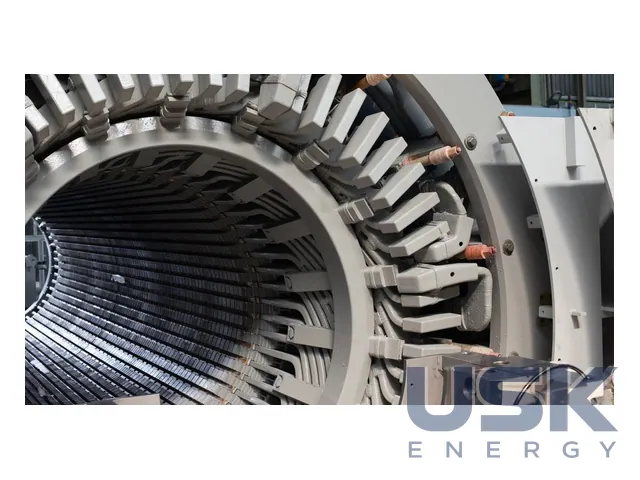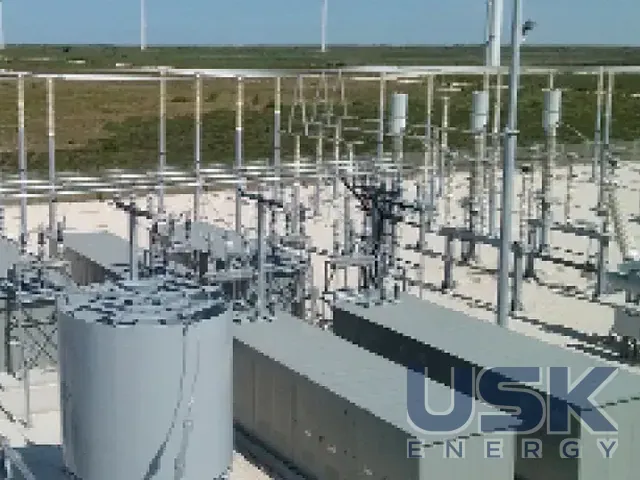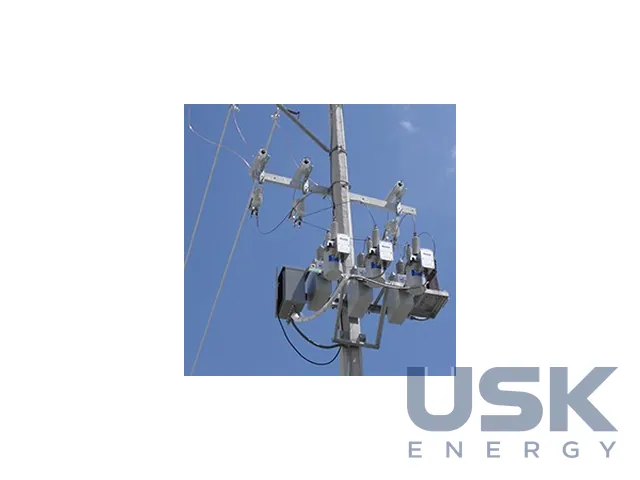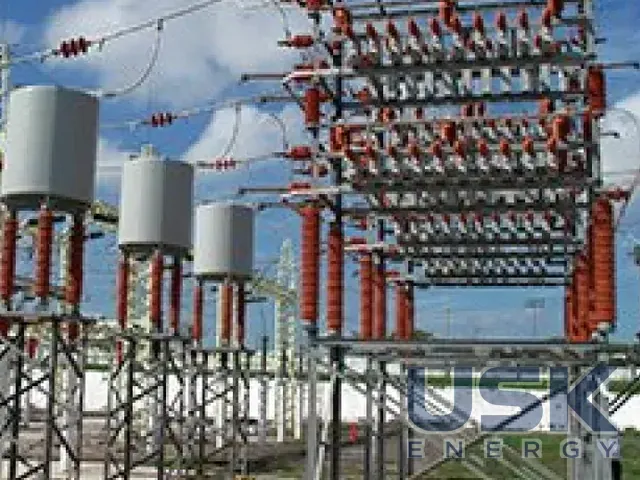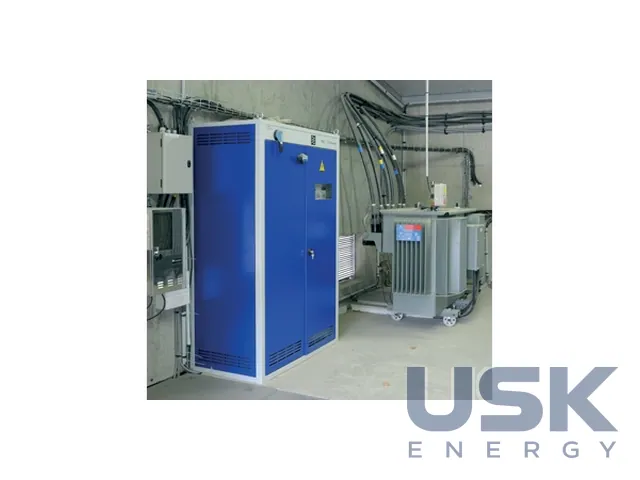
PCS-9583 static synchronous compensator (STATCOM) on cascaded IGBT bridges
The PCS-9583 is a static synchronous compensator (STATCOM) based on a voltage-source converter with cascaded IGBT bridges for transmission and industrial networks. It regulates reactive power, improves power quality and reduces losses. It is used at substations, wind and solar plants, steel mills, railways and mines.
- Principle
- voltage-source converter (VSC), cascade of IGBT H-bridges, multilevel output voltage (2N+1 levels)
- Connection
- through a coupling reactor or a converter transformer
- Redundancy
- N-1 / N-2 of power modules in a phase
- Cooling
- forced air (small/medium power), closed water (large power)
Price, availability and lead time on request. We help with analogue selection, customs clearance and delivery.
Description
Unlike an SVC, this compensator does not need high-power capacitors and reactors. It supplies or absorbs reactive current almost independently of the network voltage, so it holds the voltage well during deep sags. Voltage regulation is performed by an IGBT voltage-source converter (VSC).
The power section is assembled in a cascaded multilevel arrangement. Each phase has a chain of H-bridges, that is, power modules, and each module contains IGBTs with drivers, a storage capacitor, a heat sink and balancing resistors. Unipolar modulation with frequency multiplication and phase-shifted carriers is applied. On the AC side a multilevel voltage close to a sinusoid is obtained. With N+1 modules in a phase, 2N+1 levels are obtained. The modules are redundant under the N-1 or N-2 criteria, so the failure of one module does not stop the installation.
The converter is connected to the network through a coupling reactor or a converter transformer, through which active and reactive power are exchanged. A starting device limits the capacitor charging current during commissioning. For small and medium power the cooling is forced air, and for large power a closed water system with its own control is used.
The control and protection system consists of the pole control and protection unit PCS-9583 PCP, the valve base controller PCS-9589 VBC, power module controllers SMC, auxiliary relays and network switches. IEC 61850 and Modbus are supported, and built-in fault recording in COMTRADE format captures transient and steady-state processes after large disturbances.
At transmission network substations a STATCOM compensates line reactive power, stabilizes voltage, increases transfer capacity, prevents voltage collapse and damps power oscillations. At mine hoists and rolling mills it raises the power factor, actively filters harmonics and reduces flicker during starts. On electrified railways and in metro systems it compensates unbalance and harmonics, at wind and solar plants it corrects the power factor and improves low voltage ride-through (LVRT). At metallurgical and chemical plants it suppresses flicker and unbalance.
Technical specifications
| Principle | voltage-source converter (VSC), cascade of IGBT H-bridges, multilevel output voltage (2N+1 levels) |
|---|---|
| Connection | through a coupling reactor or a converter transformer |
| Redundancy | N-1 / N-2 of power modules in a phase |
| Cooling | forced air (small/medium power), closed water (large power) |
| Control system | PCS-9583 PCP (pole control and protection), PCS-9589 VBC (valve control), SMC |
| Applications | transmission networks, renewable energy, metallurgy, chemicals, electrified railways, metro, mines |
Request a price and lead time
PCS-9583 static synchronous compensator (STATCOM) on cascaded IGBT bridges. We reply within one business day.
Or email sales@usk.ua or call 044 339-50-20.
Customs codes
| UKTZED (Ukraine) | 8504 40 88 00 |
|---|---|
| HS, 6 digits | 8504 40 |
| CN (EU) | 8504 40 88 |
| HTSUS (USA) | 8504 40 95 80 |
| China customs tariff | 8504 40 99 99 |
Codes are for reference: the final code is determined at declaration for the specific model.
Questions and answers
How does the PCS-9583 differ from an SVC?
A STATCOM does not need high-power capacitors and reactors and supplies reactive current almost independently of the network voltage. Therefore it holds the voltage better during deep sags.
What redundancy of power modules is provided?
The modules in each phase are redundant under the N-1 or N-2 criteria. With N+1 modules in a phase the converter gives 2N+1 levels of output voltage.
What cooling is used in the PCS-9583?
Forced air for small and medium power. A closed water system with its own control for large power.
Similar equipment from other manufacturers