Series 39 Butterfly Control Valve for Slurry, DN 50–600, up to 16 bar
Series 39 butterfly control valve for slurries and abrasive, erosive and corrosive media, including scaling services. Available in wafer or flanged long-body form, NPS 2 to 24 (DN 50 to 600), up to 230 psi (16 bar) and -29 to 150 °C.
- Sizes
- NPS 2–24 / DN 50–600
- Body style
- wafer, flanged long body
- Body material
- ductile iron, stainless steel, carbon steel
- Liner material
- carbide-rich metal, chrome iron alloy
Price, availability and lead time on request. We help with analogue selection, customs clearance and delivery.
Description
The Series 39 is used on slurry lines and highly abrasive media where throttling and flow regulation are needed. It is fitted in mining and mineral processing circuits and in chemical or other process plants where the medium wears the flow path, causes corrosion or leaves deposits. The disc does not give a tight seal, so a separate shut-off valve is needed on the line if isolation is required.
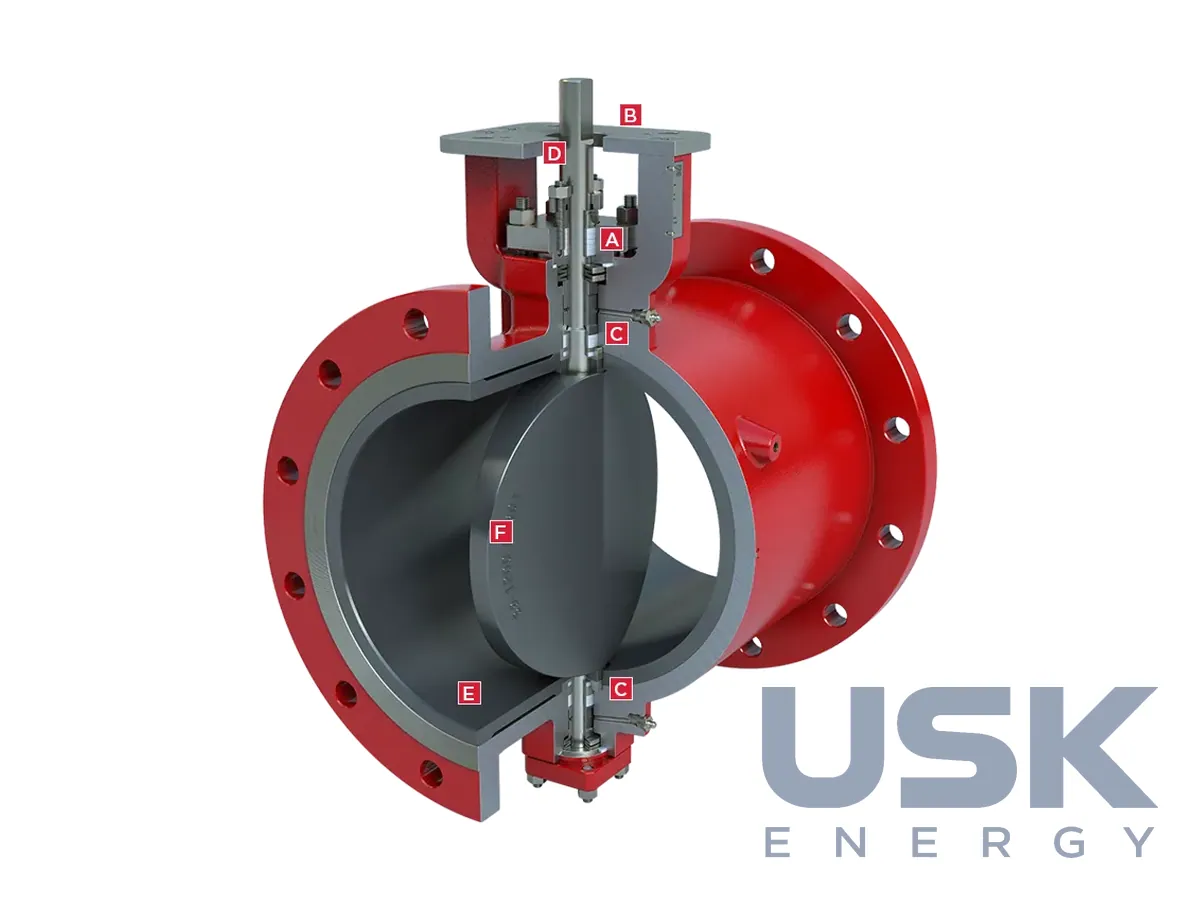
The body is made from ductile iron, stainless steel or carbon steel. The flow path is protected by a replaceable liner, in a chrome iron alloy or a carbide-rich metal. The disc is hardened chrome-molybdenum iron, and its profile is designed for maximum flow capacity and less wear.
The stem is one-piece 17-4PH stainless steel on all sizes, with a double flat for the actuator. The top flange follows ISO 5211, so an actuator mounts directly without adaptor parts. The upper stem bearing has a 316 stainless steel shell with a glass fibre reinforced TFE liner, while the lower bearing is ceramic PSZ. This pairing resists corrosion and distortion under mechanical load and high temperature. A stem retaining ring guards against the stem blowing out if an internal failure occurs.
The valve comes in two body styles: wafer, and flanged with a long body. Sizes run from NPS 2 to NPS 24, which equals DN 50 to DN 600. The maximum allowable working pressure is 230 psi (16 bar), and the working temperature runs from -29 to 150 °C. Design follows ASME B16.34, flange drilling matches ASME B16.5 Class 150, and testing is to API 598. Face-to-face length follows the manufacturer's standard, so a replacement valve from another source must be checked against the existing pipework. The valve carries UA TR certification.
The stem gland can be tightened in place without removing the actuator. When wear occurs, the liner and several flow-path parts are replaced while the body and actuator stay in the line, which lowers maintenance costs.
Technical specifications
| Sizes | NPS 2–24 / DN 50–600 |
|---|---|
| Body style | wafer, flanged long body |
| Body material | ductile iron, stainless steel, carbon steel |
| Liner material | carbide-rich metal, chrome iron alloy |
| Disc material | hardened chrome-molybdenum iron |
| Stem material | 17-4PH stainless steel |
| Maximum working pressure | 230 psi (16 bar) |
| Working temperature | -29 to 150 °C |
| Design standard | ASME B16.34 |
| Flange drilling | ASME B16.5 Class 150 |
| Testing standard | API 598 |
| Face-to-face length | per manufacturer's standard |
| Actuator flange | ISO 5211 |
| Certification | UA TR |
Request a price and lead time
Series 39 Butterfly Control Valve for Slurry, DN 50–600, up to 16 bar. We reply within one business day.
Or email sales@usk.ua or call 044 339-50-20.
Questions and answers
Is the Series 39 suitable for tight shut-off?
No. The disc of a control valve does not give a tight seal, so a separate shut-off valve is needed on the line.
Which liner materials are available?
A chrome iron alloy or a carbide-rich metal. The liner is replaceable, and when it wears only the liner and several flow-path parts are changed, not the whole valve.
How is the actuator fitted?
It mounts directly onto the top flange to ISO 5211, and the 17-4PH stainless steel stem has a double flat. The stem gland can be adjusted without removing the actuator.
Similar equipment from other manufacturers