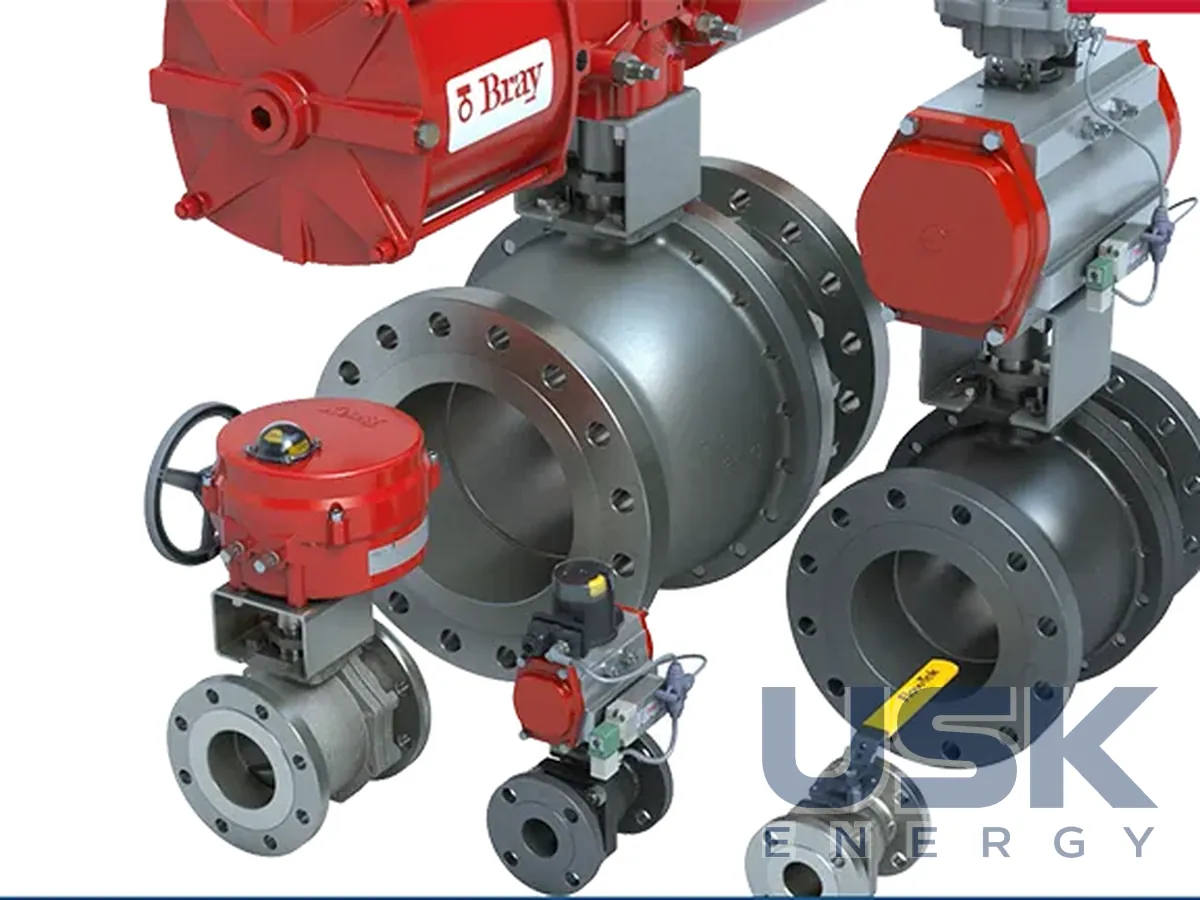
F15/F30 Flanged Floating Ball Valve, DN 15 to 300, ASME 150 and 300
The F15/F30 is a two-piece flanged floating ball valve, full port, built to ASME B16.34 in classes 150 and 300. It covers NPS 1/2 to 12 (DN 15 to 300), temperatures from -46 to 343 °C, zero-leakage shutoff and a fire-safe design to API 607.
- Design
- two-piece body, floating ball
- Bore
- full port (F15/F30), reduced port (RF15/RF30)
- Size
- NPS 1/2 to 12, DN 15 to 300
- Pressure class
- F15: ASME 150; F30: ASME 300; PN10, 16, 25, 40
Price, availability and lead time on request. We help with analogue selection, customs clearance and delivery.
Description
F15/F30 valves are used in process pipelines, oil depots and fuel terminals, oil and gas, chemicals, refining and municipal water supply. The F15 corresponds to ASME Class 150 and PN 10/16, while the F30 is ASME Class 300 and PN 25/40. For flanges to EN 1092, versions in PN10, PN16, PN25 and PN40 are available.
The two-piece body is cast by the investment process in stainless steel CF8M, carbon steel WCB or special alloys, including Alloy 20. The ball is ASTM A351 Gr CF8M and is polished for tight shutoff at low torque. Sizes 1/2 to 2 inch have a stem with an integrated seal under constant load, while sizes 2 1/2 to 12 inch have a separate gland bush that can be tightened without removing the mounting parts or the actuator. Disc springs compensate for wear and temperature changes, and large sizes use trunnion ball support to reduce torque.
Seats are pre-loaded for sealing at low pressure and vacuum, and shutoff is bidirectional. The standard seat is TFM 1600, with PEEK, RPTFE, UHMWPE or metal seats available on request. The stem is ASTM A479 type 316. Non-fire-safe versions have standard stem seals, while the API 607 fire-safe version uses graphite seals. A cast mounting pad to ISO 5211 simplifies fitting of the actuator.
The body is designed to ASME B16.34 and API 608, with face-to-face length to ASME B16.10 and testing to API 598. Certification covers ATEX, CRN, NACE MR0175, NSF 61 and 372, PED, PE(S)R and SIL. The valve can perform safety functions up to SIL 3 under IEC 61508, with a service life in that mode of 10 to 15 years or 10,000 cycles. Reduced-port RF15 and RF30 versions are available in sizes 2 to 12 inch.
Fluid-control options include packing fillers, a containment assembly, and balls with a V-shaped notch for flow regulation.
Technical specifications
| Design | two-piece body, floating ball |
|---|---|
| Bore | full port (F15/F30), reduced port (RF15/RF30) |
| Size | NPS 1/2 to 12, DN 15 to 300 |
| Pressure class | F15: ASME 150; F30: ASME 300; PN10, 16, 25, 40 |
| End connections | flanges ASME 150, 300; EN 1092 PN10, 16, 25, 40 |
| Temperature | -46 to 343 °C (-50 to 650 °F) |
| Body material | CF8M, WCB, special alloys |
| Ball material | ASTM A351 Gr CF8M |
| Stem material | ASTM A479 type 316 |
| Seats | TFM 1600; optional PEEK, RPTFE, UHMWPE, metal |
| Shutoff | zero leakage |
| Mounting pad | ISO 5211 |
| Standards | ASME B16.34, API 608, ASME B16.10, API 598 |
| Fire safety | API 607 |
| Functional safety | up to SIL 3 (IEC 61508) |
Request a price and lead time
F15/F30 Flanged Floating Ball Valve, DN 15 to 300, ASME 150 and 300. We reply within one business day.
Or email sales@usk.ua or call 044 339-50-20.
Questions and answers
What is the difference between F15 and F30?
F15 is rated to ASME Class 150 and PN 10/16, while F30 is rated to ASME Class 300 and PN 25/40. The design and the NPS 1/2 to 12 size range are the same.
Is a fire-safe version available?
Yes, fire-safe versions to API 607 have graphite stem seals. Non-fire-safe versions have standard stem seals.
Can the valve be used in a safety loop?
Yes, it can perform safety functions up to SIL 3 under IEC 61508. The service life in that mode is 10 to 15 years or 10,000 cycles.
Similar equipment from other manufacturers