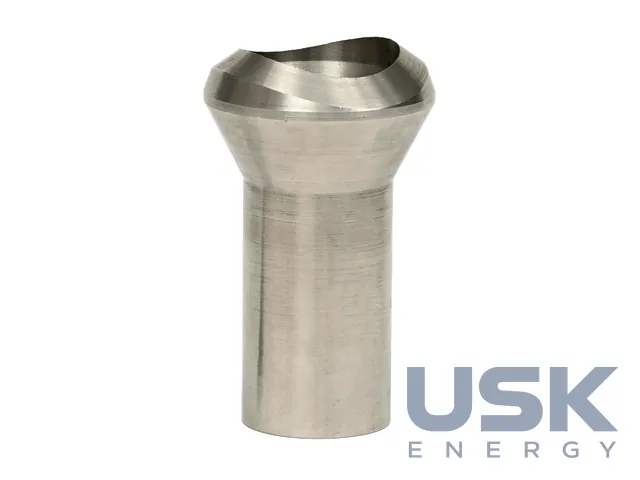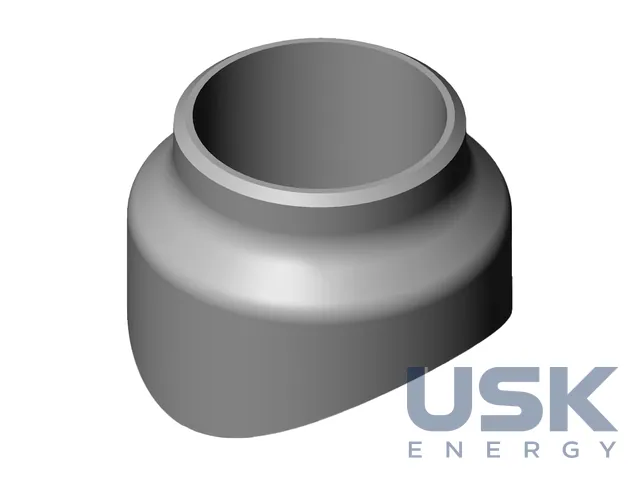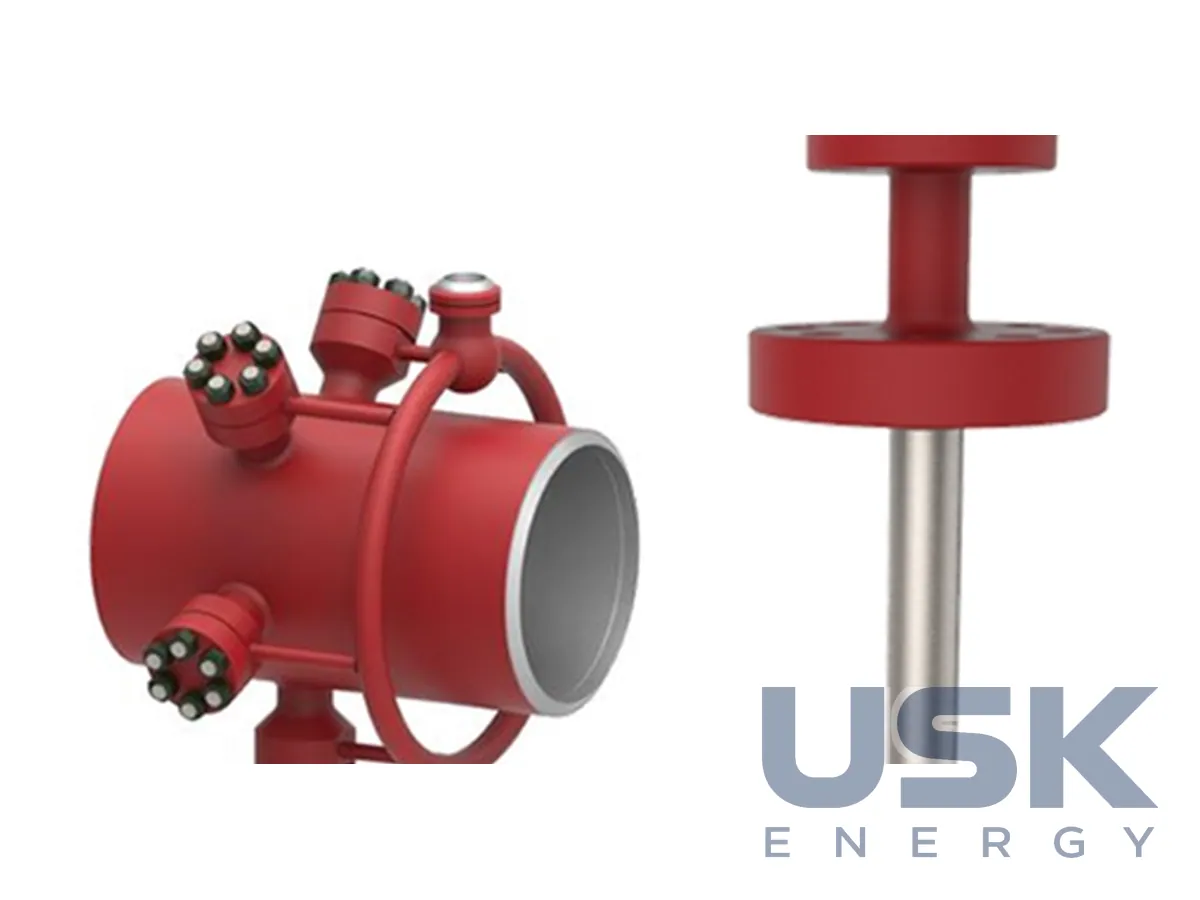
DSH steam desuperheaters, radial spray and insertion types, 100–1200 mm lines
Spray-water desuperheaters that bring superheated steam down to a set temperature, for boiler attemperation, HRSGs and process steam. The range covers in-line radial units for large lines and an insertion unit.
- Types
- DSH-1XX radial spray (DSH-110, DSH-120); DSH-200 insertion
- Line size
- 100–1200 mm (4–48 in)
- Pressure ratings
- ANSI 150–2500; UNI-DIN 10–400
- End connections
- buttweld (BW), RF and RTJ flanges
Price, availability and lead time on request. We help with analogue selection, customs clearance and delivery.
Description
Interstage and final attemperators on a boiler have to push large volumes of cooling water into steam hotter than 537 °C, protecting the turbine and boiler tubes from temperature spikes. The DSH family is aimed at exactly this severe, heavily cycled duty, and equally at turbine extraction and exhaust, heat recovery steam generators and process steam conditioning. It is found in coal, gas and combined cycle power stations, refineries, petrochemical plants and pulp and paper mills.
Water leaves through nozzles with individual Cv values of 0.4, 0.8, 1.5, 3.0, 5.0 or 10.0. Fitting anything from 1 to 8+ nozzles gives a combined Cv from 0.4 to beyond 80. Each nozzle cracks open at 1.7 bar (25 psi); mean droplet size is under 100 µm, and more than 99 % of droplets are finer than 200 µm.
On the DSH-1XX radial design no part, not even a nozzle, projects into the steam, so thermal fatigue inside the pipe is avoided. Its DSH-110 variant adds the Flow Profiler, which steers steam towards the pipe centre and forms a turbulent mixing region clear of the wall; the DSH-120 variant carries a thermal liner, typically 1 to 2 m long. The DSH-200 is pushed into the line as an insertion unit.
Line sizes run from 100 to 1200 mm (4 to 48 in) with ANSI 150 to 2500 or UNI-DIN 10 to 400 ratings, buttweld or RF and RTJ flanged ends. Body material limits are 427 °C for carbon steel, 510 °C for 1-1/4Cr 1/2Mo, 565 °C for 2-1/4Cr 1Mo and 649 °C for 9Cr 1Mo V. The water manifold is 25–150 mm (1–6 in). Designs follow ASME B31.1, B31.3, B16.5 and the BPVC. Allow 5 pipe diameters of straight run upstream and up to 15 downstream, fit the pressure tapping 5 diameters away and the temperature sensor no closer than 10 m, and insulate with 25–50 mm.
Technical specifications
| Types | DSH-1XX radial spray (DSH-110, DSH-120); DSH-200 insertion |
|---|---|
| Line size | 100–1200 mm (4–48 in) |
| Pressure ratings | ANSI 150–2500; UNI-DIN 10–400 |
| End connections | buttweld (BW), RF and RTJ flanges |
| Body material | carbon steel, chrome-molybdenum steel |
| Temperature limits | carbon steel 427 °C; 1-1/4Cr 1/2Mo 510 °C; 2-1/4Cr 1Mo 565 °C; 9Cr 1Mo V 649 °C |
| Nozzle Cv | 0.4; 0.8; 1.5; 3.0; 5.0; 10.0 |
| Combined Cv | 0.4 to 80+ |
| Number of nozzles | 1 to 8+ |
| Nozzle opening pressure | 1.7 bar (25 psi) |
| Mean droplet size | < 100 µm |
| Water manifold | 25–150 mm (1–6 in), RF, RTJ, SWE, BWE |
| Codes | ASME B31.1, B31.3, B16.5, BPVC |
Request a price and lead time
DSH steam desuperheaters, radial spray and insertion types, 100–1200 mm lines. We reply within one business day.
Or email sales@usk.ua or call 044 339-50-20.
Questions and answers
What is the difference between DSH-1XX and DSH-200?
The DSH-1XX is an in-line radial unit whose nozzles stay outside the steam flow. The DSH-200 is an insertion type introduced into the steam pipe.
How much straight pipe does the installation need?
Five pipe diameters upstream and a calculated length downstream of no more than 15 diameters. The temperature sensor goes at least 10 m downstream.
What steam temperature can the body handle?
Carbon steel is limited to 427 °C, while chrome-moly grades reach 510, 565 or 649 °C depending on alloy.
Similar equipment from other manufacturers